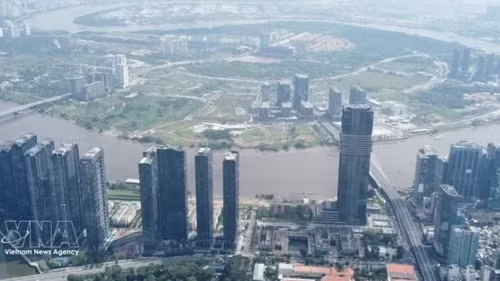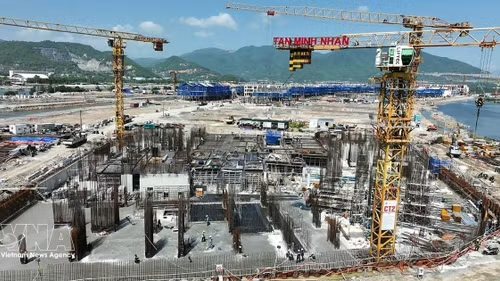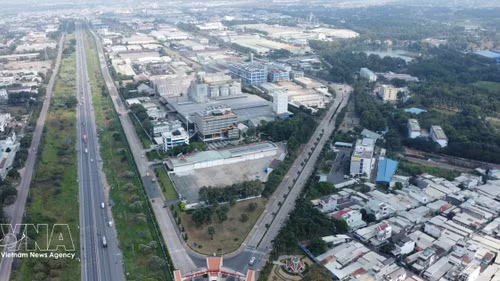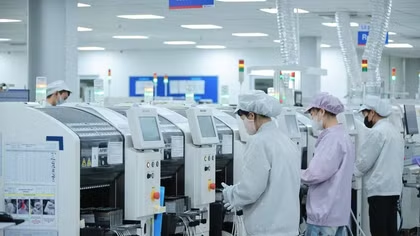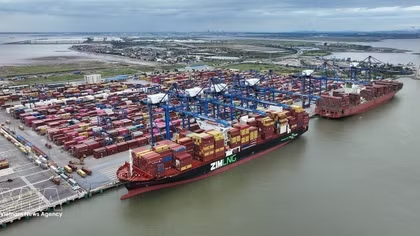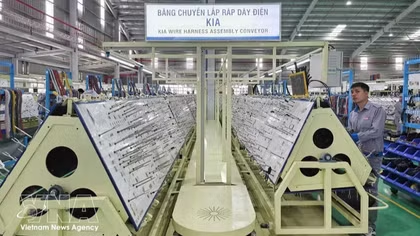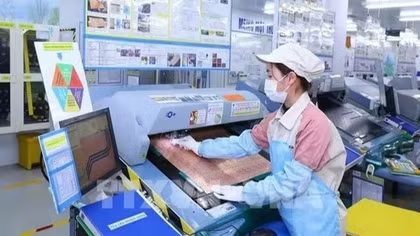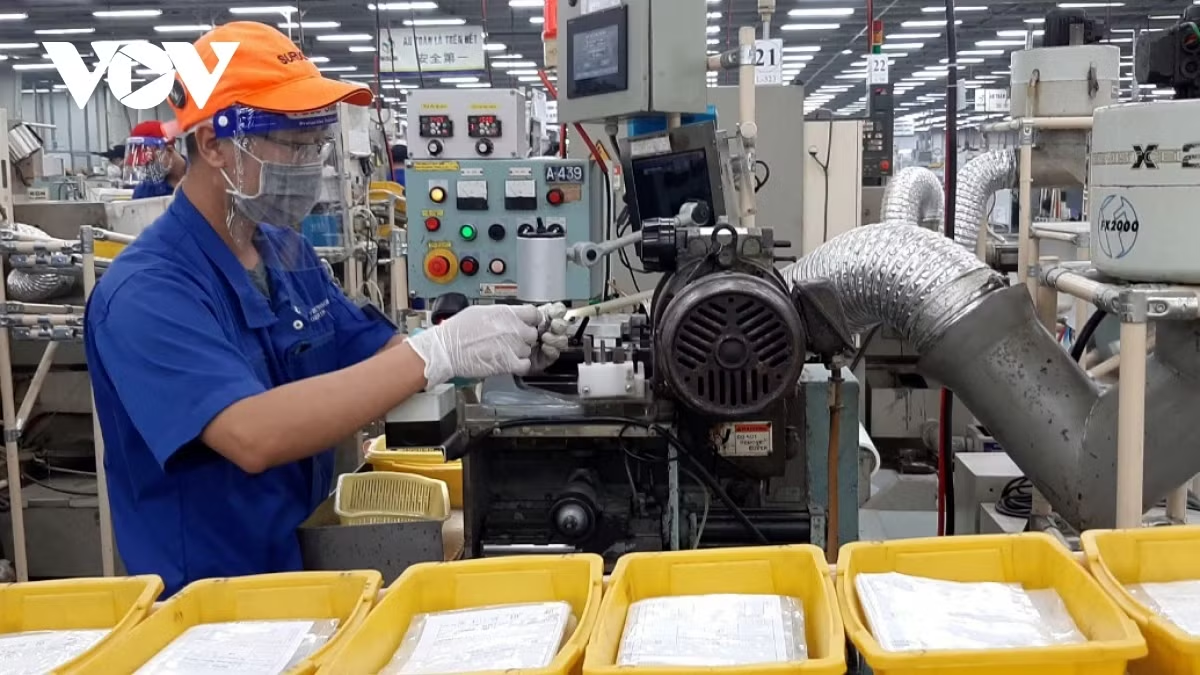
The first two months of the year saw the index of industrial production (IIP) increase by an estimated 5.4% over the same period last year. Of this, the processing and manufacturing industry grew by 6.1%, contributing 5.2 percentage points to the overall increase.
Moving forward, industrial production is forecast to enjoy plenty of advantages from the Government's policy of "living together" safely with COVID-19 and the swift response of local businesses as they gradually devise strategies to smoothly maintain production activities and supply chains amid still challenges relating to the pandemic. Along with this, export orders in many fields have been relatively abundant.
Supply chain recovery
Phan Thi Thanh Xuan, vice president of the Vietnam Leather, Footwear and Handbag Association (Lefaso), said that the current production pace of enterprises, especially leather and footwear ones based in the southern region, remains quite good. Many enterprises have secured export orders at least until the end of the second quarter of the year, which serves as the foundation for them to accelerate production and regain growth after being impacted by the COVID-19 pandemic.
“With Nike brand alone, Vietnam has risen to become the largest leather and footwear outsourcing and manufacturing country for the company, accounting for more than 50% of Nike's shoe output. Outsourcing and exporting for Nike makes up for about 30% of the whole industry's export turnover, creating jobs for around 300,000 workers. This popular sports shoe brand is poised to continue to invest and expand production in Vietnam," the Lefaso representative added.
Judging from the results of industrial production growth over the past two months, Assoc. Prof. Dr. Pham Tat Thang, senior researcher of the Institute for Strategy and Policy Research under the Ministry of Industry and Trade, said the operation of industrial zones, including those based in both the north and south, have been stable following the full resumption of supply chains, while trade promotion activities have been restored.
“Vietnam's export turnover during the reviewed period focused on key products, especially those in the processing and manufacturing industry. The nation has up to nine items with export turnover of US$1 billion or more, of which five with export turnover of US$5 billion or more, including industrial products with high value-added content such as phones, components, electronics, machinery, and equipment," Dr. Thang pointed out.
Concerns over human resources and price of raw materials and fuel
The fourth pandemic wave in late April last year hit industrial production centres, causing great difficulties for the Vietnamese processing and manufacturing industry. This decline in industrial production has caused the labour force in industrial zones to be dispersed to a certain extent, meaning recruitment of new skilled workers is a matter of concern at this time.
Furthermore, fluctuated gasoline prices in an upward direction is one of the great difficulties posed to the entire economy in general, with this particularly affecting the processing and manufacturing industry. With the economy recovering, the demand for petroleum will inevitably increase, potentially even seeing a sharp spike.
However, petroleum supply is being greatly impacted by the Russia-Ukraine conflict, as well as instability in the Middle East, thereby causing gasoline prices to greatly affect the production, import, and export activities of the processing and manufacturing industry.
According to the Vietnam Textile and Apparel Association (Vitas), increased transportation costs coupled with a general shortage of containers remains a significant bottleneck that needs to be removed. It is predicted that it will not be until the second half of the year when the number of newly-built containers is supplied to the market, the transport problem will begin to be solved. These are barriers which could have a major impact on production and export activities.
Truong Van Cam, vice president and general secretary of Vitas, suggested that the State go ahead with its vaccine strategy, which represents a fundamental solution for businesses to recover and develop in the new normal. This should be done while expanding fiscal and monetary policies, along with amending improper regulations to reduce the cost burden for businesses.
The Lefaso representative said that, in order to continue to remove difficulties and help domestic leather and footwear enterprises recover production swiftly, the Government and relevant ministries need to improve procedures for local businesses to access the VND350,000 bailout package as soon as possible. Indeed, this step represents a means of promoting economic recovery and development moving forward.
Moreover, it remains necessary to study and issue new policies, focusing on those which support enterprises in taking fully advantage of free trade agreement (FTAs) to increase export turnover.
This should be done alongside improving the infrastructure system, logistics service, and working out a better development strategy aimed at investing in raw materials, and also attracting credit to develop industrial clusters, parks, and new material areas.