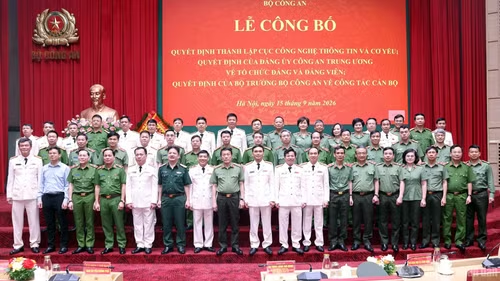
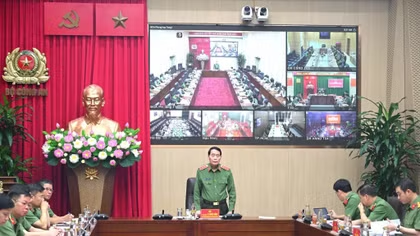
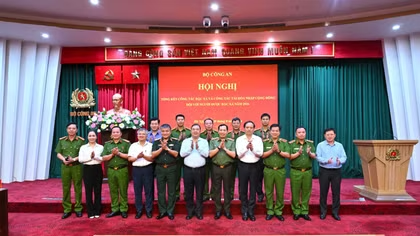
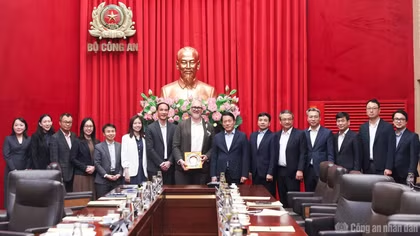
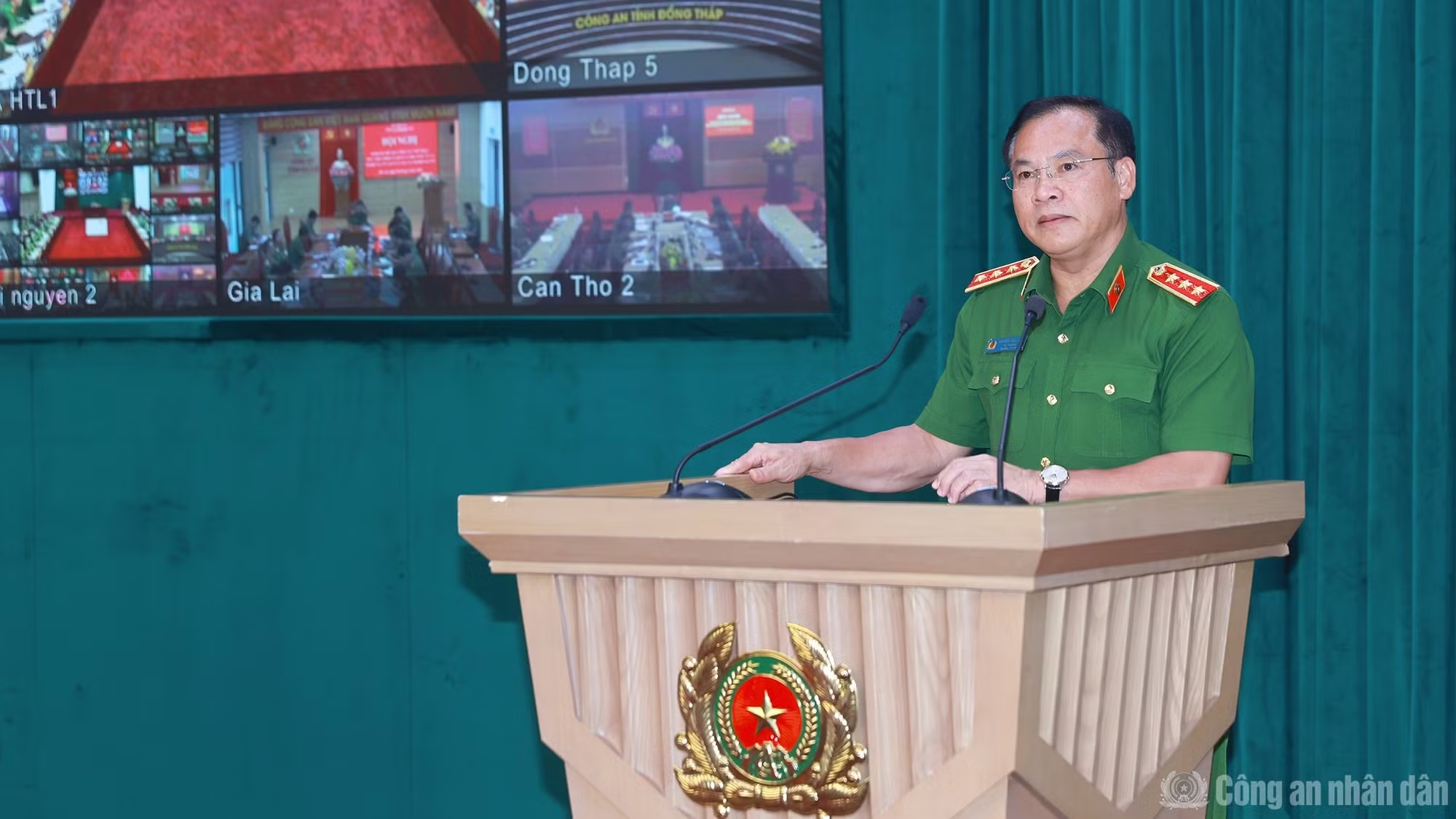
Politburo Member and Minister of Public Security General Luong Tam Quang attended and delivered a directive address. Member of the Party Central Committee and Deputy Minister of Public Security-cum-Head of the Criminal Investigation Police Authority of the Ministry of Public Security Senior Lieutenant General Nguyen Van Long chaired the conference.
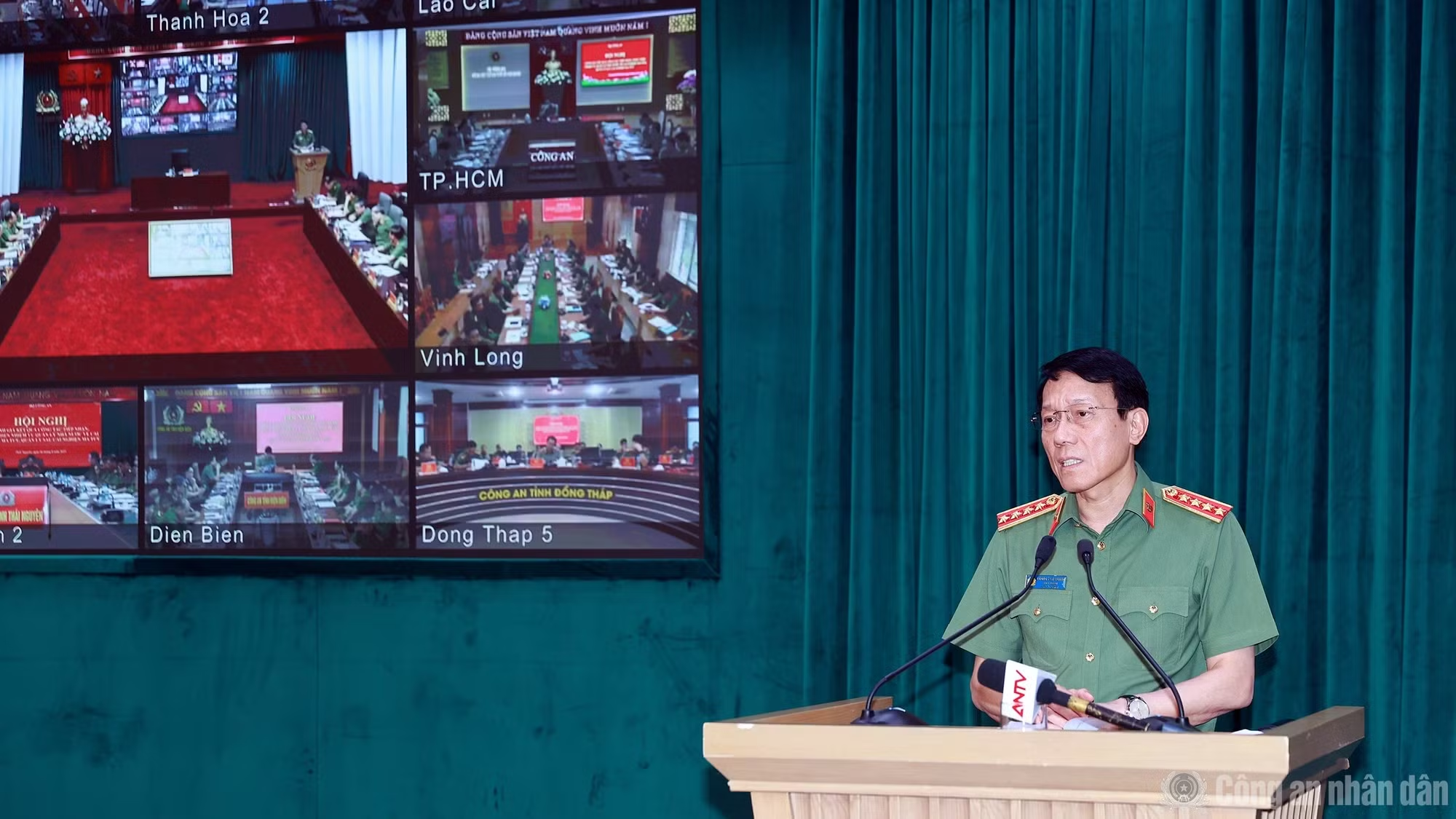
The conference was also attended by representatives and leaders from various public security units and local police departments. It was conducted in person at the ministry's headquarters and broadcast online to provincial, municipal, and commune-level police units nationwide.
At the conference, leadership from the Drug Crime Investigation Police Department presented a summary report on the first year since assuming state management responsibilities for drug rehabilitation and post-rehabilitation management.
Accordingly, on March 1, 2025, the Ministry of Public Security officially took over the state management of drug rehabilitation and post-rehabilitation duties from the Ministry of Labour, Invalids and Social Affairs.
More than one year after assuming these responsibilities, thanks to the close attention of the National Assembly and the Government, the leadership of local Party committees and authorities, the support and coordination of various sectors, and especially the exceptional determination and efforts of public security units and local police forces in strategic advice and execution, the handover, reception and management of drug rehabilitation establishments have been carried out safely, smoothly and without disruption.
Immediately after taking over these duties, the Ministry of Public Security urgently consolidated its organizational apparatus, restructuring 97 facilities formerly designated as division-level units into 77 public drug rehabilitation centers operating as team-level units under the Drug Crime Investigation Police Divisions of provincial and municipal police departments. Concurrently, the ministry advised on perfecting the legal framework, professional procedures and internal operational guidelines, creating a unified legal basis for rehabilitation work nationwide.
Notably, the Ministry of Public Security advised the Prime Minister to issue Decision No. 08 regarding credit policies for individuals completing drug rehabilitation, creating favorable conditions for them to stabilize their lives and reintegrate into the community.
After more than a year of implementation, regimental conduct, posture, discipline, and internal order at the rehabilitation facilities have seen clear transformations. Persons undergoing rehabilitation are guaranteed comprehensive healthcare, nutrition, and daily living conditions; they receive regular education in politics, law, life skills, general education, literacy, and vocational training, alongside participating in cultural, artistic, and traditional education activities.
Implementing the Government's Decision No. 08, 350 individuals completing rehabilitation have received loans totaling nearly VND 43 billion to develop production, business, and job creation. Among these, one manufacturing and business establishment was granted a loan of VND 1 billion to employ rehabilitated individuals.
The transfer of duties has established absolute consistency in state management and provided seamless organization for rehabilitation and post-rehabilitation work. It closely integrates "supply reduction," "demand reduction," and "harm reduction" strategies, contributing to gradually resolving the root causes and conditions that breed drug crimes and social vices.
Through these measures, the efficacy and efficiency of drug prevention and control have been enhanced, supporting addicts and rehabilitated individuals in community reintegration, aiming to build a safe, healthy society and a drug-free Vietnam.
At the conference, representatives from local police departments exchanged views and evaluated recorded achievements, highlighted lingering bottlenecks and difficulties during execution, and proposed numerous solutions to enhance the efficiency of drug rehabilitation and post-rehabilitation management in the coming period.
Concluding the conference, Minister Luong Tam Quang commended the dedication, efforts and achievements made by the Public Security forces during their first year of executing responsibilities for the state management of drug rehabilitation and post-rehabilitation.
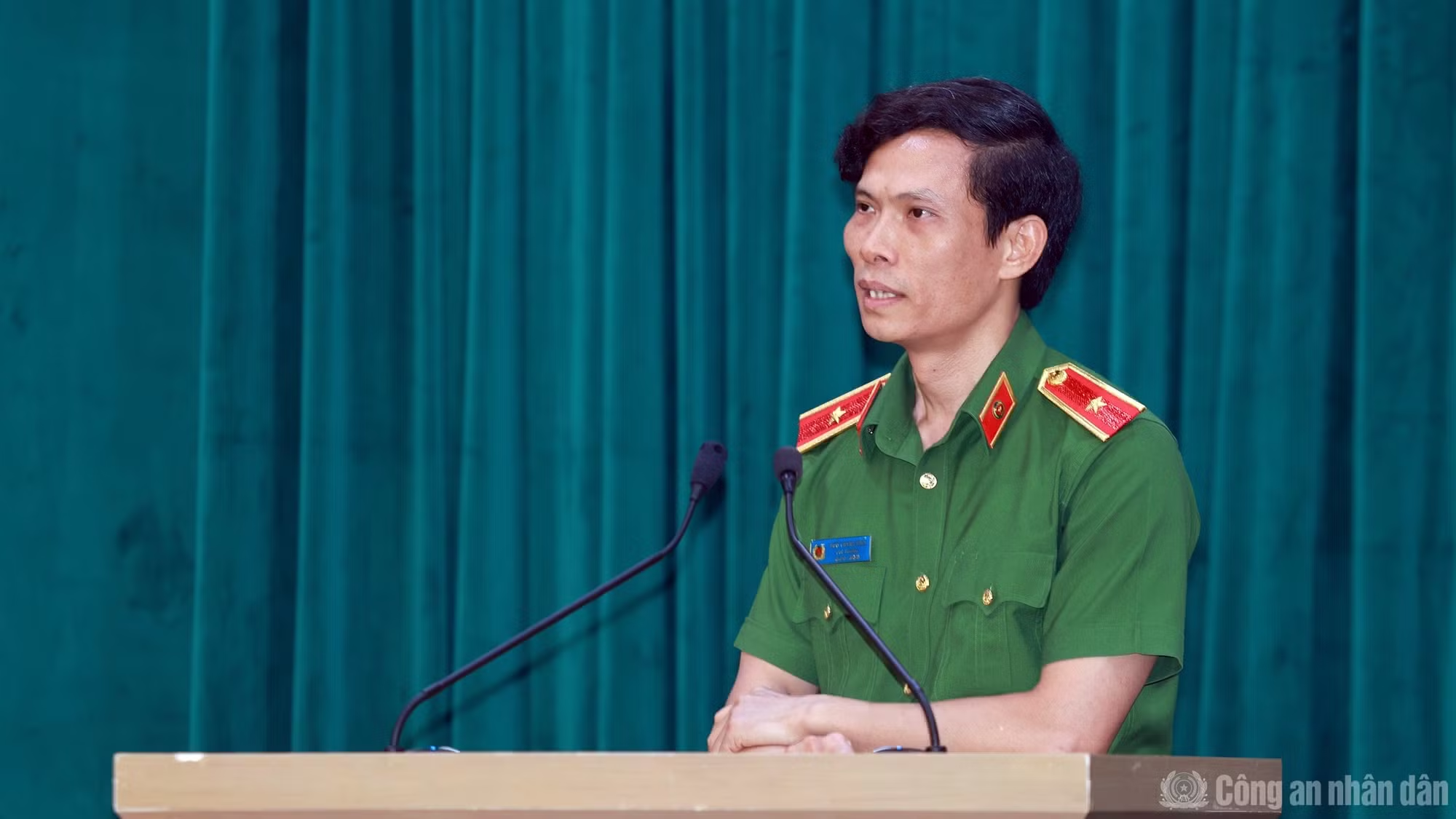
Emphasizing the mandates moving forward, Minister Luong Tam Quang requested a concentrated effort to bring all aspects of operations into structured order and elevate quality and efficiency. The forces must focus intensely on screening drug addicts, organizing rehabilitation, providing vocational training, arranging post-rehabilitation employment, and managing individuals after rehabilitation, identifying this as a pivotal, core phase closely linked to tightening discipline, order and character education. He also urged accelerating the application of science and technology in drug rehabilitation and post-rehabilitation management.
Furthermore, supporting individuals after rehabilitation to reintegrate into the community is a vital task inseparable from the core rehabilitation process, representing a shared responsibility of the entire political system and society. It is essential to excel in vocational training, credit access, and job creation for rehabilitated individuals to rebuild human resources and contribute positively to society.
The Minister expressed his firm confidence that drug prevention and control in general, and drug rehabilitation and post-rehabilitation management in particular, will achieve critical milestones in the coming period. This will contribute to curbing the growth of all types of crime, guaranteeing public order and social safety to serve the socio-economic development of the nation.