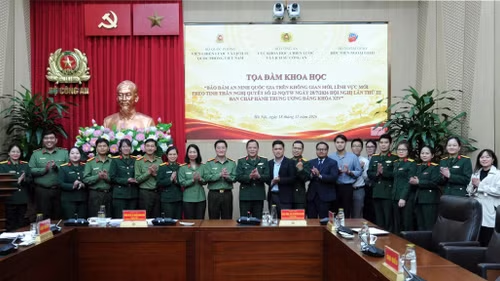
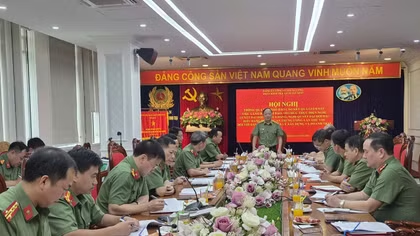
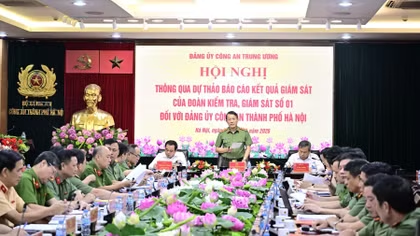
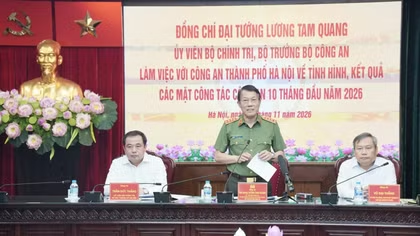
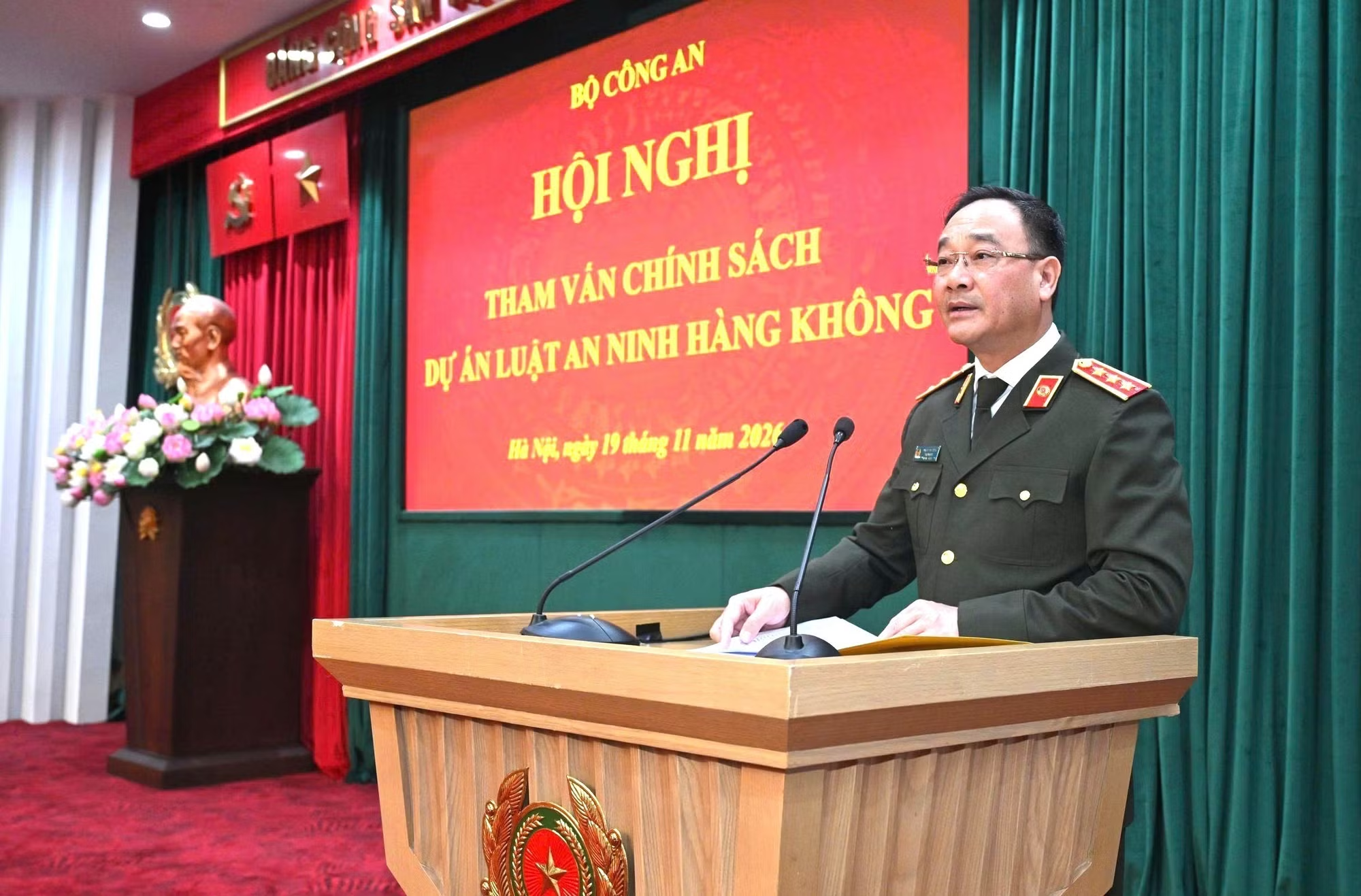
On November 19 in Hanoi, the Ministry of Public Security held a policy consultation conference on the draft Law on Aviation Security.
Senior Lieutenant General Pham The Tung, Member of the Party Central Committee and Deputy Minister of Public Security, chaired the conference.
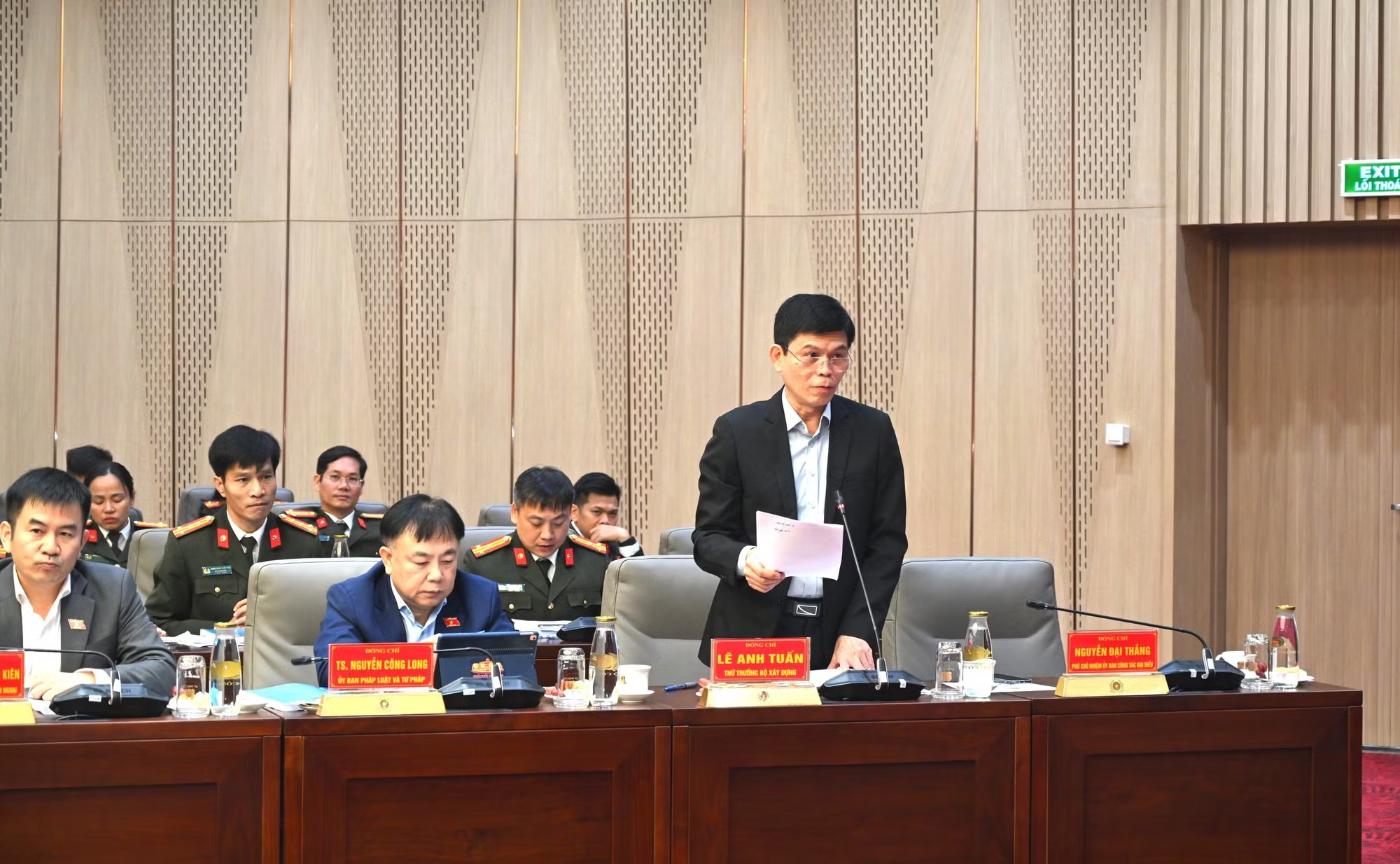
Present at the conference were Le Anh Tuan, Deputy Minister of Construction, along with representatives from agencies of the National Assembly, the Government Office, central agencies, ministries, sectors, and the People’s Committees of provinces and centrally-run cities.
On May 22, 2026, the National Assembly Standing Committee issued Plan No. 64/KH-UBTVQH16 to implement Conclusion No. 17-KL/TW of the Politburo and the Legislative Orientation Project for the 16th National Assembly term, assigning the Ministry of Public Security to take the primary responsibility for drafting the Law on Aviation Security.
In his opening remarks, Deputy Minister Pham The Tung emphasized that, in recent years, Viet Nam’s civil aviation sector has experienced robust growth, with both domestic and international flight networks continuously expanding. However, alongside this development, threats to aviation security have become increasingly diverse and complex...
The Deputy Minister noted that the practice of legal regulations regarding aviation security in recent times has revealed that they still have numerous limitations and shortcomings, such as unclear delineation of management responsibilities, lack of coordination in incident response, and inadequate implementation of aviation security measures. All of the issues fall short of current practical requirements.
Furthermore, since March 1, 2025, the Ministry of Public Security has assumed the function and responsibility for state management of aviation security nationwide. To date, aviation security control forces under the Ministry of Public Security have been established and are working at 100% airports. They have been professionally trained in law, operations, equipment, use of weapons, support tools, and operation of vehicles to ensure aviation security.
Deputy Minister Pham The Tung stressed that, given these issues, it is essential to have a specialized law governing aviation security, with the aim of fully institutionalizing the Party’s viewpoints and the State’s policies and laws on national security strategy, including the field of aviation security...
To further refine the policy dossier for the draft Law, Deputy Minister Pham The Tung requested that delegates focus discussions and comment on the orientation of major policies, the specifics of each policy, the components of the policy dossier and other related issues, thereby contributing to the development of a comprehensive, modern, and practical law on aviation security that will meet the requirements for missions of safeguarding national security and ensuring social order and safety in the new context.
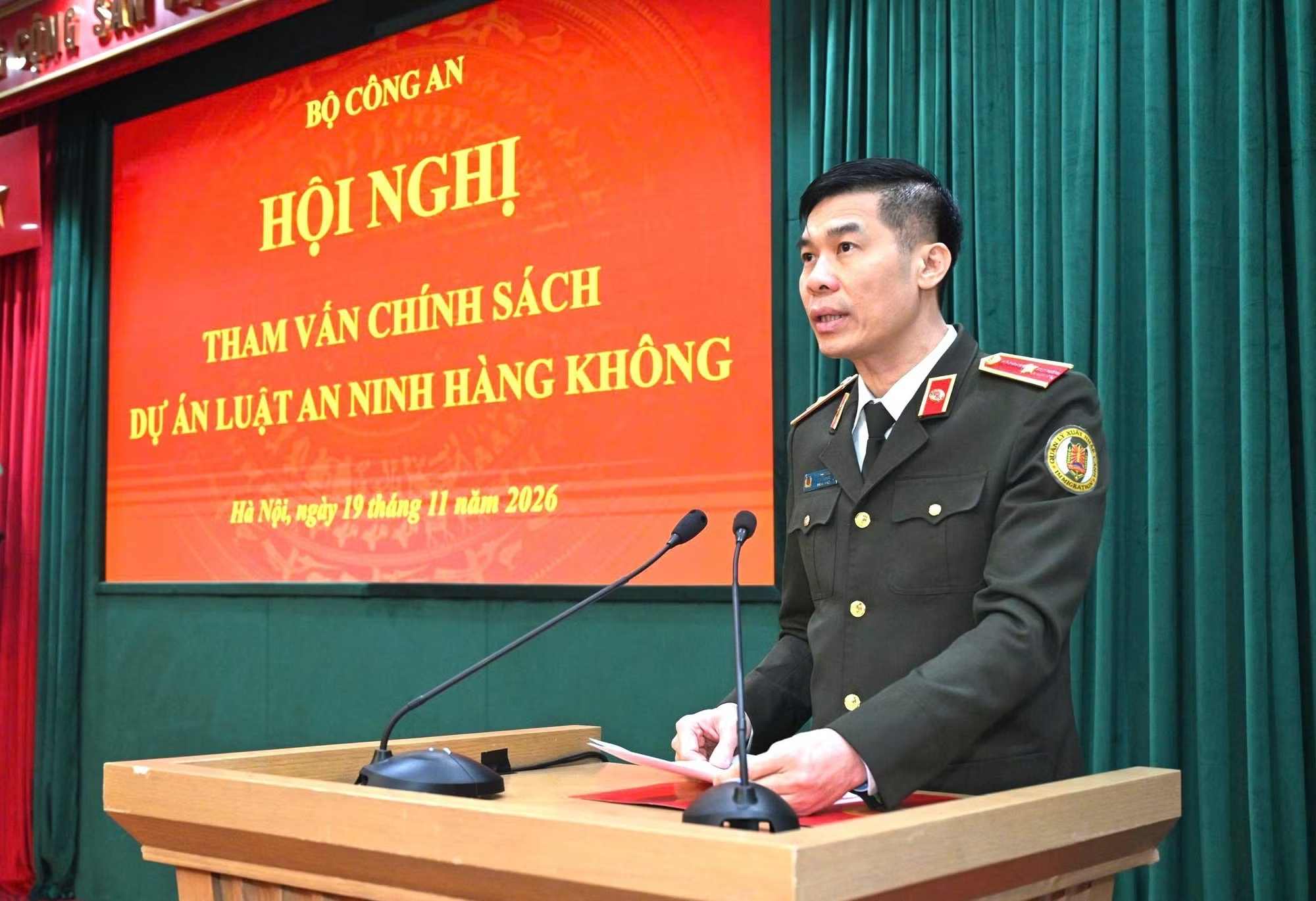
The drafting agency’s representative presented a summary report on the draft Law’s policy contents. Major General Cao Minh Huyen, Director of the Immigration Department, stated that, based on practical reviews and the absorption of the Party’s viewpoints, domestic legal systems, and relevant international treaties and agreements, the Ministry of Public Security has proposed four major policy groups in the draft Law on Aviation Security: (1) Completing the legal framework for specialized state management of aviation security; (2) Establishing mechanisms and activities to ensure aviation security, identify and handle acts threatening aviation security; (3) Developing mechanisms for quality control, aviation facilitation, and risk management in aviation security to meet practical needs and comply with international law; (4) Improving mechanisms and policies on resources to ensure aviation security in the new situation.
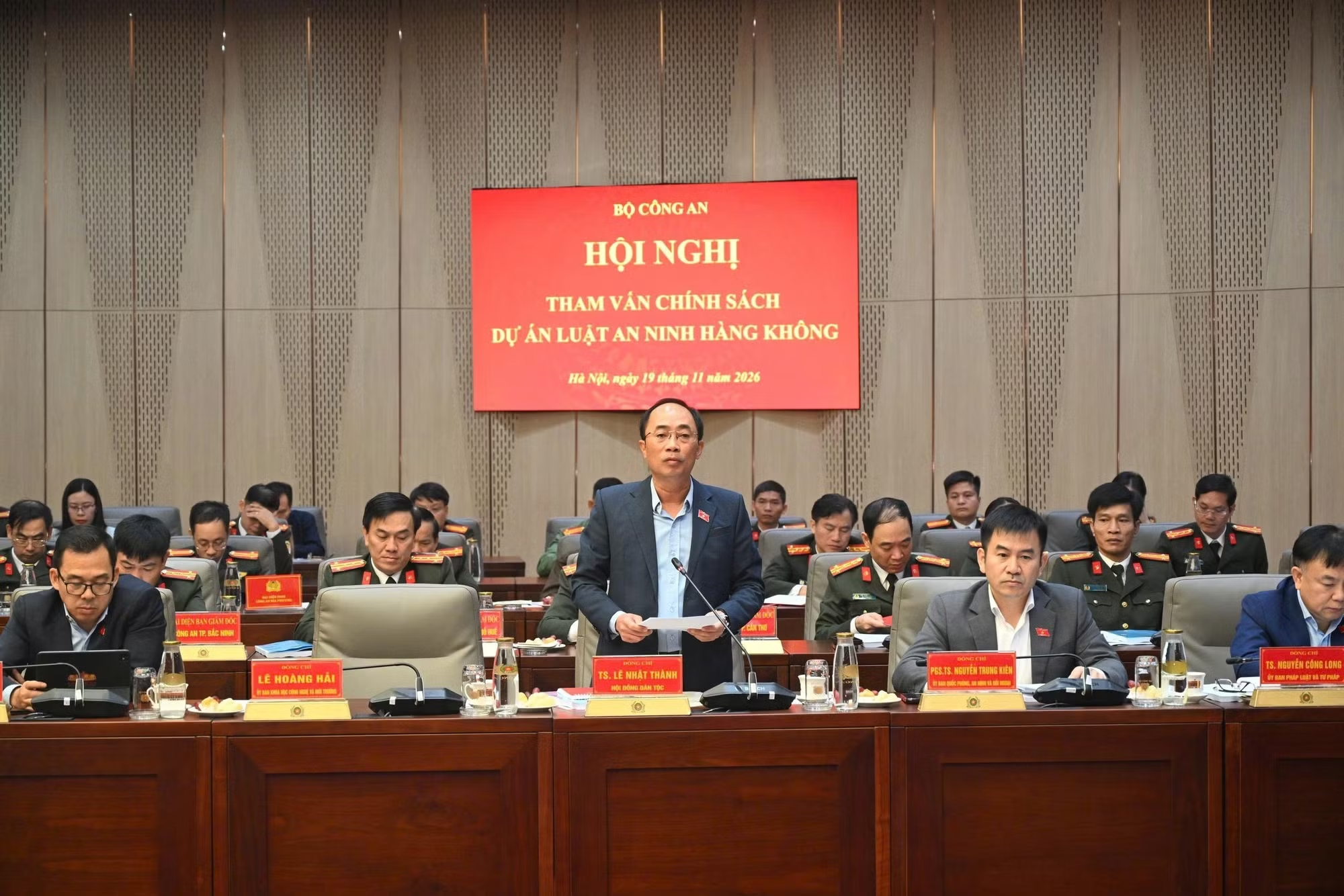
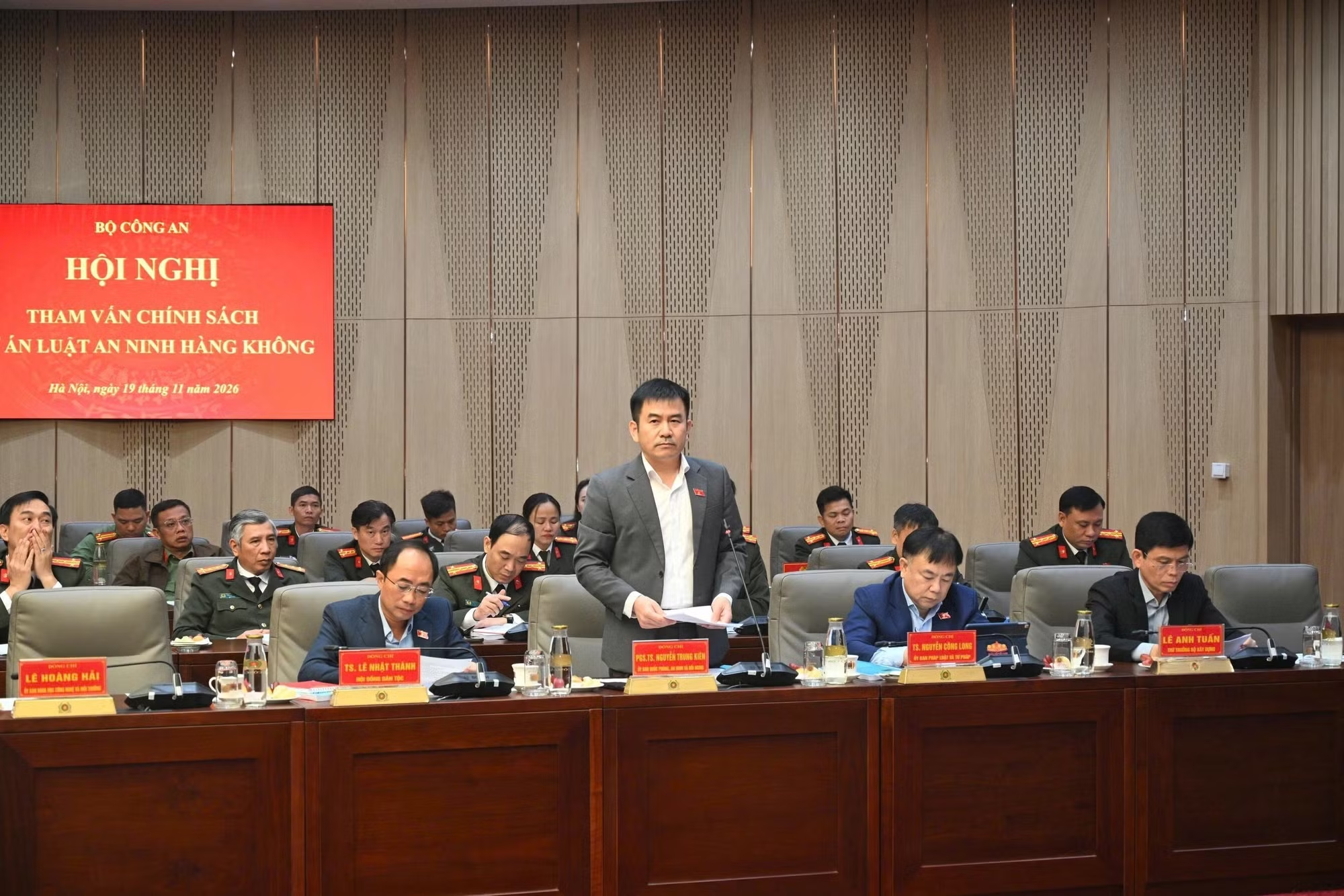
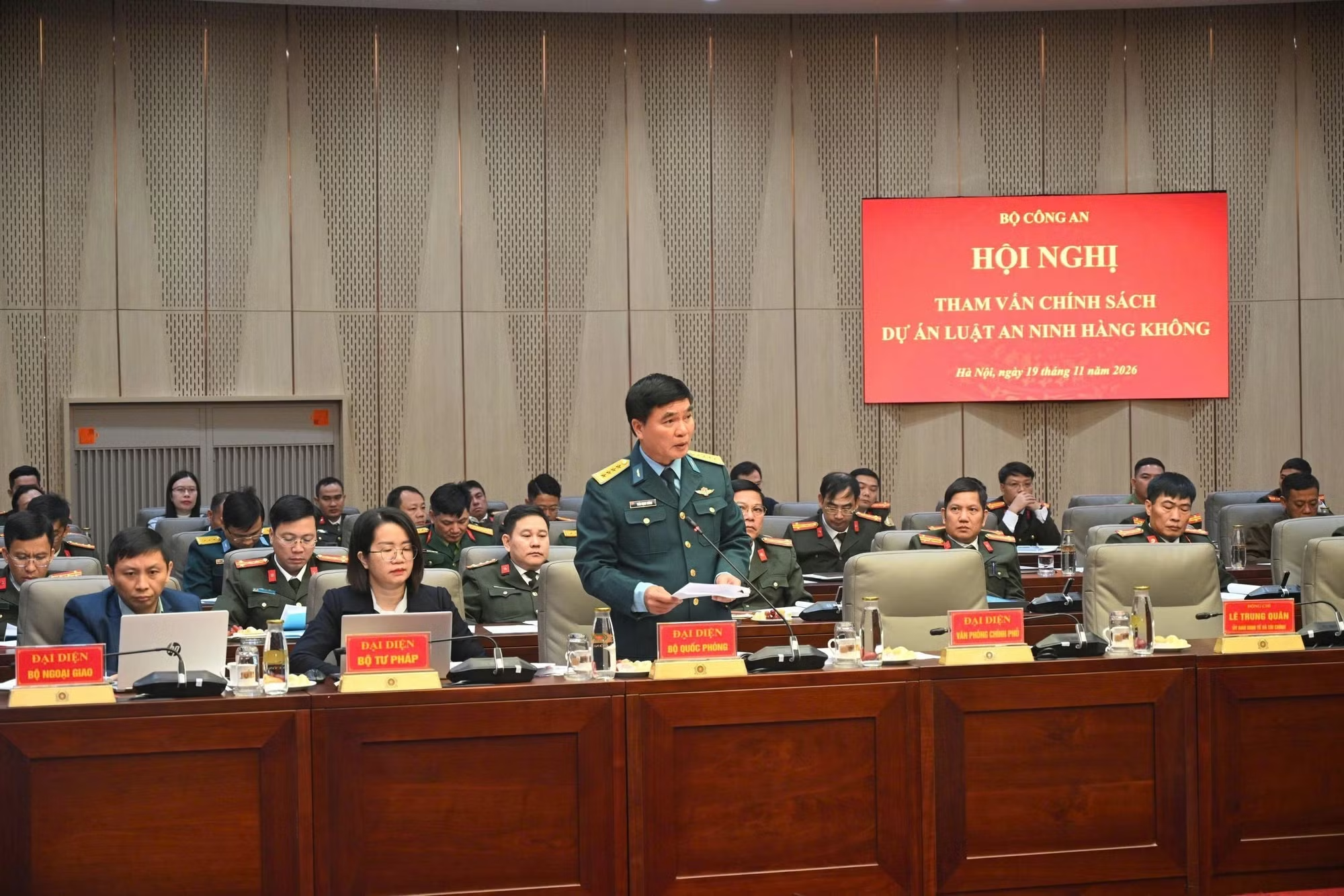
At the conference, delegates agreed on the necessity of developing the Law on Aviation Security; discussed and provided input to refine the key policy groups of the draft law; proposed additional contents for the policy dossier; and emphasized the need to ensure consistency and synchronization between the Law on Aviation Security and other relevant laws.
In his concluding remarks, on behalf of the Executive Committee of the Public Security CPV Organization and the Ministry of Public Security’s leadership, Deputy Minister Pham The Tung acknowledged and highly appreciated the dedicated, responsible and scientific contributions of the delegates to the seminar. He affirmed the necessity of formulating and promulgating the Law on Aviation Security, which will serve as an important legal foundation for state management of aviation security; specialized activities to ensure aviation security, identify and handle acts threatening aviation security; quality control and risk management in aviation security, as well as for the building of mechanisms and policies on resources to ensure aviation security.
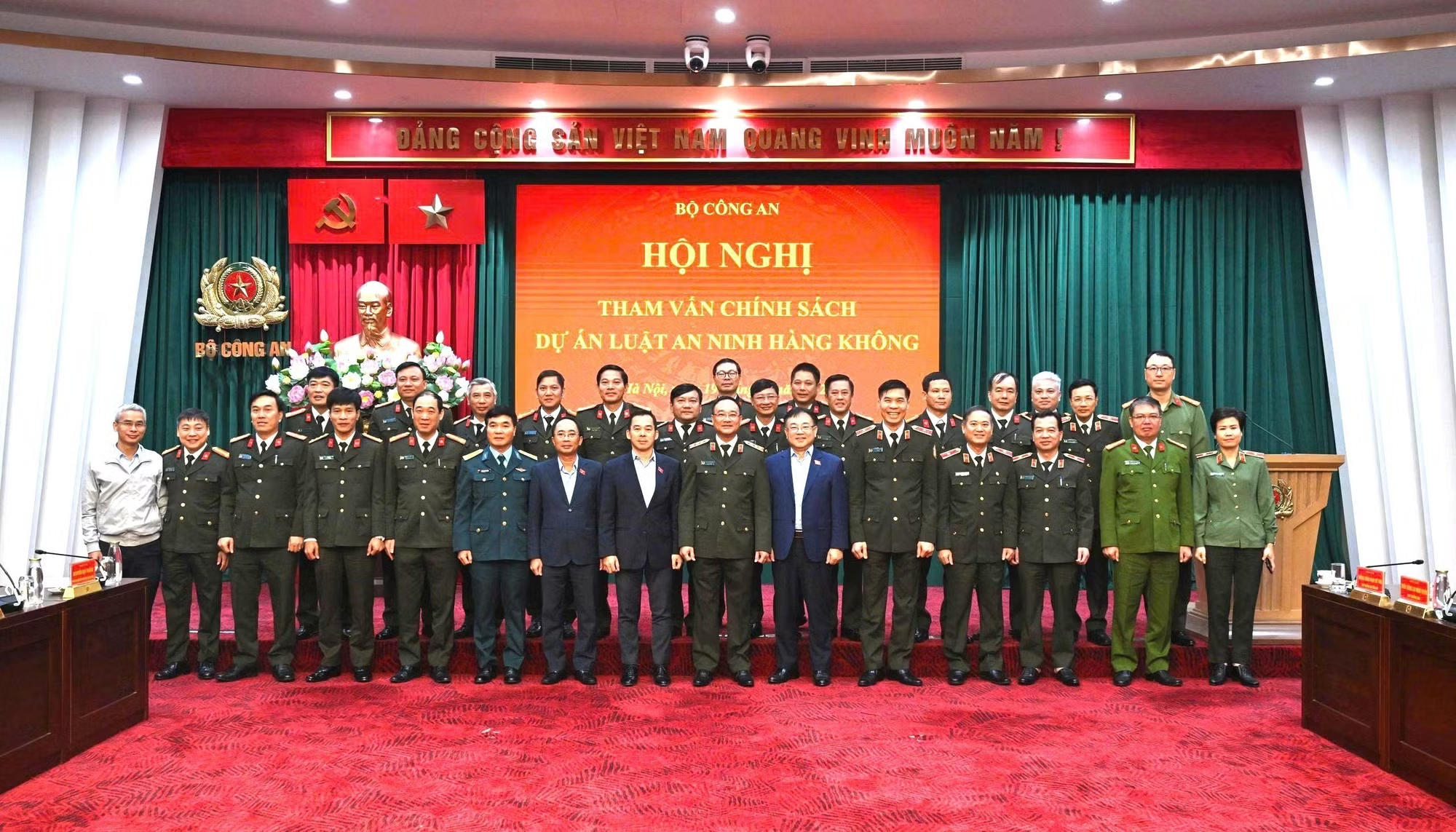
Deputy Minister Pham The Tung emphasized that the four policy groups in the draft Law broadly cover the major and urgent issues arising from practical needs. Based on the ideas and opinions given at the conference, he assigned the Immigration Department to collaborate with the Department of Legal Affairs and Administrative and Judicial Reform and other relevant units, to seriously take the ideas and opinions into consideration; review the entire policy dossier with a focus on key and essential issues, ensuring sufficient theoretical and practical bases; and urgently finalize the policy dossier to ensure quality for submission to the Ministry’s leadership and the Ministry of Justice for appraisal in accordance with the set schedule and requirements.
Additionally, the Deputy Minister requested that ministries, sectors, and relevant agencies closely coordinate with the Ministry of Public Security during the finalization of the policy dossier, provide complete and responsible written feedback on matters related to their respective areas of state management, and intensify the review of current legal regulations, especially specialized legal documents, to ensure the consistency and synchronization of the legal system.