Pho (Vietnamese noodle)

Throughout the country, you can easily find yourselves a hot bowl of pho. Yet if you are a food expert or you are acquainted with the taste of Hanoi pho, you will find that there is no pho that can have the flavor of the one served in Hanoi.
The light sweetness of the hot broth which floods the white rice noodles having particular flavors of Hanoi will bring you the most satisfying feeling.
Pho is a Vietnamese noodle soup, usually served with beef or chicken. The soup consists of noodles made from rice flour.
This dish is often served with Asian basil, saw tooth herb, rau om (rice paddy herb), cilantro, thinly sliced green onion, lime juice, and bean sprouts that are added to the soup by the person who is dining.
The dish is associated with the city of Hanoi in which the first Pho restaurant opened in the 1920s.
Pho is a popular street food, and night-food. Alongside gỏi cuốn, “Pho” is one of "the world's 50 most delicious foods," according to CNN.
There are a large number of famous pho restaurants in Hanoi, such as Pho Co Cu on Lieu Giai Road, Thin restaurant on Lo Duc Street, Suong restaurant on Dinh Liet Street, etc. The price for a bowl of pho is from VND25,000 ($1.2).
Pho tron (Mixed pho)

One of the favorite foods in Hanoi is pho tron. This dish is popular and delicious.
It’s a dry type noodles dish that includes dried beef, bean sprouts, dried onion and other raw vegetables; served in sour and sweet sauce made from fish sauce.
The noodles are added into the bowl and then some pork chop, herbs, peanuts and dried scallions.
Next, the cooks will add sour sauce,the most important ingredient to make this dish delicious.
Each shop has a different way of making this sauce and they keep it as a secret. Therefore, you may enjoy different tastes in different restaurants.
Bun cha (vermicelli with grilled pork)

Bun cha is the signature dish of Hanoi.
At lunchtime you’ll find just about all of Hanoi sitting on kid-sized stools and slurping down this combination of grilled pork, salty-sweet broth, slices of green papaya, rice noodles, and fresh herbs.
Every neighborhood in Hanoi has a bun cha place — just follow your nose to the smoky street-side grill.
Where to try: The ideal place to enjoy the specialty is the old-established restaurant at No.1, Hang Manh Street, Old Quarter Hanoi. But you can’t walk far without stumbling on bun cha anywhere in Hanoi.
Bun dau mam tom (vermicelli served with tofu and shrimp paste)

A Hanoi dish that makes people want to try immediately only by hearing its name. For a long time, bun dau mam tom has become a specialty that many people have to try whenever setting feet on the capital city.
A set of bun dau mam tom includes a dish of fresh rice vermicelli, fried tofu, shrimp paste mixed with lemon or kumquat juice, raw vegetables, and boiled pork.
Some restaurants even add fried fish paste to the set. It will be a big mistake if visitors to Hanoi skip bun dau mam tom.
Pho cuon (rolled noodles)

Apart from the renowned Hanoi pho noodle, pho cuon is not less delicious and its genuine taste can only be found in Hanoi.
Fried beef and herbs are rolled in the rice paper cake and then the roll is dipped into a sour and sweet sauce which is added with slices of pickle.
To enjoy this dish, tourists should visit the restaurants on Ngu Xa or Quan Thanh Street.
Bun oc (rice vermicelli served with snails)

Being one of the most famous dishes of Hanoi, bun oc can satisfy people of all ages. The dish, however, is very simple, containing only rice vermicelli, several snails, sour broth and herbs.
Bun thang
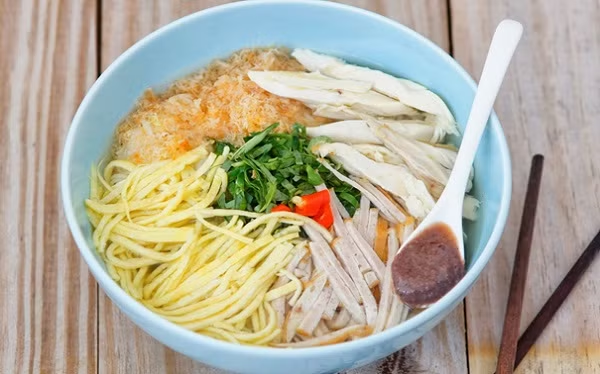
Bun thang or rice vermicelli with chicken, egg and pork can be enjoyed at any time of the day.
The clear yet flavorful broth is made with 20 ingredients, including dried shrimp, squid, shrimp paste, spring onion, coriander, ginger, mushroom, beet, fish sauce, sugar candy, and vinegar.
It is also a particularly attractive Hanoi dish as the noodles, chicken, eggs, pork slices, and a dollop of shrimp paste are carefully arranged to resemble a flower.
Bun thang is one of the most popular yet hidden fares in Hanoi and one can find it only outside of the Old Quarters or a few special restaurants scattered across the city.
The chicken broth is artistically done and the dish is beautifully served.
Where to try: Bun thang Ba Duc on Cau Go street or Bun Thang at 13 Gia Ngu is a great place to try the dish. This street vendor has a limited number of seats on the pavement but you will be surprised how many people can fit in the two storey old house behind the stall.
Dishes from duck
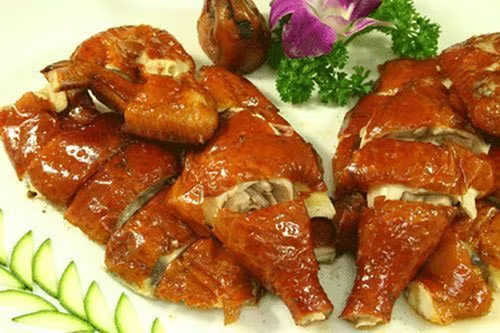
There are lots of dishes processed from duck meat, for example duck simmered with dracontomelum, sauté duck, duck with bamboo shoot, etc.
You can enjoy these at duck meat restaurants on Kim Ma or Lang roads.
Xoi xeo (sticky rice)

Chances are you will encounter this dish in almost every outdoor market. There are even two restaurants dedicated fully to this dish in the Old Quarters.
Xoi xeo is sticky rice topped with ground de-hulled mung bean and fried onion. Sometimes it can be served with eggs or steamed chicken breast on request.
The serving is filling and is good for any time of the day but most Vietnamese have it for breakfast or lunch.
Oc luoc (boiled snails)

Hanoi’s oc luoc is special for its sauce. Some boiled snail restaurants are well-known for their sauces, which have special flavors.
Boiled snails are taken with minced ginger, lemon leaves and sometimes with cucumber and pachyrrhizus.
To enjoy the best boiled snails, visitors should go to a boiled snail restaurant on Luong Dinh Cua Street, No. 1 Dinh Liet, Lan Binh restaurant at 18 Hang Ba and Trai Gang market. This cuisine is usually available from late afternoon to midnight.