According to investigators, the group exploited religious activities to spread separatist ideology, undermine ethnic unity, and recruit local ethnic minority residents in Gia Lai province.
Alongside criminal investigations against key suspects, local authorities and security forces have also intensified public outreach campaigns to help residents recognise the group’s manipulative and anti-government activities.
Using religion as a cover for separatist activities
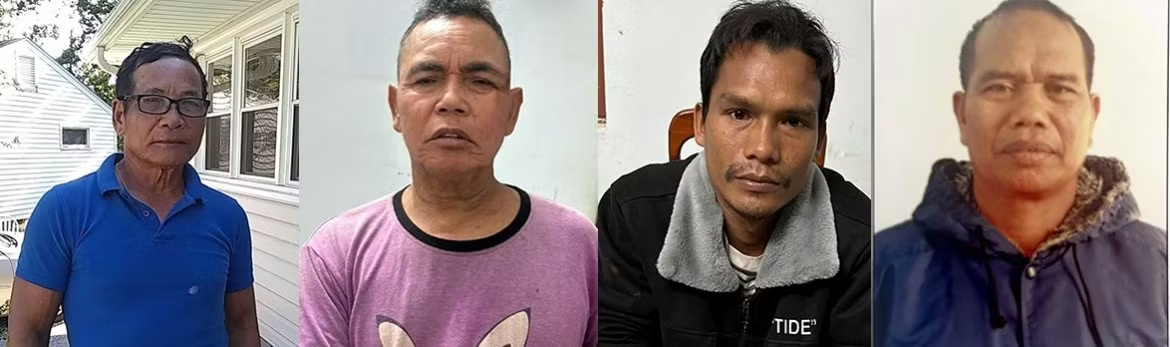
Police said the network began operating in 2019 after overseas-based FULRO affiliates identified as Di (born 1941) and Dinh Yum (born 1963) allegedly coordinated with domestic actors to rebuild separatist influence in the Central Highlands. The organisation aimed to establish a separate state for the Bahnar ethnic group in the region.
From 2023 onward, the group reportedly expanded recruitment efforts under the name “Bahnar Dega Kon Kong”, collecting personal information from followers and sending the data abroad in an attempt to seek outside intervention.
Investigators identified several local organisers, including Roh (born 1963) from Kon Brung village in Ayun commune and Thong (born 1992) from To Drah village in Bo Ngoong commune, as core members responsible for expanding the network.
Police said six illegal gathering points involving more than 200 participants were established in Ayun and Bo Ngoong communes. Between July and September 2025, the group allegedly recruited more than 350 people across 22 villages in seven communes of Gia Lai province. It was accused of receiving money, clothing, banners, badges, and other materials from overseas to strengthen its operations.
According to police, the group used religion as a cover to spread separatist propaganda, incite ethnic division, and oppose local authorities, posing risks to social order and regional security.
Lieutenant Colonel Nguyen Van Day, head of the Investigation Security Division under Gia Lai Provincial Police, said the organisation was not a legitimate religious movement but “a disguise for activities linked to FULRO and Dega Protestantism.”
“If left unchecked, the group could have expanded its influence and threatened local security and social stability,” he said.
Legal action launched against key members
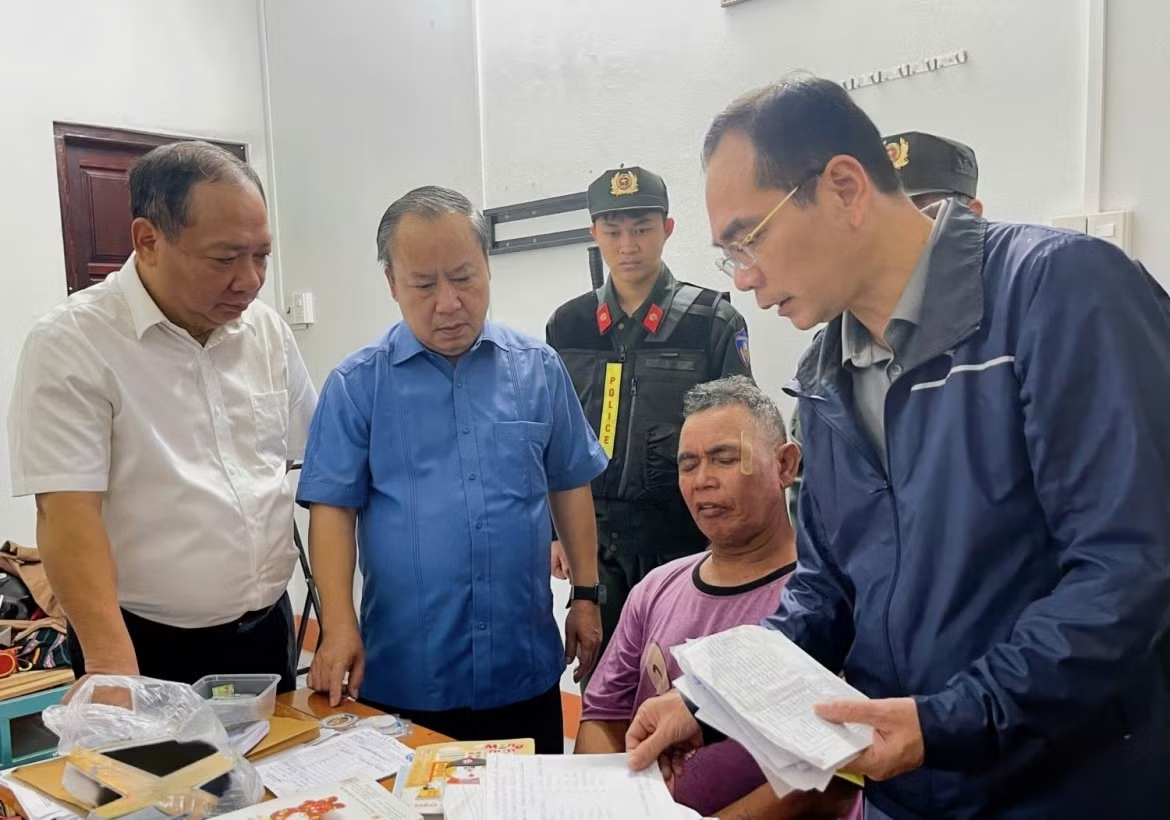
Following directives from Vietnam’s Ministry of Public Security and Gia Lai provincial authorities, police launched coordinated operations to detect and dismantle the organisation.
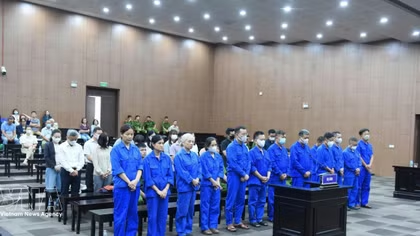
On April 14, 2026, the Investigation Security Agency of Gia Lai Provincial Police announced it had completed legal procedures to prosecute four individuals on charges related to “undermining national unity policy.” The suspects were Roh, Thong, Di, and Dinh Yum. Authorities said Di and Dinh Yum are currently overseas and may be prosecuted in absentia under Vietnamese law.
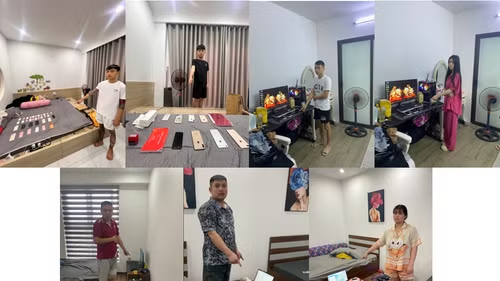
In mid-May 2026, police expanded the investigation and arrested several additional core members allegedly linked to the organisation.
Lieutenant Colonel Phan Thanh Hai, deputy head of the Internal Security Division of Gia Lai Provincial Police, stated that “Bahnar Dega Kon Kong” was essentially a new form of the banned “Dega Protestantism” movement orchestrated by overseas extremist elements.
He said the case reflected authorities’ determination to prevent attempts to exploit ethnic and religious issues to undermine national solidarity.
Community outreach helps residents reject illegal group
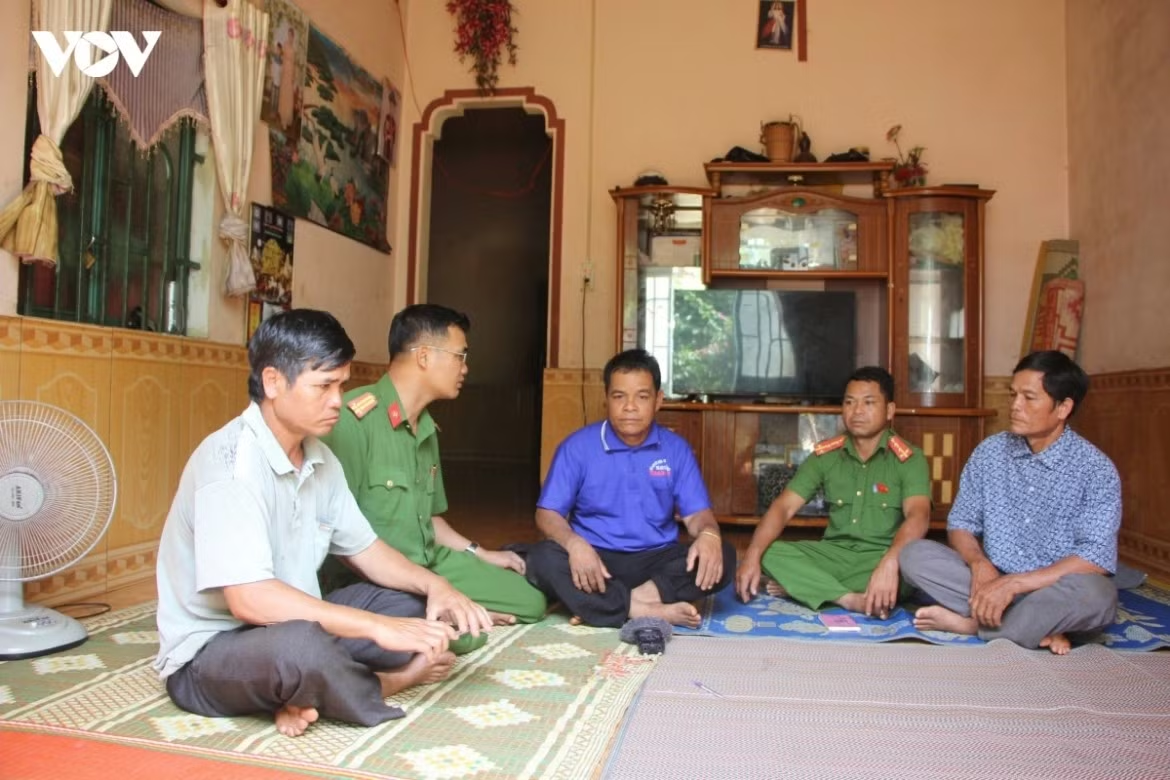
Alongside law enforcement measures, authorities in Gia Lai have focused heavily on public awareness campaigns aimed at persuading residents who were influenced by the group to return to lawful religious practices.
In To Drah village, Bo Ngoong commune, Bai, 43, a local Bahnar resident, said he initially believed the organisation was “a religion specifically for the Bahnar people.” He recalled many villagers joined after being told the group had been officially recognised.
Only after receiving explanations from local authorities and police did he realise the organisation was exploiting religion for political purposes.
“The Bahnar Dega Kon Kong sect is wrong because it causes ethnic division. The State does not allow that. Once I understood it was wrong, I stopped following it,” Bai said.
Village elders, respected community figures, local Party officials, and village leaders have played a key role in educating residents about what authorities described as the organization’s divisive agenda.
Dinh Chroh, Party Cell Secretary and head of To Drah village, said Vietnam’s 54 ethnic groups “cannot be separated into so-called independent religions that go against national unity.”
Maintaining stability in Central Highlands
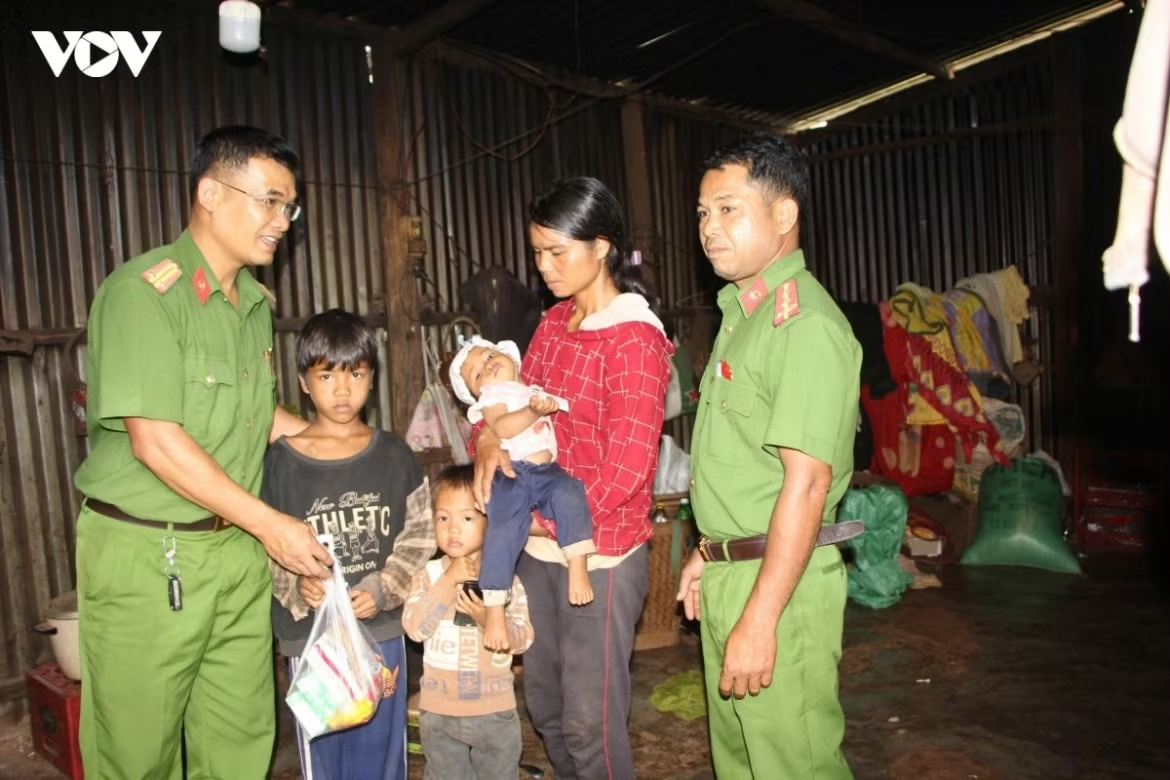
According to Colonel Pham Huu Truong, deputy director of Gia Lai Provincial Police, preventing organisations from exploiting ethnic and religious issues remains a priority in safeguarding national security and social stability.
Security forces are strengthening both preventive operations and ideological campaigns to stop extremist organisations from recruiting supporters in remote communities, Truong said.
He also emphasised the importance of involving village elders, reputable local figures, and former followers who have renounced the organisation in public education efforts.
The fight against organisations accused of exploiting ethnic and religious issues in the Central Highlands is described as a long-term and complex challenge. However, coordinated efforts by police, local governments, and residents will continue to prevent extremist narratives from gaining influence in the region while preserving stability across the Central Highlands.