 |
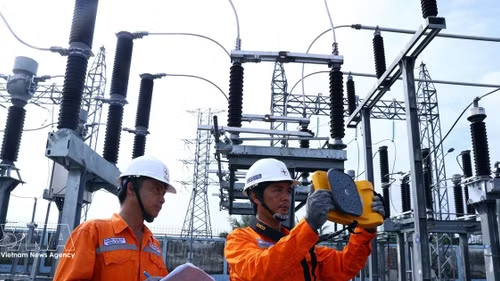
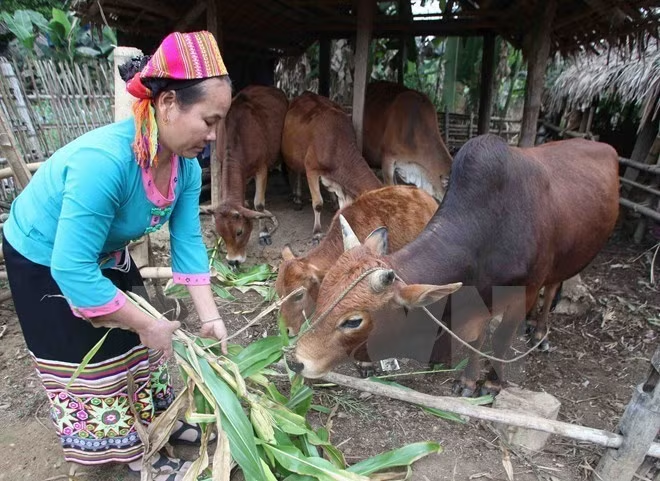
| Vietnam has gained a lot of significant achievements in SDG on poverty reduction (Illustrative image. Source VNA) |
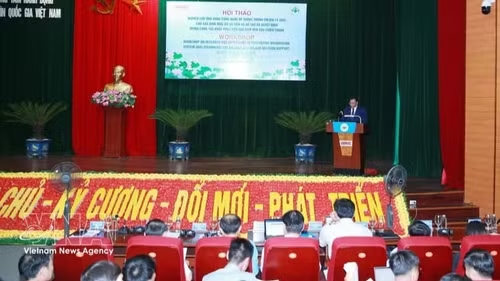
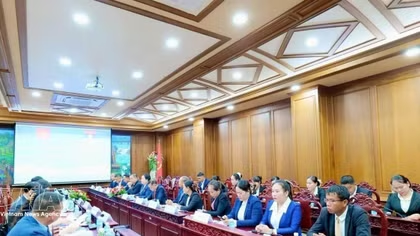
The event is part of a conference themed “The National Assembly and sustainable development goals”.
A wide range of issues were discussed at the meeting, such as climate change adaptation, poverty reduction and elimination, food security guarantee, sustainable agriculture development, gender equality, and female and youth empowerment.
Deputy Minister of Natural Resources and Environment Vo Tuan Nhan said that Vietnam is considered one of the countries bearing the most brunt in terms of climate change impact. According to Vietnam’s climate change research, if the sea level rises by one metre in the late 21st century, about 10-12 percent of its population will be directly affected and the country could lose around 10 percent of its gross domestic product (GDP).
Therefore, Vietnam will face a lot of significant challenges in the implementation of SDGs on climate change, he said, adding that Vietnam has to realise its goals on emissions reduction as committed from 2021 while still maintaining high economic growth.
In addition, climate change in Vietnam has become more complicated and unpredictable, unraveling quicker than predicted and impacting heavily on the people and climate change-sensitive sectors.
The use of water and the development of hydropower plants for countries in the upper part of the Red River and Mekong River have been exerting great impact on Vietnam, especially in the Mekong Delta. These have been exacerbating the effects of climate change by increasing floods, droughts and salt water intrusion, Nhan said.
Realising these challenges, the Party, National Assembly and Government of Vietnam have promulgated many important policies to cope with climate change.
Vietnam has been consistent in improving its institutions, policies and laws to actively respond to climate change, promote green growth, and reduce carbon emissions.
The Government has issued a national action plan on implementing the UN agenda 2030 for sustainable development; a resolution on the sustainable development of the Mekong Delta in adaptation to climate change; a target programme and national strategies on climate change and green growth; and a plan to implement the Paris agreement in Vietnam.
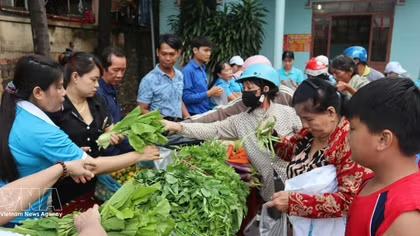
Vietnam also has gained important outcomes in poverty reduction thanks to the leadership of the Communist Party of Vietnam; the regular directions of the National Assembly and Government; and the joint efforts of all sectors and society, according to Deputy Minister of Labour, Invalids, and Social Affairs Le Tan Dung.
He cited that the rate of poor households throughout the country reduced from 58 percent in 1993 down to 7 percent in 2017. Essential infrastructure in poor districts, communes and ethnic minority-inhabited regions have been improved, as well as the locals’ living standards and assessment of social services.
Vietnam’s achievements in this field have been recognised by the international community. The UN evaluated Vietnam as one of the countries with the most impressive poverty reduction accomplishments during the implementation of the organisation’s Millennium Development Goals.
Besides the positive outcomes, challenges in poverty reduction and social welfare still lie ahead, especially in the realisation of the SDGs on poverty elimination through 2030, the official said.
Specifically, the speed of poverty reduction is uneven and unsustainable, particularly in the northern mountainous and Central Highland regions.
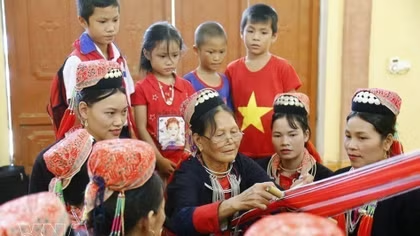
Ethnic minority households accounted for 52.66 percent of the total number of poor households nationwide, according to statistics in 2017. The average income of ethnic minority households was equal to just 40 percent of the national average.
To further the achievements that Vietnam has gained in poverty reduction and social welfare, the country will continue reviewing and supplementing policies in the field; focusing on supporting production development; increasing incomes for poor households; and helping needy people gain access to social services, healthcare, education, accommodation, clean water, information, and infrastructure development.
According to Deputy Minister of Agriculture and Rural Development Le Quoc Doanh, agriculture plays an important role in Vietnam in ensuring food security for nearly 95 million people, as well as livelihoods for nearly 65 percent of the country’s population living in rural areas, making up 15.34 percent of the GDP.
Vietnam exported a variety of agro-forestry products in 2017 worth 36.52 billion USD, and the figure is projected to hit 40 billion USD in 2018. There are 10 groups of commodities having the annual export turnover of 1 billion USD or more, with fruit, cashew nuts, coffee, shrimp and timber products registering export values of more than 3 billion USD. Vietnamese farm produce are now sold in 180 countries and territories around the world. Vietnam ranks second in the Southeast Asian region and 15th in the world in exporting agriculture products.
However, the agriculture sector has been faced with a lot of difficulties and challenges in ensuring food security and sustainable development, Doanh said, adding that small-scale production remains a major challenge to realising the country’s targets of modernisation and industrialisation, as well as increasing the quality of agriculture products for nearly 102 million people in 2025, and 107 million people in 2030.
The complicated development of climate change has exerted negative impact on agricultural production and threatened food security, not to mention the increasingly scarce land, labour and capital sources. This requires long-term strategies to mitigate damage, Doanh said.
To address difficulties, the ministry will focus on restructuring the agriculture sector, reforming growth models, and building new rural areas towards developing high-tech, clean and organic agriculture in association with the processing industry and sales of agriculture products.
The ministry will boost the transfer and application of high technology to create breakthroughs in the productivity and quality of animals and plants; ensure food safety and hygiene; and increase the competitiveness of the sector, Doanh said.
President of the Vietnam Association for the Protection of Children’s Rights Nguyen Thi Thanh Hoa said that in recent times Vietnam has gained positive outcomes in implementing the SDGs on children, women and gender equality.
Vietnam continues to use 20 percent of the State budget spending on education. All children under six years old are granted free health insurance cards. The rate of malnourished children has been reduced to 13.1 percent.
Women make up over 48 percent of the labour force in Vietnam, with 31.6 percent of business owners being female. The current rate of female National Assembly deputies in the ongoing 2016-2021 term is 26.71 percent, 2.62 percent higher than the previous tenure.
The Government has promulgated a number of programmes and projects to promote gender equality, including consideration over reducing the retirement age gap between men and women.
In the coming time, Vietnam will fine-tune its legal system and policies for child protection, Hoa said.