Saigon High-Tech Park consolidates role as sci-tech nucleus

The park currently plays a leading role in shaping Vietnam’s semiconductor ecosystem, hosting nearly 70 enterprises in microelectronics and information technology, alongside almost 30 biotechnology investment projects.

Located in Ho Chi Minh City, the Saigon High-Tech Park (SHTP) aims to become an international centre for science, technology and innovation by 2030, contributing to a green and sustainable economic transition while serving as the core of innovation clusters in southern Vietnam.

In 2025, SHTP continued to assert its position as a key driver of the city’s high-tech industry, with an estimated production value reaching about 23 billion USD.
Saigon High-Tech Park consolidates role as sci-tech nucleus -0
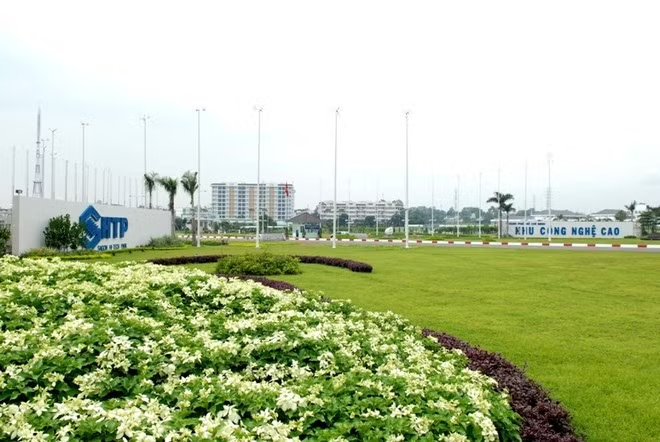
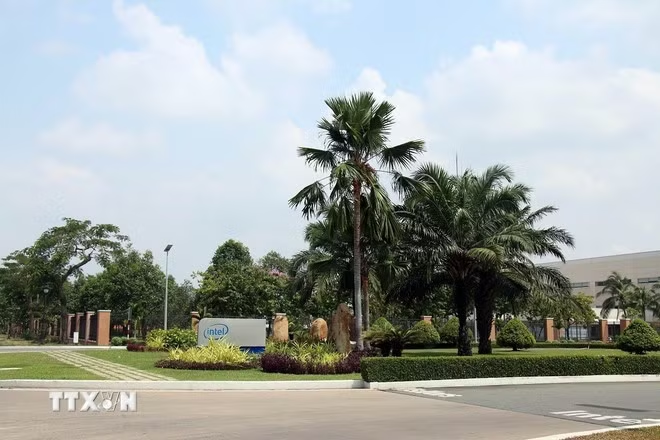
In 2025, the Saigon High-Tech Park (SHTP) reports an estimated production value reaching about 23 billion USD. (Photo: shtp.hochiminhcity.gov.vn)

Destination for core technology projects

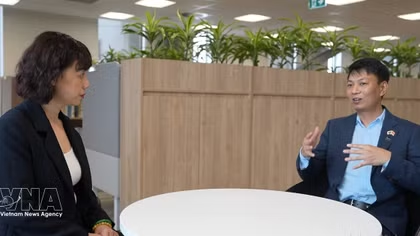
Tse Kenneth, Vice President and General Manager of Intel Products Vietnam, said by the end of 2025, Intel’s cumulative export value had exceeded 100 billion USD, with more than four billion product units shipped globally. Over nearly 20 years of operation in Vietnam, Intel has invested more than 1.5 billion USD and created nearly 6,000 jobs, including about 2,000 employees currently working at its manufacturing facility.

He noted that many Vietnamese professionals now hold key leadership positions within Intel in Vietnam and across the region, demonstrating the quality and competitiveness of the local workforce.

Alongside deploying advanced technologies and developing breakthrough products, Intel is committed to sustainable investment in human and the environment through energy-saving initiatives, carbon emission reduction and corporate social responsibility programmes.

In 2026, Intel is coordinating with the Vietnamese Government and SHTP to roll out two major initiatives: “AI for Leaders” that aims at enhancing the capacity of local officials, and “AI for the Future Workforce” that targets university students, Kenneth added.

SHTP currently plays a leading role in shaping Vietnam’s semiconductor ecosystem, hosting nearly 70 enterprises in microelectronics and information technology, alongside almost 30 biotechnology investment projects. The park has attracted global technology giants such as Intel, Samsung and Sanofi.
Saigon High-Tech Park consolidates role as sci-tech nucleus -0
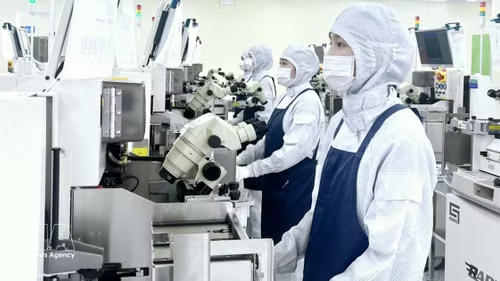
The factory of Intel at the Saigon High-Tech Park. (Photo: VNA)

Notably, the park has managed to master two core technologies: nanotechnology applied in biomedical and energy fields, and MEMS chip design and fabrication for environmental monitoring and industrial applications. It has also developed an incubation model linking the State, academic institutions and enterprises, with a strong focus on supporting projects through the incubation and commercialisation stages.

Working towards international research standards

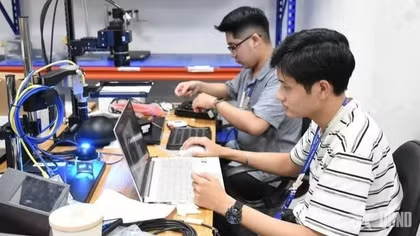
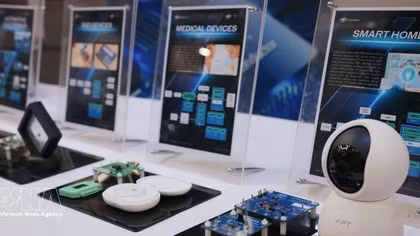
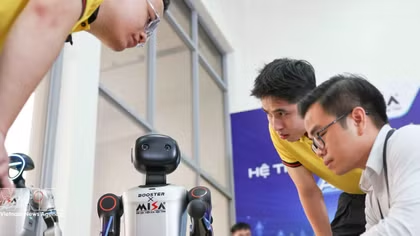
The SHTP Research and Development Centre (SHTP Labs) serves as a hub of innovation, equipped with state-of-the-art facilities for the design and packaging of miniature electronic components. Boasting a team of highly capable researchers, the centre has secured 18 patents, transformed over 20 scientific ideas into real-world products, and shared its discoveries in more than 120 scientific papers both in Vietnam and abroad.

With its sights set high, SHTP Labs aims to become a world-class research centre within the next five years.

With more than 160 active projects, SHTP’s cumulative high-tech production value has surpassed 176 billion USD. The park currently holds nine international patents, nearly 60 national patents and 155 industrial property titles, providing a solid foundation for its ambition to become an international science, technology and innovation hub by 2030 and a highly interactive innovation nucleus of the southern key economic region.

Prof. Dr Nguyen Ky Phung, head of the SHTP management board, said that for 2045, SHTP is envisioned as an international-standard science and technology park and the core of a highly interactive creative urban area to support sustainable development in Ho Chi Minh City and the whole southern region. This long-term vision is built on six breakthrough pillars: application and technology transfer, infrastructure development, human resources, science and innovation, international cooperation, and digital governance.

VNA

Other News

Top leader calls for greater contribution from Vietnamese experts in Canada

Top leader calls for greater contribution from Vietnamese experts in Canada

At a meeting with representatives of the Canadian Vietnamese Scientists and Experts Association (CVSEA) on September 25 (local time), the top leader praised the contributions and professional capabilities of Vietnamese experts and intellectuals in Canada, describing them as a valuable intellectual resource and an important bridge connecting Vietnam with Canada and the wider world.

Hanoi approves controlled pilot of two technology projects

Hanoi approves controlled pilot of two technology projects

The two projects involve an intelligent autonomous transportation system developed by Phenikaa-X JSC and a technology for producing mixed rare-earth oxides with a purity of over 95% on a semi-industrial scale developed by the Mining Technology and Construction Consultancy JSC.

Banking industry in AI era: When data becomes competitive advantage

Banking industry in AI era: When data becomes competitive advantage

In just a few years, AI has evolved from an experimental technology into an “assistant” for many banks, supporting everything from customer service, credit approval, and fraud detection to risk management. However, as the technological gap between institutions narrows, a new question is emerging: What will determine banks' competitive advantage in the AI era?

Bac Ninh considers establishing AI centre of excellence

Bac Ninh considers establishing AI centre of excellence

A meeting has been held in Bac Ninh to discuss potential cooperation with Plug and Play in developing the northern province’s innovation ecosystem and establishing an artificial intelligence (AI) centre of excellence, with Standing Vice Chairman of the provincial People’s Committee Mai Son receiving a delegation from the global innovation platform.

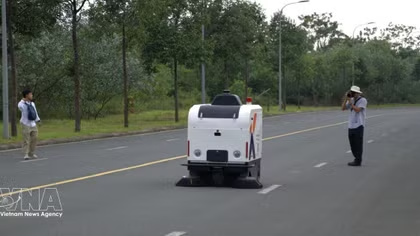
Hanoi allows 24-month trial of autonomous vehicles at Hoa Lac

Hanoi allows 24-month trial of autonomous vehicles at Hoa Lac

The project aims to assess the safety, reliability and readiness of autonomous vehicles under real traffic conditions, as well as the effectiveness of autonomous public transport and compatibility with existing systems. Its results will contribute to developing technical standards, operating procedures and management models suited to Hanoi’s traffic conditions.

Singapore's experience suggests solutions to Vietnam's human resources challenge in AI era

Singapore's experience suggests solutions to Vietnam's human resources challenge in AI era

As Vietnam accelerates digital transformation and high-tech development, Singapore’s experience and the engagement of global technology companies demonstrate that human resources preparation must stay ahead of the curve. The ability to filter knowledge, collaborate, innovate and effectively use AI will increasingly become essential to helping workers adapt to a changing labour market and strengthening the competitiveness of Vietnam’s economy in the new era.

Protecting national security amid digital transformation, cyberspace

Protecting national security amid digital transformation, cyberspace

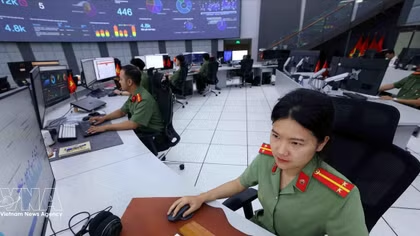
Cybersecurity, information security and data security risks must be identified and addressed early and from afar, with appropriate defensive measures ready to neutralise threats and protect national interests in cyberspace, said Lieutenant General Le Xuan Minh, Director of the Ministry of Public Security’s Department of Cybersecurity and Hi-tech Crime Prevention (A05).

Mekong Delta launches first robotics, AI research institute

Mekong Delta launches first robotics, AI research institute

Dr. Nguyen Van Quang, Rector of Nam Can Tho University, said the university is developing a value chain covering training, research, technology development, testing, technology transfer and commercialisation. The model is designed to link research more closely with practical needs, ensuring that technologies generate products and products create value for society.

Vietnam positioned to harness AI wave, World Bank report says

Vietnam positioned to harness AI wave, World Bank report says

The WB report identifies Vietnam as one of the few economies outside the European Union (EU) to have adopted a comprehensive AI regulatory framework as early as 2025. Vietnam applies a risk-tiered approach similar to that of the EU AI Act, imposing different obligations depending on whether an AI system poses “unacceptable,” “high,” “low” or “minimal” risks. The approach is viewed as a strategic step towards ensuring safe and transparent AI governance.