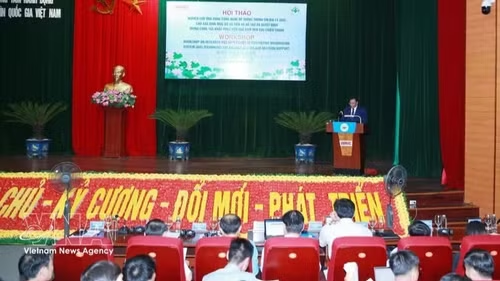
The Ministry of Health will therefore continue to gather opinions from members of the National Steering Committee for COVID-19 Prevention and Control and relevant agencies as it seeks to finalise a plan to ensure pandemic response measures for the 2022 to 2023 period. This will be based on the Response Plan to End the Global COVID-19 Emergency in 2022 issued by the WHO on March 31.
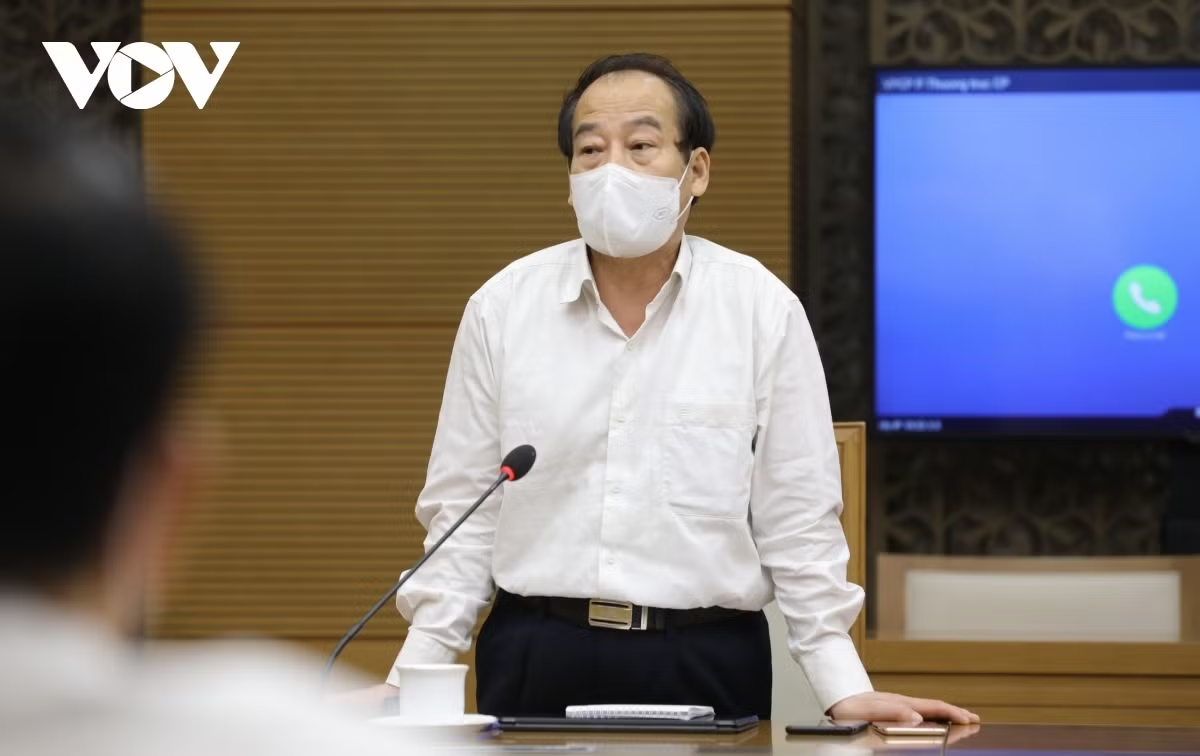
According to experts, the continued evolution of the COVID-19 pandemic is unpredictable, therefore the WHO has outlined a range of scenarios to serve in the pandemic response. Associate Professor Dr Tran Dac Phu, former director of the Department of Preventive Medicine under the Health Ministry, said the nation is currently in a transitional period and is preparing various scenarios and taking proactive measures to ensure an appropriate disease response.
The WHO recently announced a plan which aims to end the "state of emergency" to the COVID-19 pandemic. However, it should be noted that this is not the end of the COVID-19 pandemic, Prof. Phu said.
Accordingly, the organisation has put forth several scenarios which could occur in the near future, such as having less severe outbreaks or weakened immunity among populations requiring a booster dose for those most at risk. Alternatively, the pandemic could turn out to be seasonal, with case numbers fluctuating throughout the year.
The WHO's most notable scenario is the possible emergence of new variants of the SARS-CoV-2 virus, but causing less severe disease. Others include people having longer-lasting antibodies without the need for a booster vaccine, with no need to make significant changes to existing vaccines.
However, it also warned that the worst-case scenario is the possibility that virus mutates, with new threats such as higher transmissibility, stronger symptoms, coupled with higher severity for individuals at risk.
In this case, vaccines may prove to be less effective, while the ability to recover from the disease and immunity will weaken rapidly. Accordingly, there may be a need for a new vaccine and expanded vaccination, with priority given to vulnerable groups.
Despite coming up with scenarios to end the pandemic emergency, the organisation is calling on countries to strengthen surveillance in order to detect and warn of early signs of changes in the virus.
“In my opinion, the WHO's recommendations still focus on vaccination measures. Through this we can see that WHO is uncertain and difficult to predict in which direction the changes of SARS-CoV-2 of the COVID-19 pandemic will be,” Prof. Phu said.
Regarding conditions for pandemic control which could end the state of emergency relating to the COVID-19 pandemic this year, Phu said given the specific pandemic developments in the country, along with the WHO's guidance, the nation must continue updating information regarding pandemic developments. In addition, it should keep up with relevant events elsewhere in the world, especially regarding changes to the virus.
The health sector therefore needs to undergo surveillance methods to fully grasp the disease situation. It can be considered essential to put suitable scenarios in place to respond promptly to developments of the pandemic, while simultaneously ensuring the "dual goal" of both fighting the pandemic and developing the national economy, with people's health being put first, he went on to say.
Following the latest developments relating to the COVID-19 pandemic, the nation has proposed two scenarios for pandemic response. In which, the first considers the virus to be milder, with COVID-19 becoming a common disease. The second is that the pandemic could be more serious, making it necessary to focus on response strategies to effectively combat it.
“During this period, we should go ahead with the flexible adaptation strategy. This is an extremely important strategy in terms of flexible and effective adaptation to each pandemic situation as well as to each scenario to respond to the change of the virus,” he stated.
Prof. Phu also underlined the necessity of following anti-pandemic measures such as mask wearing, disinfecting, and injecting vaccines according to the instructions of the Ministry of Health, in which it will be necessary to offer booster shots to people suffering immune deficiency.
“It is possible that the COVID-19 epidemic will become an annual epidemic. But at this time, Vietnam needs a transitional period to prepare appropriate scenarios and response measures. Accordingly, when COVID-19 can be identified as a common disease, we will not suffer too much loss in terms of investment in extreme response measures,” Prof. Phu added.