Private higher education plays an important role in promoting human resource quality, however, policies to develop private universities still face obstacles.

Educational experts think that the key goal is to address obstacles in the relations between the State and private sector to reduce pressure on public universities.
Vietnam’s education strategy in the 2009-2020 period aims to expand private higher education institutions so that 40 percent of students select private universities. However, this target seems out of reach as in recent years, the number of students enrolling in private universities has kept declining. It is estimated that currently only 15 percent of students nationwide register for private higher education. A lot of majors at private universities no longer exist because they did not enroll enough students.
Vietnam’s experiences run counter to an emerging trend in developing countries in which public education investment drops and private education grows.
Nguyen Dieu Thanh, principal of State-owned Quang Binh University, said that there was a common perception among Vietnamese people that public universities are better than private ones. Changing the mindset of society on that issue is difficult and will take time.
“Private universities must have their own unique features and outstanding training quality to compete with public institutions,” she said.
Another weakness of private universities was lacking a long-term vision. This had posed a challenge for private universities and explained why many, despite being established a long time ago, were still unable to create their own “brand”, she said.
According to educational experts, private universities have grown in number but remain low-quality. Weak academic standards and lecturers along with poor infrastructure pose big obstacles for these private institutions.
Professor Dang Ung Van, from Hoa Binh University, said that a large number of public and private universities which were newly established or upgraded from colleges contributed to an excess in slots for students. This meant low-ranked universities struggled to attract students. Some universities were willing to accept students simply because they had graduated from high school.
Associate Professor Nguyen Huy Vi from the University of Social Sciences and Humanities of the Vietnam National University, HCM City, said that unclear, irrelevant and difficult legal requirements would prevent investors from making investments in private higher education.
According to Dr Dang Van Dinh from the Association of Vietnam’s Universities and Colleges, resolving difficulties for private universities is an urgent task and a vital solution to develop higher education in Vietnam.
“The State should grant the private sector equal preferential opportunities as its public peer. Investors in private universities should be allowed to have the right to select their own management model and invite other sides to join the management council,” he said.
“Privatising higher education is considered to be the only and the best solution to reduce financial pressure on State budget. The private education sector helps diversify training programmes and create competitiveness with the public sector,” he said.
Associate Professor Nguyen Huy Vi said that the role of the State should be changed from one of management to supervision.
The State should set up policies to manage higher education and create an equal playing field for public and private universities. Both public and private higher education must operate in an open and transparent manner, following quality assessments and ranking, he said.
Thanh from the Quang Binh University said that private schools should have mechanisms to attract local and foreign lecturers to address a labour shortage. The Government should give private universities autonomy but at the same time closely supervise their training quality.
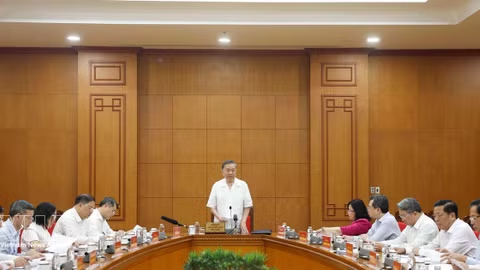
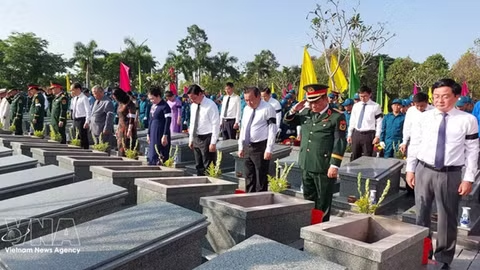

To accelerate the implementation of the the Ethnic Affairs Strategy by 2030, with a vision toward 2045, the Prime Minister requested ministries, agencies and local authorities to continue thoroughly carrying out the Party and State’s policies on ethnic affairs, enhancing the effectiveness of State management and strengthening oversight of policy implementation.
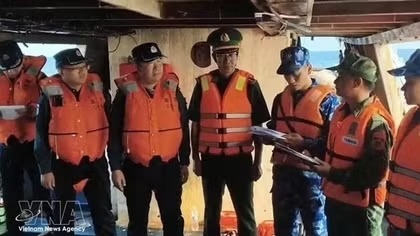
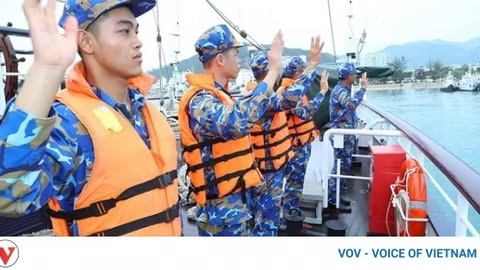
Vietnamese authorities also provided the Chinese side with photographs and video footage recording the rescue operation and repairs to the vessels, demonstrating transparency and Vietnam’s full efforts in maritime search and rescue.
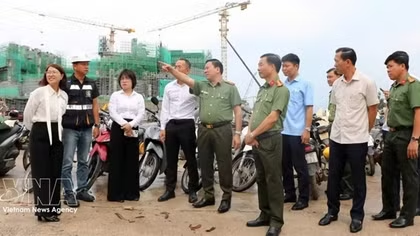
The team examined the APEC 2027 Convention Centre, where main conference activities are scheduled; Sun Serenia Hospital, designated to provide healthcare and emergency medical services for delegates; provincial road DT.975, which connects Phu Quoc International Airport to the convention centre; and the area surrounding Phu Quoc International Airport.
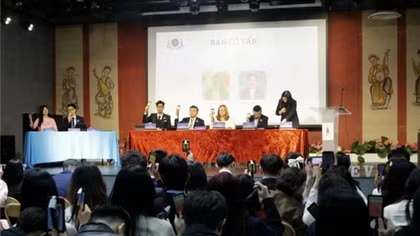
The Union of Vietnamese Youth and Student Associations in Europe (VYSEF) on May 9 successfully held its second congress for the 2026-2031 term in a hybrid format at the Vietnam Cultural Centre in Paris.
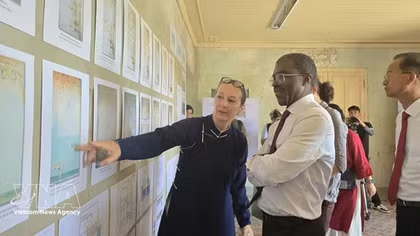
Hue is now poised to become a centre for culture, tourism and specialised health care in Southeast Asia. On that journey, the continued engagement of international experts remains a valuable resource, helping the city not only preserve its past but also shape its future.
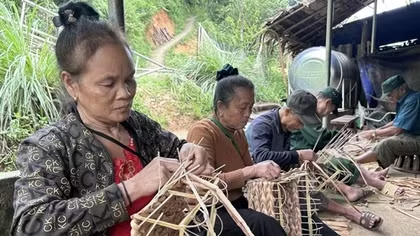
Humanitarian Month 2026 is slated to raise around 500 billion VND for relief activities, support more than 17,000 poor and disadvantaged households, and activate activities in every commune and ward nationwide.
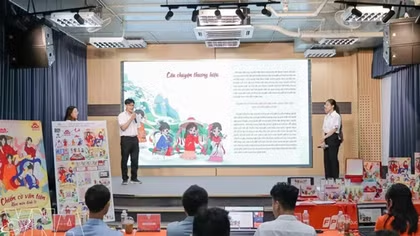
Once issued, the circular is expected to provide a key legal basis for promoting responsible technology adoption, advancing digital transformation and AI in higher education, while strengthening quality assurance, data protection and academic integrity in the digital era.
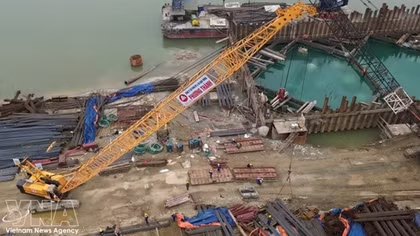
According to the municipal Transport Construction Investment Project Management Board, the city is simultaneously implementing seven projects, namely Tu Lien, Ngoc Hoi, Tran Hung Dao, Thuong Cat, Van Phuc, Hong Ha and Me So bridges. Construction is being carried out on multiple fronts, focusing on bored piles, pile caps, piers and superstructure works.

Seventy-two years after the Dien Bien Phu Victory, its legacy still reverberates. The unity, self-reliance, and resilience forged in that historic triumph remain a powerful internal engine, now propelling Dien Bien toward fast and sustainable development.
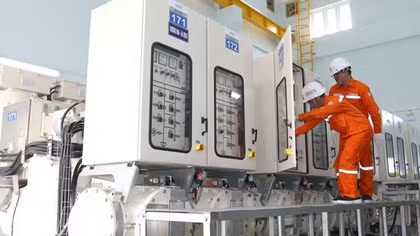
Ho Chi Minh City’s GRDP could grow by an average of 10.2% annually in 2026–2030, driven by industry, construction and services. This will shift electricity demand toward high-tech manufacturing, logistics, digital infrastructure and the green economy.
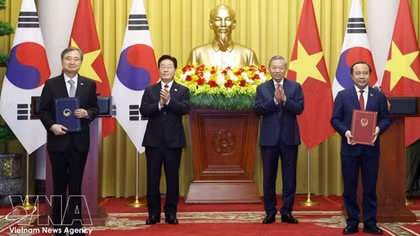
Economic and trade cooperation has remained the main pillar of Vietnam-RoK relations. Two-way trade reached 89.5 billion USD in 2025, up 9.6% from 2024, and 26.9 billion USD in the first three months of 2026, an increase of 30% year-on-year.
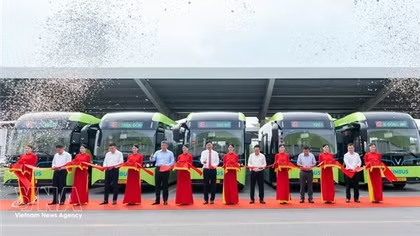
In the 2027–2030 period, the city will accelerate the transition towards the complete phase-out of fossil fuel-powered buses. The share of electric and green energy-fueled buses is projected to reach 79–89% by 2029 and 100% by 2030.
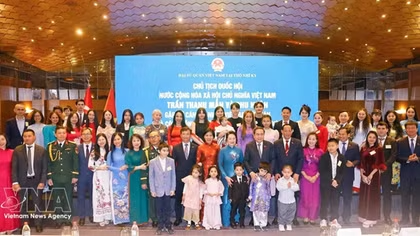
NA Chairman Tran Thanh Man expressed his hope that the Vietnamese in Türkiye will remain united, support each other, build an increasingly strong community, integrate well, abide by the laws of the host country, and maintain a positive image of the Vietnamese people.
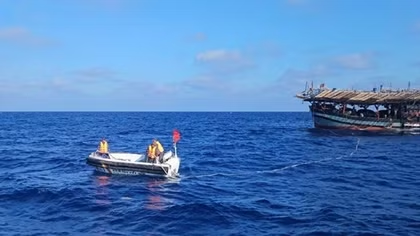
At 8:00 the same day, KN475 began towing the disabled fishing boat toward Da Tay A island. The towing operation was carried out safely, and by 18:30 both the vessel and its crew had arrived at the island without incident, where repairs and additional support procedures were arranged.
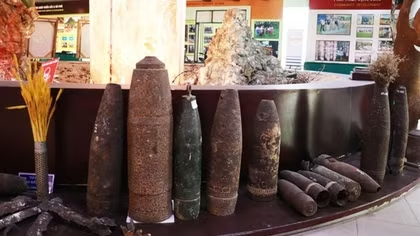
Deputy Director of the Mine Action Centre of Quang Tri Dinh Ngoc Vu said nearly 60,000 hectares of land in the province have been cleared of UXO contamination, with over 925,000 explosive items safely destroyed.
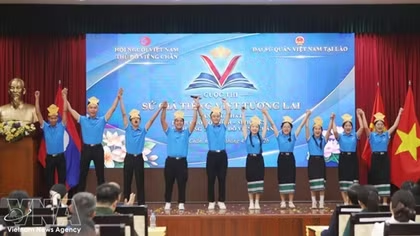
Held in response to the launch of the Vietnamese Language Day among overseas Vietnamese communities, the event aimed to enhance the quality of Vietnamese language teaching and learning in Laos while contributing to the great friendship, special solidarity, comprehensive cooperation and strategic cohesion between the two countries.
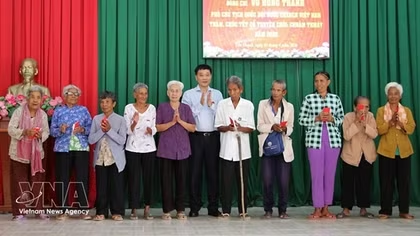
Vice Chairman Vu Hong Thanh called on Party committees and authorities in Can Tho to continue implementing ethnic policies, encourage people to restructure production, develop modern cooperative models, and use science and technology in farming to adapt to climate change.
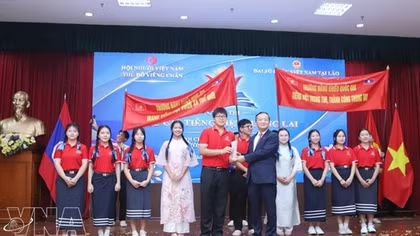
Held in response to the launch of the Vietnamese Language Day among overseas Vietnamese communities, the event aimed to enhance the quality of Vietnamese language teaching and learning in Laos while contributing to the great friendship, special solidarity, comprehensive cooperation and strategic cohesion between the two countries.
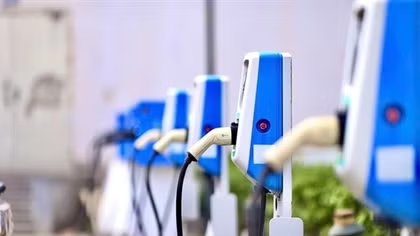
The Ministry of Construction has been tasked with completing urban planning standards with green transport infrastructure taken into account, including charging stations, by the second quarter of 2026.
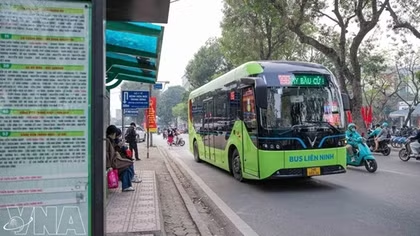
By the end of April, the number of buses using electricity and other green energy sources in the city is expected to reach 822, including 683 electric buses and 139 compressed natural gas (CNG) buses, representing 42.1% of the total number of vehicles.