- OOG and the World Bank join forces to deliver on e-government reforms
- PM calls for more non-refundable aid from World Bank
Ensuring future water security in Vietnam will depend on meeting a host of critical challenges including emerging water stress, fast deterioration of water quality, and rising water-related disaster risks, resulting in a must to implement solutions to improve water productivity.
Rapid increase in water demand will lead to water stress to 11 out of 16 river basins in Vietnam by 2030 during the dry season. In addition, there is a growing competition and needs among multiple sectors for water, against the backdrop of worsening water quality. Climate change exacerbates water challenges, posing additional need to manage water effectively.
These are the key points of discussion of a workshop in which an independent study by the World Bank titled “Towards a Safe, Clean, and Resilient Water System” was launched. The workshop, co-hosted in Hanoi today by the Ministry of Natural Resources and Environment and the World Bank in Vietnam saw the participation from numerous stakeholders as well as international and domestic experts.
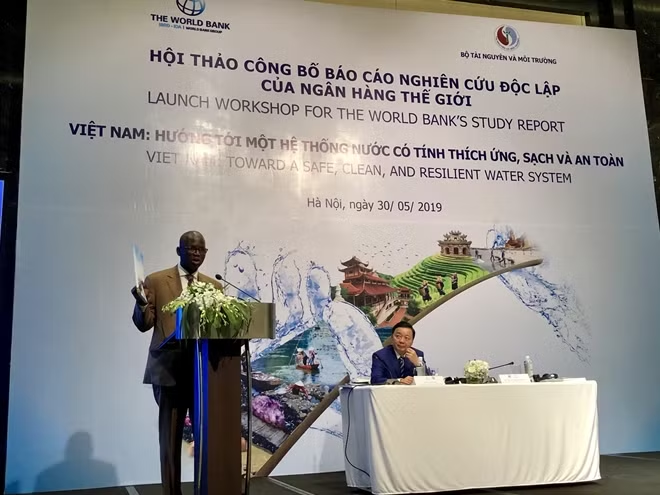 |
| World Bank Country Director for Vietnam Ousmane Dione. |
At the workshop, Minister of Natural Resources and Environment Tran Hong Ha stressed the challenges that Vietnam is facing in water management: “Pressures from population growth, economic growth, and increasing water demand have put water resources at risk of depletion. These pressures will result in unsustainable development unless water resources are managed in a uniform and coordinated way and shared and used reasonably and effectively.”
The newly-completed study discusses in-depth how Vietnam can manage its water resources in a sustainable way. The study suggests policy actions and the roles the public and private sector can play for effective and sustainable water management.
“Unless decisive steps are taken, water, which has been a driving force behind Vietnam’s rapid growth, will become a brake on development,” said World Bank Country Director for Vietnam Ousmane Dione. “Early actions will ensure that water remains a key ingredient for Vietnam’s growing prosperity.”
The World Bank study recommends improvements in governance, management, and financing of water resources, including strengthening of institutions for development and enforcement of regulations. It also advocates for an integrated approach of water management at the basin level and creating incentives to pollute less and use water more efficiently. Furthermore, disaster response and resilience against escalating floods, acceleration of riverine and coastal erosion, sea level rise, and land subsidence need to be improved. In addition, improving the quality of public spending and encouraging private finance is imperative to broaden the funding sources for improvements in water management.
The study identifies water pollution as the greatest threat that could cost Vietnam up to 3.5 percent of GDP annually by 2035. Urban development, discharge of untreated industrial wastewater, and use of agricultural fertilizers and pesticides are placing unrelenting stresses on the water bodies. According to data from Ministry of Construction, only 46% urban households have connections to the drainage system and 12.5% domestic wastewater is being treated, not to mention untreated wastewater from industrial facilities outside industrial zones. This compromises water quality and related ecosystems.
“This report sends a clear message that sustained economic growth in Vietnam will not be possible without strong action to safeguard water resources,” said Jennifer Sara, Senior Director of the World Bank’s Water Global Practice. “If good decisions are made now, water systems can be strengthened to withstand shocks such as climate change and ensure current and future generations reap the benefits of water. The World Bank’s Water team stands ready to work with the Government of Vietnam to sustain resources, deliver services and build resilience.”
The study suggests strengthening and enforcing regulations to create incentives to improve water quality along with use of cost-effective solutions to control pollution. The study also sheds light on the low productivity of water use, particularly in the agriculture and aquaculture sectors which account for 92 percent of the Vietnam’s water usage. There are opportunities to use water more productively such as switching to crops and irrigation systems that give ‘more income per drop’ while saving water, reducing water usage through the use of innovative technology, and having appropriate tariff mechanisms to create incentives for efficient and productive use of water.