Technology and digital solutions are becoming integral parts of everyday lives and across vital societal functions and services such as healthcare, education, politics, and business. However, the digital sphere is reflecting gender inequalities such as low representation of women in digital leadership, gender gaps in accessing technology, targeting of women on digital platforms and gender biases embedded in artificial intelligence (AI).
As the COVID-19 pandemic has deepened the digital dependency of societies and sped up the digitization of conflict and peacebuilding efforts, increasing the participation of women and girls in the digital sphere and its governance is paramount in hindering the exacerbation of these gender gaps.
The gap in women’s participation in the digital workforce has resulted in a lack of gender perspectives informing the development of the digital world and associated cybersecurity frameworks - women account for less than 24% of the cybersecurity workforce. As such, digital policies and cybersecurity frameworks often fail to identify and respond to cyberthreats faced by women and girls.
In addition, cybersecurity is often predicated on artificial intelligence and algorithms, with limited civilian oversight. With 78% of artificial intelligence professionals being men, male experiences have overwhelmingly informed algorithm creation. This has direct peace and security implications for women.
Bringing women and other marginalized groups into technology results in more creative solutions and has greater potential for innovations that meet women’s needs and promote gender equality.
In a timely manner, the theme for International Women’s Day, 8 March 2023 (IWD 2023) is, “DigitALL: Innovation and technology for gender equality”. This theme is aligned with the priority theme for the upcoming 2023 67th Session of the Commission on the Status of Women (CSW-67), “Innovation and technological change, and education in the digital age for achieving gender equality and the empowerment of all women and girls”.
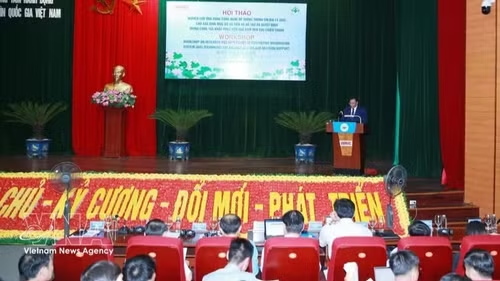
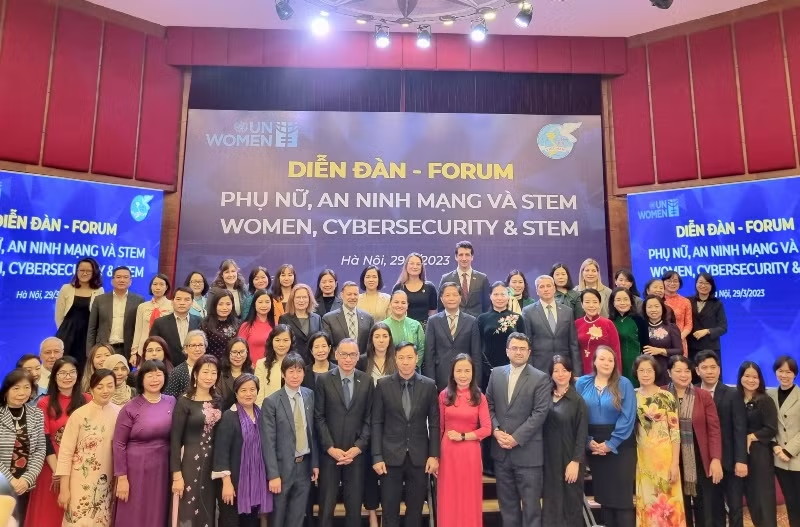
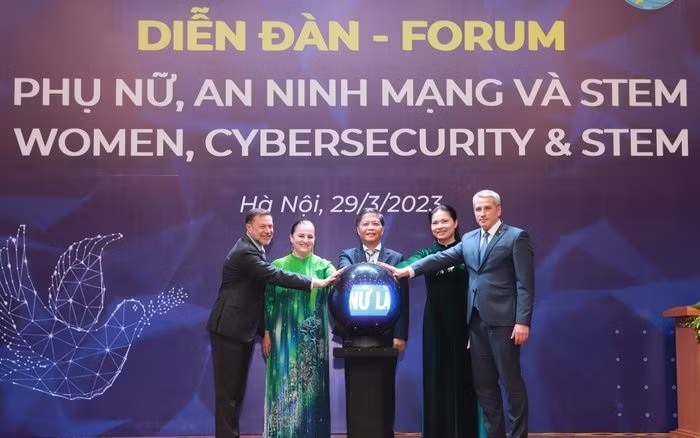
The international forum "Women, Cybersecurity and STEM" aims to share national and international best practices in promoting gender equality, women’s digital access and engagement, women empowerment, cybersecurity, emerging information technologies and innovation in STEM (Science, Technology, Engineering, and Mathematics).
Thus, to call for joint forces of all key actors in the society to work together to make the National Digital Transformation Programme by 2025 an engendered one, with an orientation towards 2030 a success in implementing gender equality and WPS principles and commitments, such as advancing women and girls’ participation in the prevention, responses and management of different degrees and scopes of crisis and conflicts, caused by both traditional and non-traditional security issues, including cybersecurity.
The event welcomed over 400 participants from the Vietnam’s Associations of Female Intellectuals, representatives from different ministries and branches, embassies, UN Agencies, international and national NGOs, and delegates representing provincial Women’s Unions and other interested parties.
 First Vietnamese woman reaches summit of Mount Everest
  Vietnamese women contribute to national development, global peace