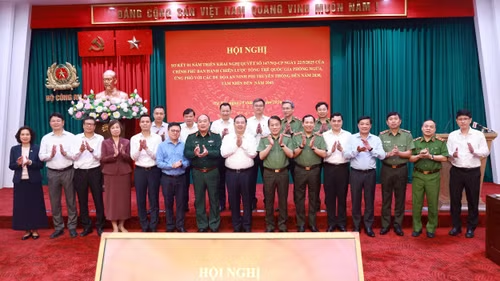
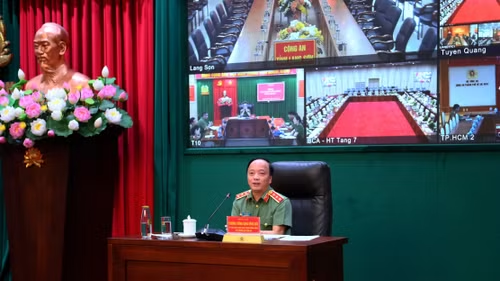
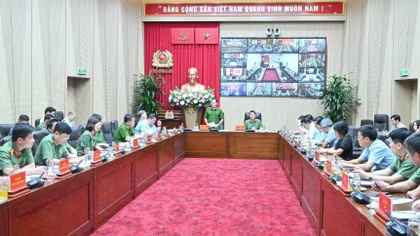
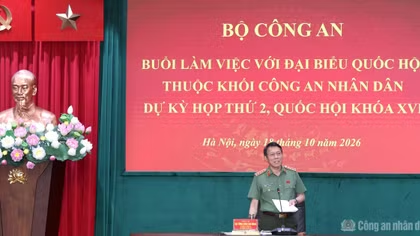
On the morning of October 28 in Hanoi, the Ministry of Public Security held a conference to review one year of implementing Government Resolution No. 147/NQ-CP dated May 22, 2025, which promulgates the National Comprehensive Strategy for Preventing and Responding to Non-Traditional Security Threats through 2030, with a vision to 2045.
Politburo Member and Permanent Deputy Prime Minister Pham Gia Tuc attended and gave directive remarks at the conference. Politburo Member, Secretary of the Executive Committee of the Public Security CPV Organization and Minister of Public Security General Luong Tam Quang chaired the meeting.

The conference was also attended by leaders from various ministries and ministerial-level agencies; representatives from Vietnam Television, the Voice of Vietnam, Vietnam News Agency, Nhan Dan Newspaper, the Vietnam Academy of Social Sciences, and the Vietnam Academy of Science and Technology.
Delegates from the Ministry of Public Security included Party Central Committee Member and Deputy Minister Senior Lieutenant General Le Van Tuyen alongside members of the Steering Committee, the Minister’s advisory team, heads of affiliated units, academies, and police hospitals, among others.
In his opening remarks, Minister Luong Tam Quang emphasized: “Within the overall framework of national security awareness and protection, our Party has paid special attention to leading and directing the implementation of policies and solutions for preventing and responding to non-traditional security threats. The 11th National Party Congress in 2011 was the first to officially identify the task of proactively responding to non-traditional security threats, a focus that has been reiterated in subsequent congresses. Government Resolution No. 147 on the non-traditional security strategy marks a historic milestone, as it is the first time Vietnam has issued a comprehensive strategy on this issue.”
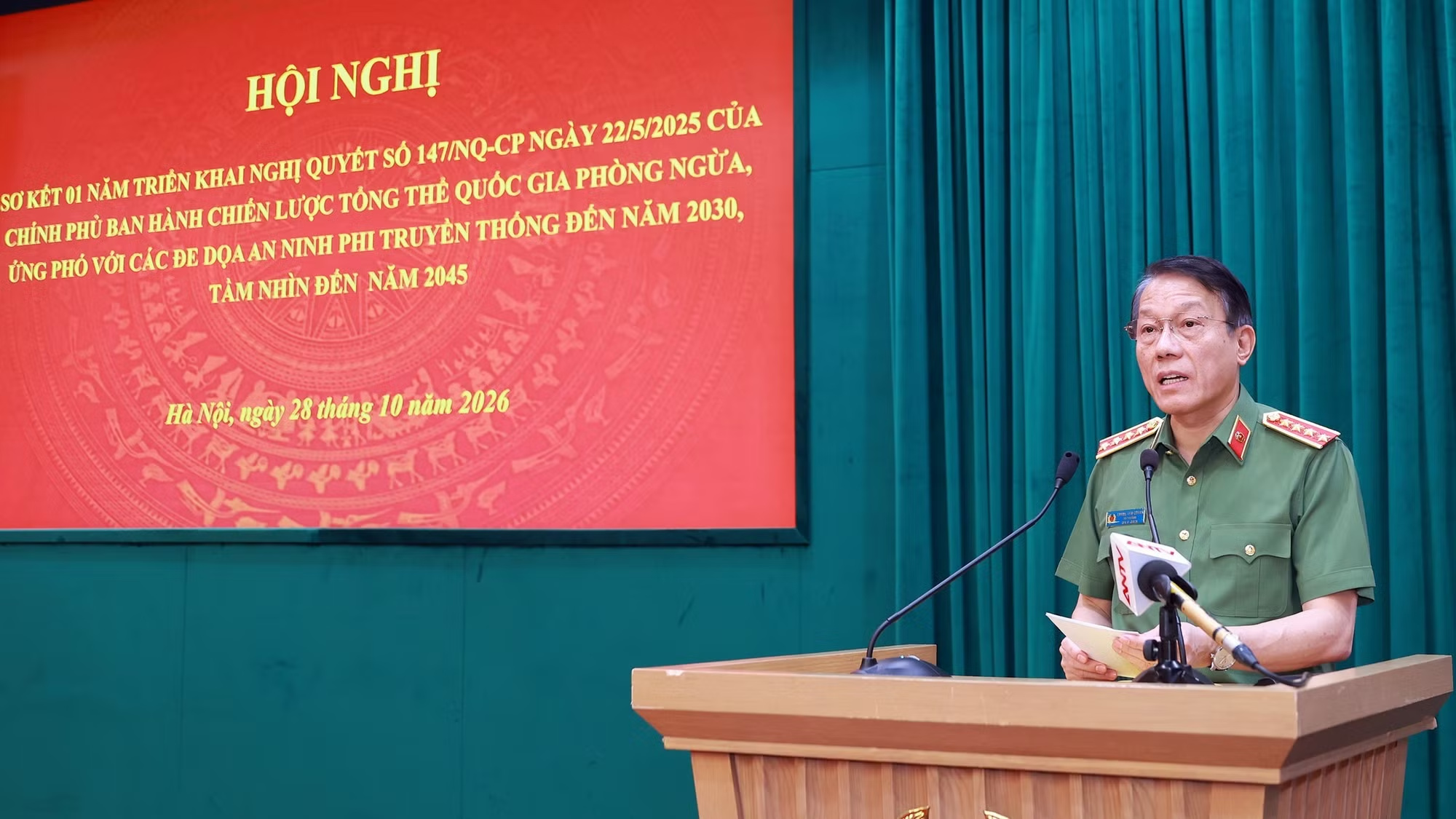
After one year of implementing Resolution 147, initial important results have been achieved in unifying and raising the awareness of the prevention and response to non-traditional security challenges across the entire political system and the public. The legal framework has been improved, and scenario frameworks and specific plans have been issued.
However, these outcomes are only the first step. Alongside the achievements, there remain many shortcomings, limitations, difficulties, and obstacles. Meanwhile, new forms of non-traditional security have emerged, needing more prevention and response efforts. This requires unified thinking and action among central and local Party committees, ministries, and sectors, as well as the mobilization of the combined strength of the entire political system and the people.
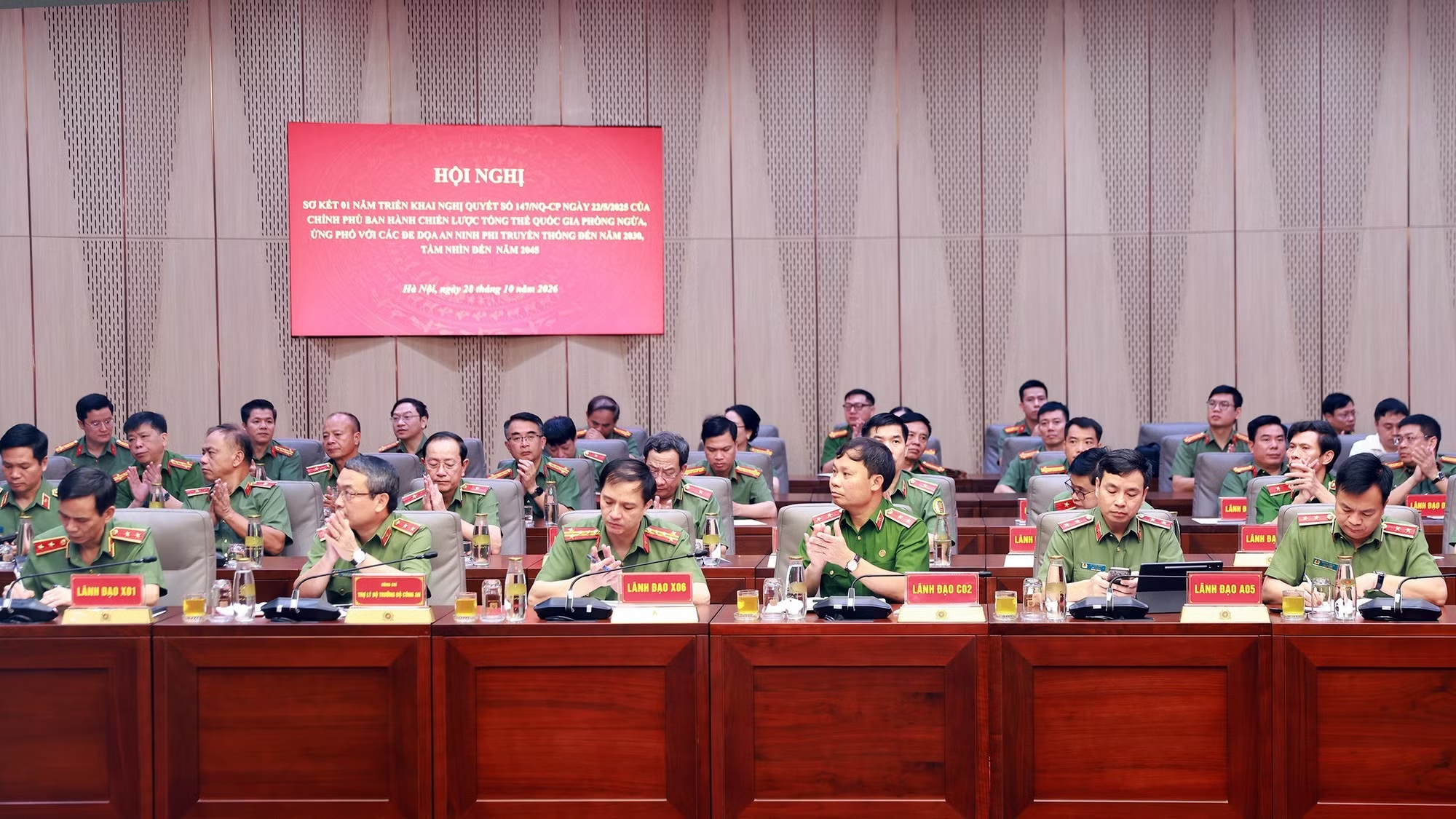
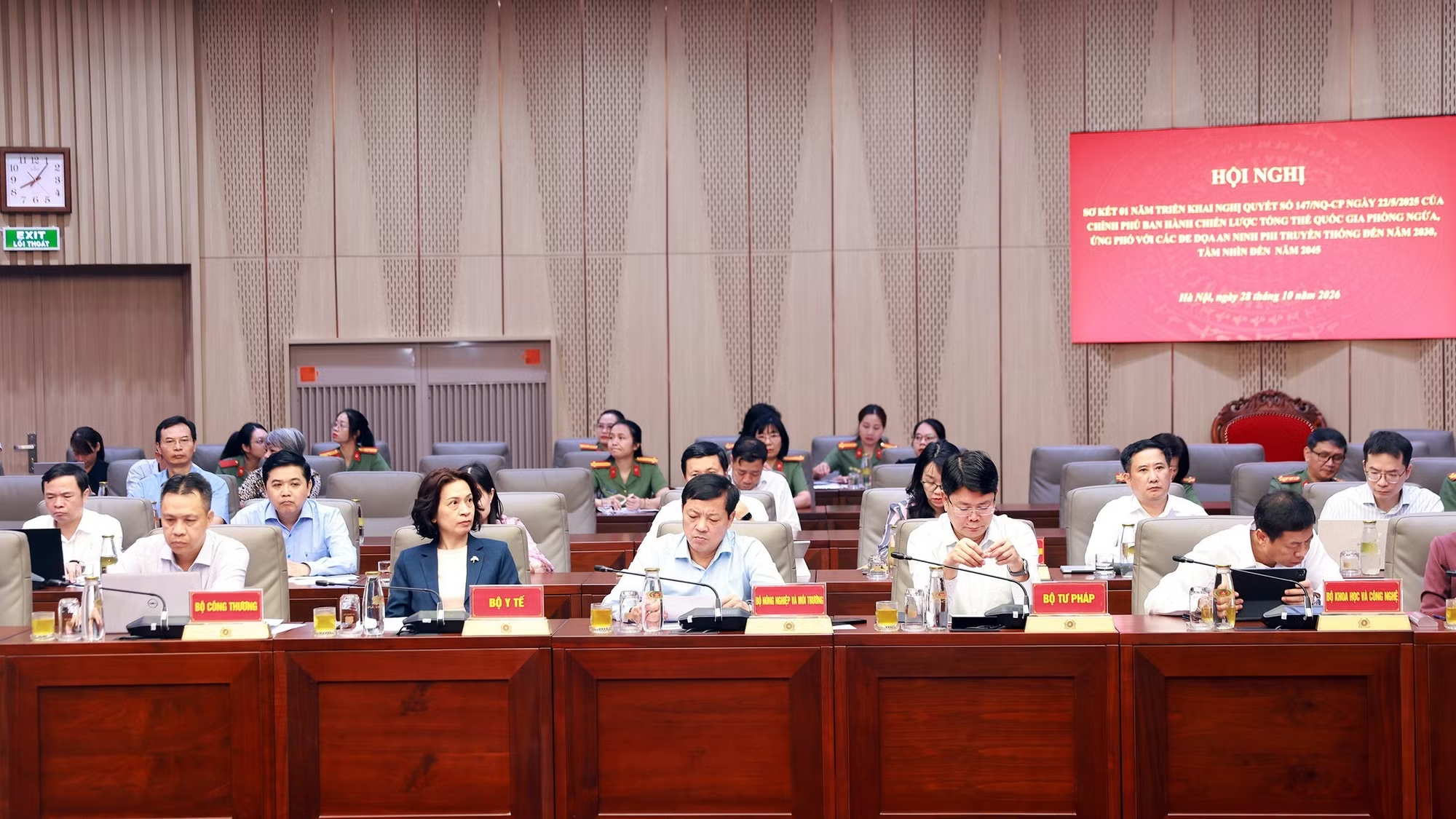
Minister Luong Tam Quang outlined three issues for delegates to discuss and exchange ideas on, aiming to create breakthroughs in the implementation of Government Resolution 147.
First, it is necessary to promote unified awareness and determination of all organizations and people to effectively implement the Party’s and State’s viewpoints and policies, as well as Resolution No. 147. Proactively preventing and responding to non-traditional security challenges is an urgent requirement to safeguard security and lay the foundation for sustainable development in the new era.
Non-traditional security issues exist in almost every aspect of social life such as economy, finance, politics, culture, ideology, spirituality, environment, natural resources, and more particularly result from natural disasters, epidemics, population issues, free migration, terrorism, transnational crime, and social evils.

Government Resolution No. 147 on the non-traditional security strategy marks a historic milestone as Vietnam issues a comprehensive strategy on this matter for the first time.
Second, non-traditional security issues have evolved with many new aspects since the issuance of Resolution 147, requiring updated understanding and additional appropriate solutions. The digital era and smart society are giving rise to many new non-traditional security challenges.
Artificial intelligence (AI) has become a core capability in the economy, national defense, security, and social governance. It is the most important foundational technology and a decisive factor in national strength in the 21st century. At the same time, it poses new non-traditional security challenges, threatening digital sovereignty and data security.
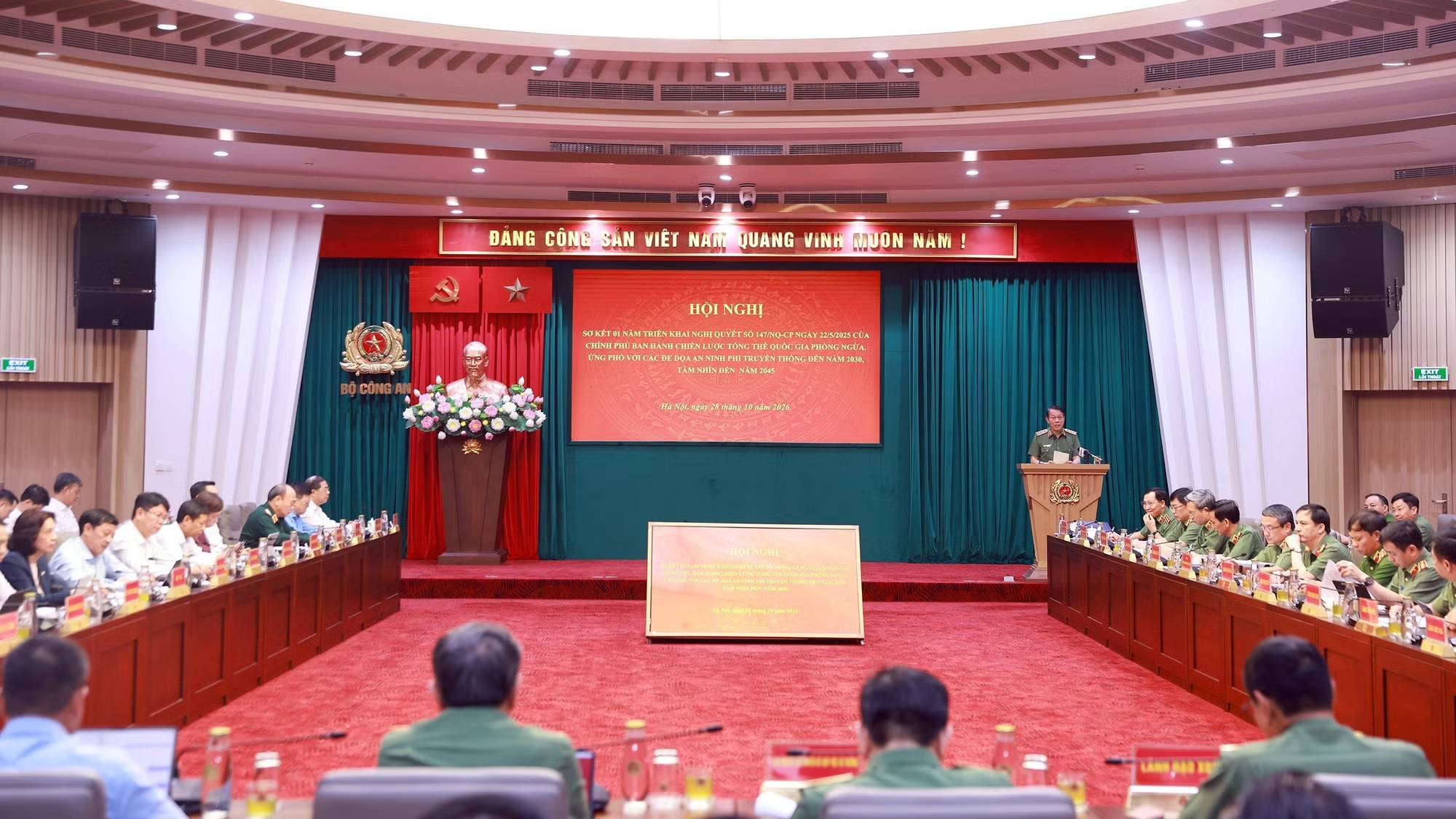
Third, it is necessary to continue innovating approaches to preventing and responding to non-traditional security challenges, shifting from protection after real risks have emerged to early identification, warning and mitigation before risks really arise. This means moving from protecting individual incidents to continuous risk management, integrating security from the outset in every policy, sector, and stage of development.
The Minister emphasized that the conference should serve as a turning point, shifting from communication and scenario development to measurable fulfillment. In addition to the viewpoints, objectives and solutions set out in Resolution 147, it is necessary to supplement and focus on specific goals and solutions as well as determine clear responsibilities of persons and organizations for managing risk factors, especially new issues in the digital era such as cybersecurity, data security, and cognitive security.