Education ministry demands sweeping tech curricula revamp in strategic fields

The education ministry demanded a complete review of existing curricula, covering goals, learning outcomes, structure, content, teaching and assessment methods, and how emerging technologies like AI, semiconductors, automation, data science, and cybersecurity are embedded.

Education ministry demands sweeping tech curricula revamp in strategic fields -0
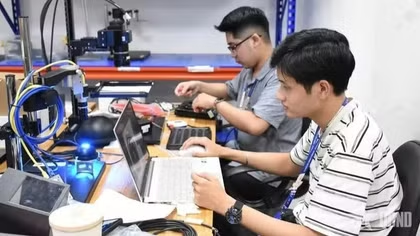
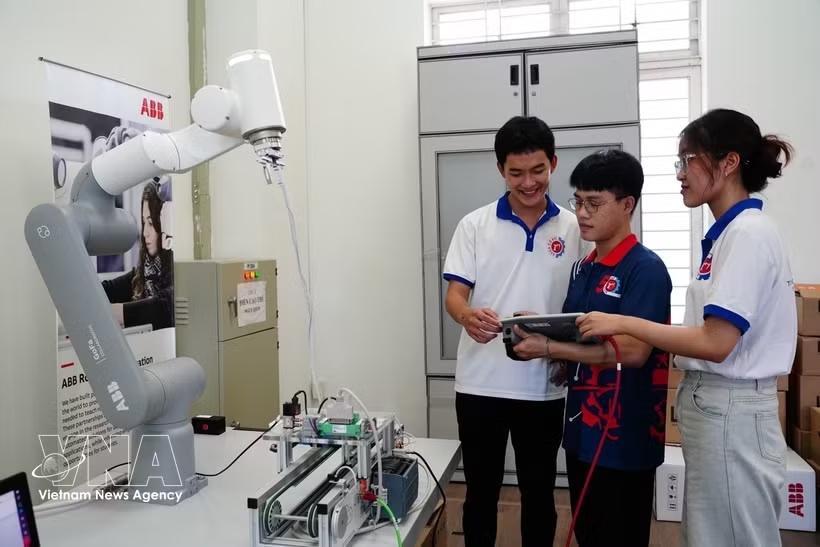
At national key laboratory of mechatronics and applications at the Da Nang University of Science and Technology (Photo: VNA)

The Ministry of Education and Training (MoET) has issued a dispatch to universities, academies, higher education institutions and research institutes with doctoral courses, requesting a sweeping review and overhaul of curricula in strategic technology fields.

Accordingly, they must review, update, and scale up courses in STEM, semiconductor microchips, information technology, artificial intelligence (AI), big data, cybersecurity, core and strategic technologies, and other hi-tech sectors.

The ministry demanded a complete review of existing curricula, covering goals, learning outcomes, structure, content, teaching and assessment methods, and how emerging technologies like AI, semiconductors, automation, data science, and cybersecurity are embedded.

Curricula must be revised to boost interdisciplinary integration, add courses on new and core technologies, and expand practice sessions, projects, and industry-linked research. They should also involve major enterprises, foreign-invested firms, and tech companies in training and graduate assessment, and are encouraged to develop English-medium courses.

The ministry tasked them with creating new courses in semiconductor design and manufacturing, AI, data science, and cybersecurity, as well as in core technologies that support digital transformation and Industry 4.0. The list of priority fields extends to energy storage, space monitoring, marine technology, smart agriculture, next-generation communications, connected intelligent transport, digital creative industries, next-generation energy, green food, smart healthcare and home appliances, advanced materials, Earth system science, bioresponsive materials, and smart electric mobility.

They must also review and build up their faculty to meet quantity, structure, and qualification requirements, with priority to doctoral-level lecturers with research and international collaboration experience. They are encouraged to recruit experts from companies and research institutes and use incentive policies to draw domestic and foreign talent.

At the same time, they should review and invest in infrastructure, including laboratories, research centres, technology systems, digital learning resources, and equipment for hi-tech training.

On partnerships, the ministry ordered them to expand ties with tech enterprises, domestic and international corporations, research institutes, innovation centres, and key national technology projects.

Collaboration should take the form of co-developing and co-delivering courses, internships, commissioned training, jointly supervised research and product development, and the creation of leading expert groups and strong research teams that connect academia, industry, research institutes, key technology programmes, and international partners.

They were also told to tap national projects for integrated infrastructure, smart workshops, and digital simulation tools; set up open labs, and expand university-enterprise collaboration to build innovation hubs and student research centres that support product design, testing, and improvement, thus spurring innovation and entrepreneurship.

A tripartite network involving academia, industry, and government should be formed to jointly design courses, run internship semesters, and fund studies. Companies are expected to advise on science, help develop curricula, evaluate graduates, promote dual training and applied research, and offer internships and jobs tied to practical skills.

The ministry is pushing for a boost in workforce R&D, tighter links between training and scientific research, and the creation of research groups in strategic technology fields. It also wants expanded postgraduate education, especially STEM and hi-tech doctoral courses, and innovation centres that offer consultancy, technology transfer, and innovation services. The establishment of sci-tech and intellectual property management firms, and investment mechanisms for such enterprises is also encouraged.

Relevant results must be reported to the ministry by June 15.
VNA

Other News

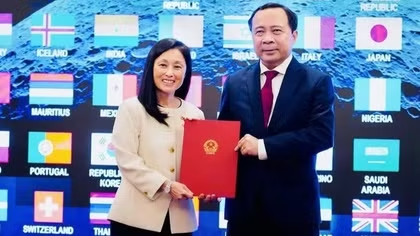
Vietnam joins Artemis Accords on space exploration

Vietnam joins Artemis Accords on space exploration

Vietnam views space science and technology as a strategic sector that can lift national science-technology capacity and support sustainable growth. The country wants to work with member nations on peaceful, safe, equitable, transparent and sustainable space exploration under international law, with tangible benefits for people and the planet.

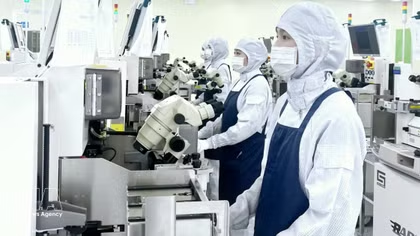
Vietnam seeks deeper role in global semiconductor value chain

Vietnam seeks deeper role in global semiconductor value chain

As global semiconductor supply chains are restructured, experts said Vietnam’s opportunity lies not only in attracting projects but also in accumulating knowledge, technology and management expertise to move into higher-value activities.

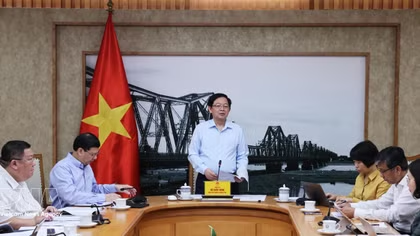
Vietnam moves to standardize digital economy measurement

Vietnam moves to standardize digital economy measurement

The digital economy is a strategic priority for Vietnam, which aims to raise its share of GDP to at least 30% by 2030, in line with the Politburo’s Resolution No. 57-NQ/TW on breakthroughs in science and technology, innovation and national digital transformation.

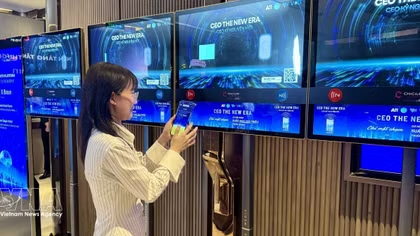
AI platform launched to help businesses build brands

AI platform launched to help businesses build brands

Addressing the event, experts and business representatives stressed that harnessing digital technologies requires businesses to adopt a new mindset, use data in decision-making, and maintain brand identity and consumer trust.

Top leader calls for greater contribution from Vietnamese experts in Canada

Top leader calls for greater contribution from Vietnamese experts in Canada

At a meeting with representatives of the Canadian Vietnamese Scientists and Experts Association (CVSEA) on September 25 (local time), the top leader praised the contributions and professional capabilities of Vietnamese experts and intellectuals in Canada, describing them as a valuable intellectual resource and an important bridge connecting Vietnam with Canada and the wider world.

Hanoi approves controlled pilot of two technology projects

Hanoi approves controlled pilot of two technology projects

The two projects involve an intelligent autonomous transportation system developed by Phenikaa-X JSC and a technology for producing mixed rare-earth oxides with a purity of over 95% on a semi-industrial scale developed by the Mining Technology and Construction Consultancy JSC.

Banking industry in AI era: When data becomes competitive advantage

Banking industry in AI era: When data becomes competitive advantage

In just a few years, AI has evolved from an experimental technology into an “assistant” for many banks, supporting everything from customer service, credit approval, and fraud detection to risk management. However, as the technological gap between institutions narrows, a new question is emerging: What will determine banks' competitive advantage in the AI era?

Bac Ninh considers establishing AI centre of excellence

Bac Ninh considers establishing AI centre of excellence

A meeting has been held in Bac Ninh to discuss potential cooperation with Plug and Play in developing the northern province’s innovation ecosystem and establishing an artificial intelligence (AI) centre of excellence, with Standing Vice Chairman of the provincial People’s Committee Mai Son receiving a delegation from the global innovation platform.

Hanoi allows 24-month trial of autonomous vehicles at Hoa Lac

Hanoi allows 24-month trial of autonomous vehicles at Hoa Lac

The project aims to assess the safety, reliability and readiness of autonomous vehicles under real traffic conditions, as well as the effectiveness of autonomous public transport and compatibility with existing systems. Its results will contribute to developing technical standards, operating procedures and management models suited to Hanoi’s traffic conditions.

Singapore's experience suggests solutions to Vietnam's human resources challenge in AI era

Singapore's experience suggests solutions to Vietnam's human resources challenge in AI era

As Vietnam accelerates digital transformation and high-tech development, Singapore’s experience and the engagement of global technology companies demonstrate that human resources preparation must stay ahead of the curve. The ability to filter knowledge, collaborate, innovate and effectively use AI will increasingly become essential to helping workers adapt to a changing labour market and strengthening the competitiveness of Vietnam’s economy in the new era.