Vietnam seeks deeper role in global semiconductor value chain

As global semiconductor supply chains are restructured, experts said Vietnam’s opportunity lies not only in attracting projects but also in accumulating knowledge, technology and management expertise to move into higher-value activities.

The investment boom in AI, data centres, and electric vehicles is fueling demand for chips, opening doors for Vietnam to expand its presence in the semiconductor industry.

Opportunities from global supply chains

FedEx’s report, “From AI to EVs: How APAC Semiconductors Drive the Global Innovation Map,” highlights how APAC has become the centre of the global semiconductor ecosystem, accounting for approximately 58% of global semiconductor industry revenue.
1-1671.jpg
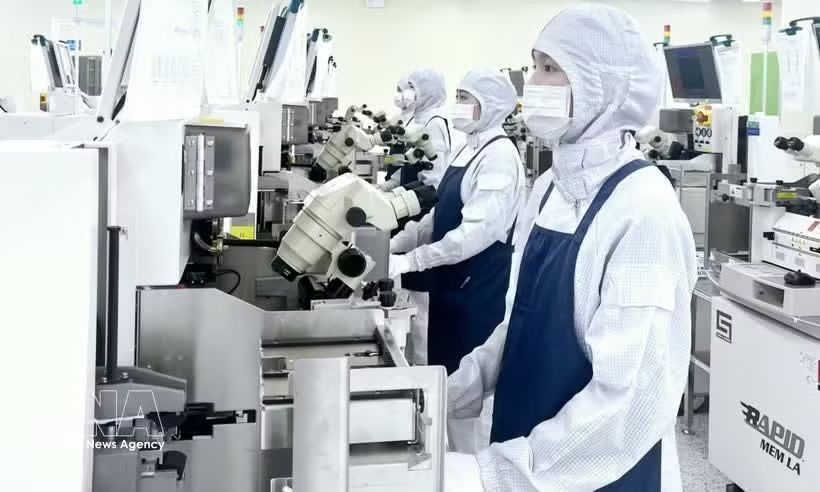
A modern production line of Hana Micron Vina Co., Ltd in Bac Ninh city (Photo: VNA)

Vietnam is benefiting from manufacturing shifts thanks to its electronics industry, regional trade links and competitively priced workforce. According to the report, Vietnam’s semiconductor exports grew at a compound annual growth rate (CAGR) of 31.8% between 2006 and 2025, while semiconductor imports grew by 30% over the same period. Vietnam exported 32.4 billion USD in integrated circuits in 2023, underscoring its growing participation in regional and global semiconductor trade.

“Vietnam is becoming an increasingly important part of APAC’s semiconductor ecosystem, as more semiconductor and high-tech companies expand their presence in the country,” said Ee-Hui Tan, Managing Director of FedEx Vietnam and Cambodia.

By late 2025, Vietnam had around 170 foreign direct investment (FDI) projects in semiconductors, with registered capital nearing 11.6 billion USD, according to the Ministry of Science and Technology. The presence of Samsung, Intel, MediaTek, and other technology groups offers opportunities to access technologies, manufacturing processes, and international customer networks. Meanwhile, the electronics components market is forecast to reach 145 billion USD by the end of 2026.

However, rising investment and exports do not necessarily translate into domestic mastery of high-value stages of the semiconductor chain. FDI spillovers depend on local firms’ supply-chain participation, technology absorption and capacity to develop technically advanced products and services.

At the recent Vietnam Innovation Summit 2026 in Ho Chi Minh City, Thomas Pang, acting CEO of Neuron Digital Group, noted that Vietnam’s semiconductor activities remained concentrated in design, packaging and testing. Upstream activities, including materials, equipment and wafer fabrication, remained limited, while advanced downstream applications and system integration are still developing.

Choosing priorities and strengthening foundations

Under Vietnam’s semiconductor industry development strategy to 2030, with a vision to 2050, the country aims to participate in all stages of the global value chain, from design and fabrication to packaging and testing. Achieving this goal requires clear priorities and effective resource allocation.

Pang said Vietnam should build on existing strengths and develop specialised capabilities rather than spread resources too thinly. Since semiconductor investments usually span five to ten-year time horizons, having stable, predictable policies and smooth coordination between agencies is crucial. He recommended looking into Singapore’s Economic Development Board model, which brings together relevant agencies to promote and support investments.
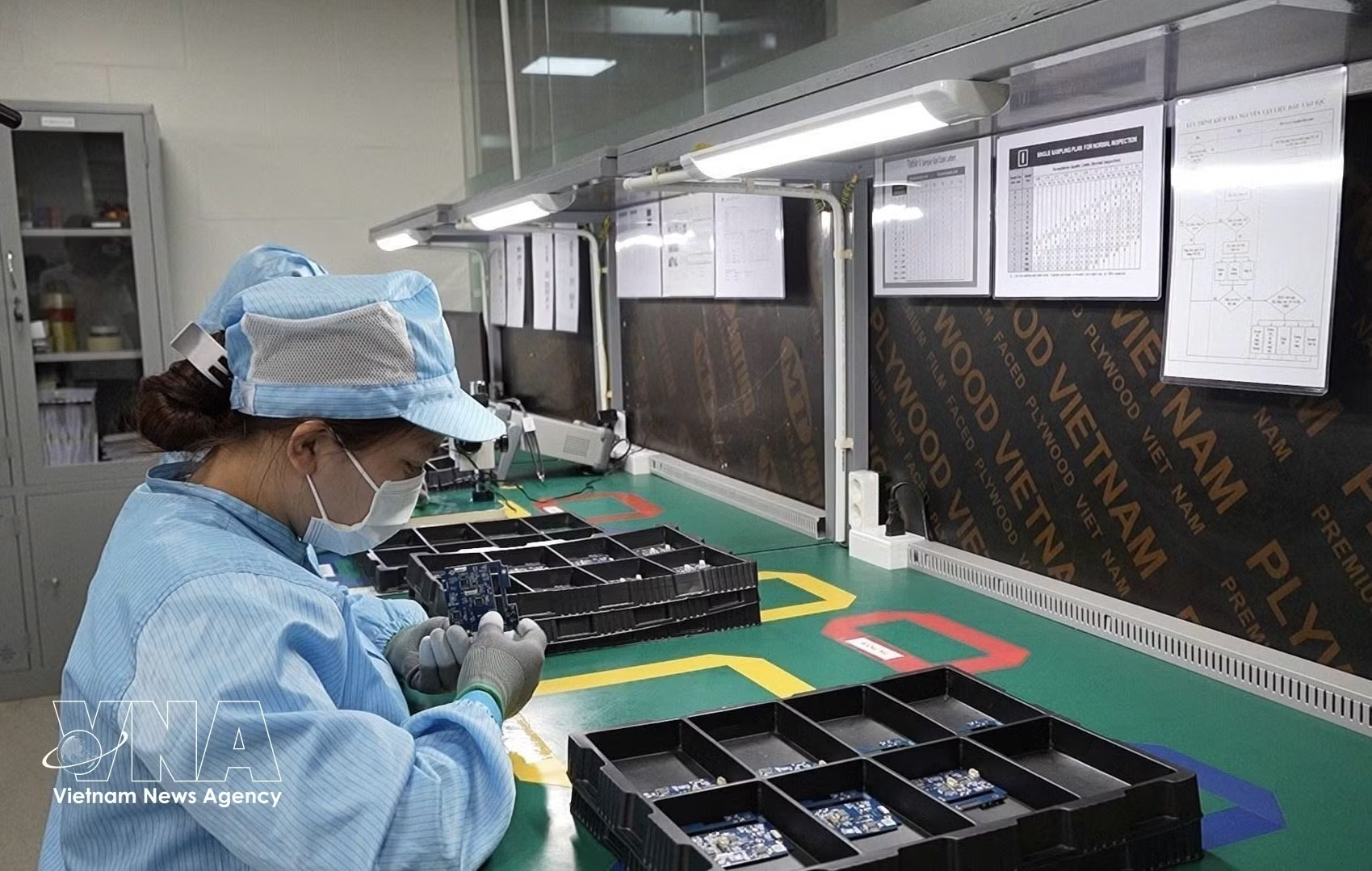
Phu Tho province prioritises attracting investment in electronics, semiconductors, new materials, digital technology, artificial intelligence and clean energy. (Photo: VNA)

Digital infrastructure is another key requirement. Advanced manufacturing generates vast amounts of data on energy, equipment, environmental conditions and logistics. AI, digital twins and real-time data can support simulation, monitoring and production optimisation, improving efficiency and reducing operating costs.

Vietnam has advantages in geographical location, political stability, a young workforce and policymakers’ attention, Pang said. He went on to say that what the country needs now is ecosystem depth, built through a consistent strategy, coordinated governance and smart infrastructure.

Calvin Yong, Regional Director for Southeast Asia, India and Oceania at Yole Group, said Vietnam needed to address domestic supply shortages, fabrication capabilities and manufacturing management experience.

Most suppliers serving Vietnam’s semiconductor industry are foreign-owned, while many inputs are imported. This underscores the need to develop domestic supply networks to help Vietnamese companies gradually integrate more deeply into the production chains of international corporations.

Developing fabrication capabilities could bridge chip design and commercial production, but requires substantial capital, advanced technology and experienced personnel. Investment decisions should therefore reflect market demand and the country’s actual capabilities.

Yong also highlighted shortages of professionals experienced in factory operations, production management and advanced packaging. Beyond engineering education, Vietnam needs experienced specialists, stronger international cooperation and opportunities for local workers to gain hands-on experience.

As global semiconductor supply chains are restructured, experts said Vietnam’s opportunity lies not only in attracting projects but also in accumulating knowledge, technology and management expertise to move into higher-value activities.


en.vietnamplus.vn

Other News

Top leader calls for greater contribution from Vietnamese experts in Canada

Top leader calls for greater contribution from Vietnamese experts in Canada

At a meeting with representatives of the Canadian Vietnamese Scientists and Experts Association (CVSEA) on September 25 (local time), the top leader praised the contributions and professional capabilities of Vietnamese experts and intellectuals in Canada, describing them as a valuable intellectual resource and an important bridge connecting Vietnam with Canada and the wider world.

Hanoi approves controlled pilot of two technology projects

Hanoi approves controlled pilot of two technology projects

The two projects involve an intelligent autonomous transportation system developed by Phenikaa-X JSC and a technology for producing mixed rare-earth oxides with a purity of over 95% on a semi-industrial scale developed by the Mining Technology and Construction Consultancy JSC.

Banking industry in AI era: When data becomes competitive advantage

Banking industry in AI era: When data becomes competitive advantage

In just a few years, AI has evolved from an experimental technology into an “assistant” for many banks, supporting everything from customer service, credit approval, and fraud detection to risk management. However, as the technological gap between institutions narrows, a new question is emerging: What will determine banks' competitive advantage in the AI era?

Bac Ninh considers establishing AI centre of excellence

Bac Ninh considers establishing AI centre of excellence

A meeting has been held in Bac Ninh to discuss potential cooperation with Plug and Play in developing the northern province’s innovation ecosystem and establishing an artificial intelligence (AI) centre of excellence, with Standing Vice Chairman of the provincial People’s Committee Mai Son receiving a delegation from the global innovation platform.

Hanoi allows 24-month trial of autonomous vehicles at Hoa Lac

Hanoi allows 24-month trial of autonomous vehicles at Hoa Lac

The project aims to assess the safety, reliability and readiness of autonomous vehicles under real traffic conditions, as well as the effectiveness of autonomous public transport and compatibility with existing systems. Its results will contribute to developing technical standards, operating procedures and management models suited to Hanoi’s traffic conditions.

Singapore's experience suggests solutions to Vietnam's human resources challenge in AI era

Singapore's experience suggests solutions to Vietnam's human resources challenge in AI era

As Vietnam accelerates digital transformation and high-tech development, Singapore’s experience and the engagement of global technology companies demonstrate that human resources preparation must stay ahead of the curve. The ability to filter knowledge, collaborate, innovate and effectively use AI will increasingly become essential to helping workers adapt to a changing labour market and strengthening the competitiveness of Vietnam’s economy in the new era.

Protecting national security amid digital transformation, cyberspace

Protecting national security amid digital transformation, cyberspace

Cybersecurity, information security and data security risks must be identified and addressed early and from afar, with appropriate defensive measures ready to neutralise threats and protect national interests in cyberspace, said Lieutenant General Le Xuan Minh, Director of the Ministry of Public Security’s Department of Cybersecurity and Hi-tech Crime Prevention (A05).

Mekong Delta launches first robotics, AI research institute

Mekong Delta launches first robotics, AI research institute

Dr. Nguyen Van Quang, Rector of Nam Can Tho University, said the university is developing a value chain covering training, research, technology development, testing, technology transfer and commercialisation. The model is designed to link research more closely with practical needs, ensuring that technologies generate products and products create value for society.

Vietnam positioned to harness AI wave, World Bank report says

Vietnam positioned to harness AI wave, World Bank report says

The WB report identifies Vietnam as one of the few economies outside the European Union (EU) to have adopted a comprehensive AI regulatory framework as early as 2025. Vietnam applies a risk-tiered approach similar to that of the EU AI Act, imposing different obligations depending on whether an AI system poses “unacceptable,” “high,” “low” or “minimal” risks. The approach is viewed as a strategic step towards ensuring safe and transparent AI governance.