The UN in Vietnam affirmed it stands with all LGBTI people from around the world.
“Every person, without distinction on any grounds, has an equal right to live free from violence, persecution, discrimination and stigma of any kind, the organisation said, stressing that human rights are universal, and cultural, religious and moral practices and beliefs, and social attitudes must not be invoked to justify human rights violations against any group, including LGBTI persons,” the statement said.
Ending marginalisation and exclusion of LGBTI people is a human rights priority – and a development imperative. The UN Human Rights Sub-Committee of Experts on Prevention of Torture and other Cruel, Inhuman or Degrading Treatment or Punishment has stressed that working to leave no LGBTI persons behind is fundamental to several international human rights standards as well as the achievement of a sustainable development goal on good health and well-being.
In its joint statement, the UN hails Vietnam’s efforts to ensure LGBTI persons’ rights, noting that the annual Viet Pride has been celebrated since 2012, the ban on same sex marriage was removed in 2014, and legislation was enacted in 2015 providing a legal basis to change one’s legal gender identity.
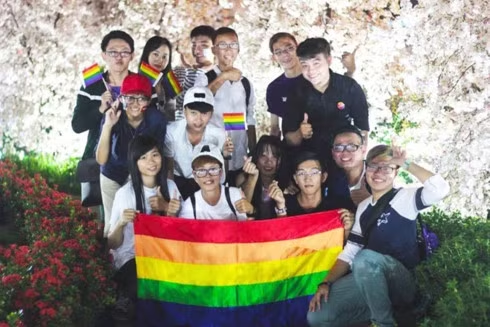 |
| Youths show back for LGBTI community at VietPride Hanoi 2016 (Photo by courtesy of VietPride Hanoi) |
The UN also welcomes the engagement of the Ministry of Health and Ministry of Justice with the LGBTI community and partners through public consultations for the new legislation on legal gender recognition.
However, LGBTI people continue to face contempt, derision, as well as discrimination on the streets, at the workplace, in schools, and in health facilities. LGBTI people also face sexual and gender-based violence because of who they are, their sexual orientation, and their gender identity. The current legal framework, policies and social norms do not sufficiently protect LGBTI people and do not allow them to fully enjoy their rights. Without legal gender recognition and other legal protection against discrimination, LGBTI people and especially transgender people still face significant challenges, including access to social and health services as well as equal employment opportunities. In many ways, the LGBTI community is vulnerable. For example, there is recent evidence of a worrying expansion of the HIV epidemic among men who have sex with men (increase of HIV prevalence from 4% in 2013 to 8.2% in 2016) and high-level HIV prevalence among transgender women.
The organisation called for national efforts to work for a better future for the LGBTI community, through opportunities to advance the fulfillment of their rights so that they can fully contribute to society and live in dignity.
Under the leadership of the Ministry of Health and Ministry of Justice, there is momentum in Vietnam to realize the right of transgender persons to legal recognition of their gender. However, there is still limited understanding of the diversity within the transgender community, and of the self-determination model.
Therefore, the UN encourages relevant authorities to continue to engage the transgender community, parents of transgender individuals, and civil society organisations on these issues.
The upcoming revision of the Labour Code also presents an opportunity to prohibit discrimination based on sexual orientation and gender identity in the world of work.
The UN believes resolutely in eliminating homophobia and transphobia through education, so as to better ensure a safe, equal, just and fair environment and equal opportunities for LGBTI people. It is also necessary to improve healthcare services, including mental health to meet the needs of transgender people.
“The United Nations will support Vietnam’s efforts to promote equality and equity for LGBTI people, establishing a solid foundation for full access to the educational, social and healthcare services they need, as well as the required opportunities to fulfil their ambitions and aspirations. As an employer, the UN commits to fostering a workplace where LGBTI employees can be themselves and work productively, with the full support and respect of all their colleagues,” UN Resident Coordinator in Vietnam Kamal Malhotra.
The UN calls for everyone to put an end to homophobia, transphobia and biphobia, and embrace diversity.