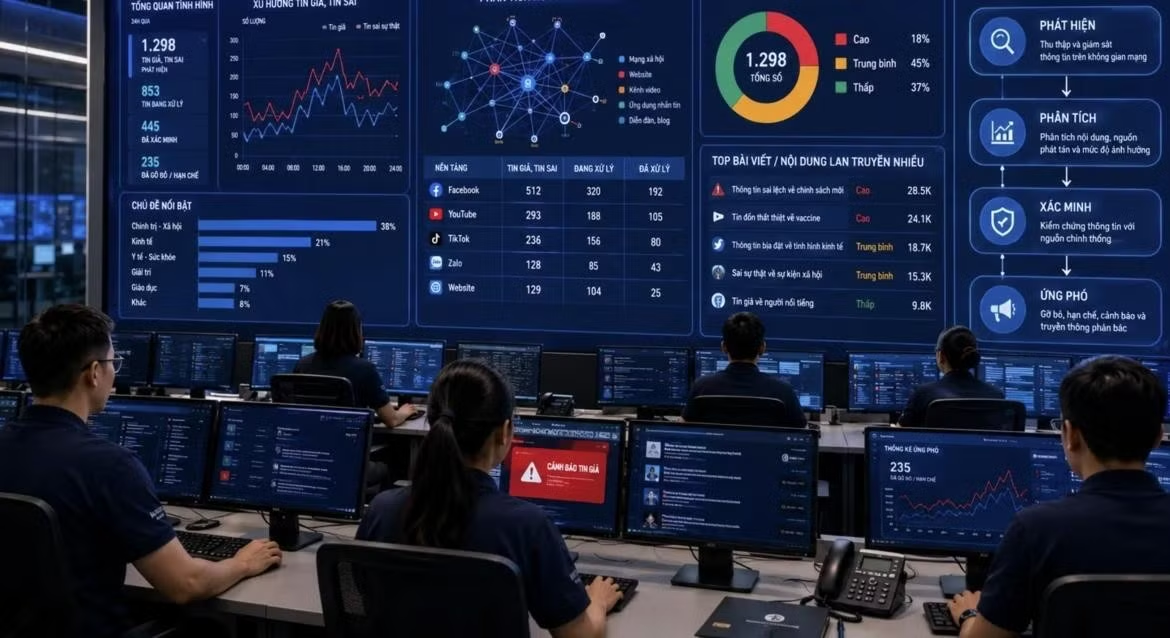
The rapid growth of digital technology and social media has turned cyberspace into a major source of information influencing political, economic, cultural and social life.
Alongside these benefits, however, fake news and malicious online content have spread at an alarming pace, particularly on issues related to politics, personnel affairs, organisational restructuring, preparations for Party congresses, elections and major policies issued by the Party and State.
Many misleading posts are disguised as “inside information”, “exclusive sources” or “leaked documents” to create the impression that they contain confidential or unpublished material, thereby attracting attention and accelerating their spread across social media platforms. False or distorted information has also surfaced in areas such as the economy, social affairs, natural disasters, disease outbreaks and daily life, fuelling public anxiety and affecting the legitimate rights and interests of organisations and individuals.
Experts say young people are among the groups most vulnerable to misinformation because of their heavy use of social media and limited fact-checking skills. Constant exposure to large volumes of online material has made many users more likely to react to information emotionally, while sensational headlines, manipulated clips and viral online trends can quickly capture attention.

Many young users now begin their day scrolling through short updates on platforms such as Facebook and TikTok, but the speed at which information spreads has made verification increasingly difficult.
Experts also warn that the herd effect on social media encourages many users to believe and share content without verifying its accuracy. This can distort public understanding of issues, fuel negative perceptions and leave users vulnerable to manipulation.
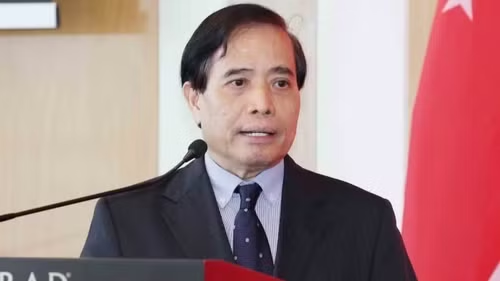
Nguyen Minh Duc, Director of CyRadar Information Security JSC, says fake news and misleading content could distort political and social perceptions, incite violence or encourage dangerous behaviour such as suicide and depression. Manipulated images and videos, meanwhile, can damage the reputation and dignity of individuals and organisations.
He also warns that AI technology is being exploited to create deepfake images, voices and videos capable of seriously misleading users. In addition to distorted or hostile narratives, harmful material linked to violence, obscenity, gambling, drugs and financial scams disguised as investment opportunities has become increasingly widespread online.
Regarding efforts to protect the Party’s ideological foundation, Senior Lieutenant Colonel and Associate Professor Dr Ho Anh Tuan, Head of the Faculty of Internal Political Security at the People’s Security Academy under the Ministry of Public Security, says hostile and misleading narratives are now being disguised in increasingly sophisticated forms, including under the labels of “social criticism”, “contributions to the Party and State” or “anti-corruption efforts”. Such tactics make it easier for misleading narratives to conceal their hostile nature and influence public perceptions online.
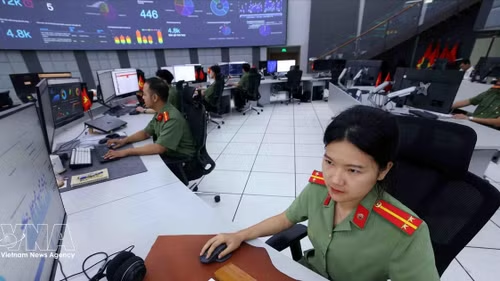
According to Ho Anh Tuan, efforts to combat fake news and harmful online content should combine both prevention and countermeasures in line with Resolution 35, with the wider dissemination of official and positive information playing a central role in shaping mainstream discourse online.
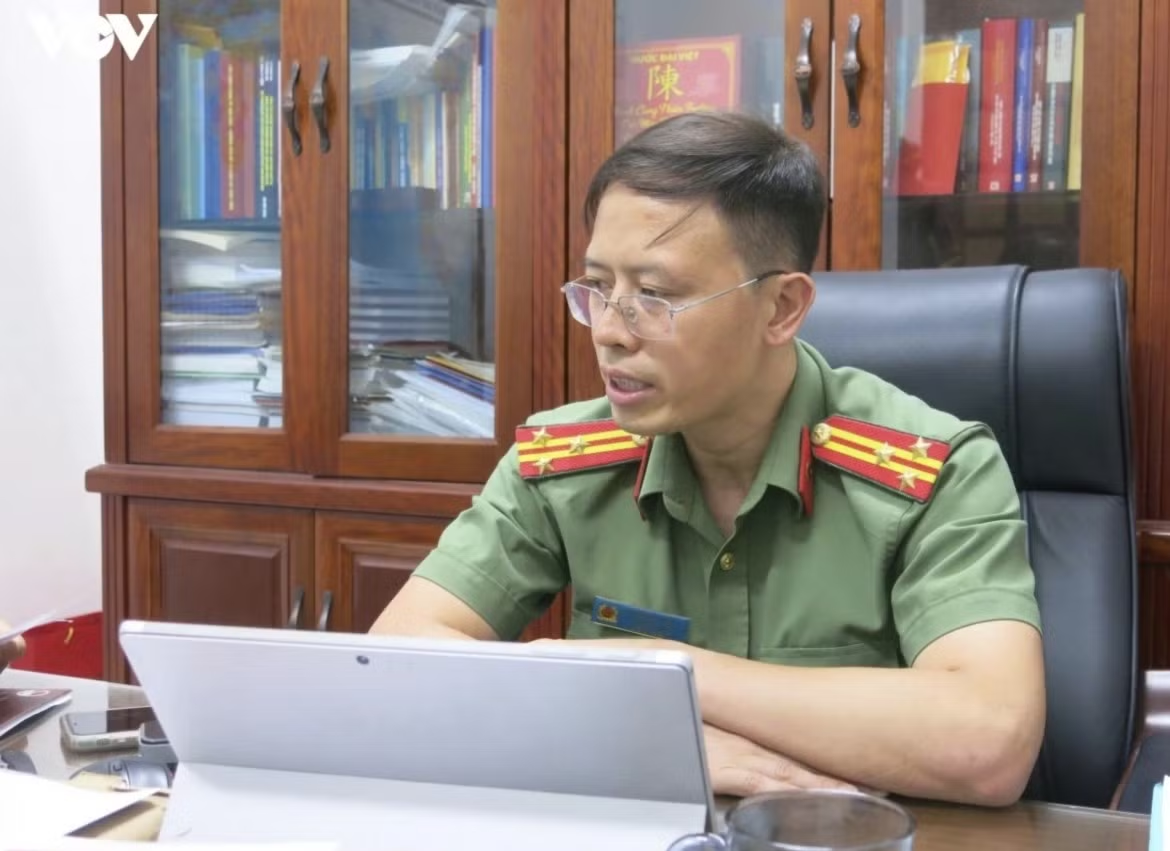
Associate Professor Dr Tran Minh Truong, former Director of the Ho Chi Minh Institute and Party Leaders under the Ho Chi Minh National Academy of Politics, points out that fake news cannot be tackled through administrative measures alone. Instead, authorities need to build official information channels that are timely, useful and appealing, particularly for younger audiences. Information should also respond to people’s practical needs so they are more likely to turn to trusted sources.
If official information is strong and useful enough, people may still encounter harmful or misleading content but would be less likely to be swayed by it, he adds. He also proposes mechanisms to encourage organisations, social groups and individuals to contribute more positive and constructive material, while ensuring information remains balanced and diverse rather than overly one-sided.
Amid the growing spread of fake news, the Government recently issued Decree 174 on administrative penalties in the fields of post, telecommunications, information technology and cybersecurity.
Under the decree, individuals or organisations that share false information causing public concern, harming socio-economic activities or disrupting the operations of State agencies and public officials may face fines ranging from VND30 million to VND50 million if the violations are not serious enough for criminal prosecution.
The same penalties apply to acts such as distorting history, undermining national unity, insulting religions, promoting gender or racial discrimination, or disclosing State secrets and personal privacy. In addition to fines, violating accounts, pages or content channels may also be suspended or removed.
Experts emphasize that combating fake news and harmful content is a long-term challenge requiring the involvement of regulators, media organisations, technology companies and the public. Most importantly, internet users need stronger critical thinking and fact-checking skills to reduce the spread of unverified content online.

The Ministry of Public Security on November 23 issued a warning about the spread of false information, particularly AI-generated fake news, related to the flooding in the central region.
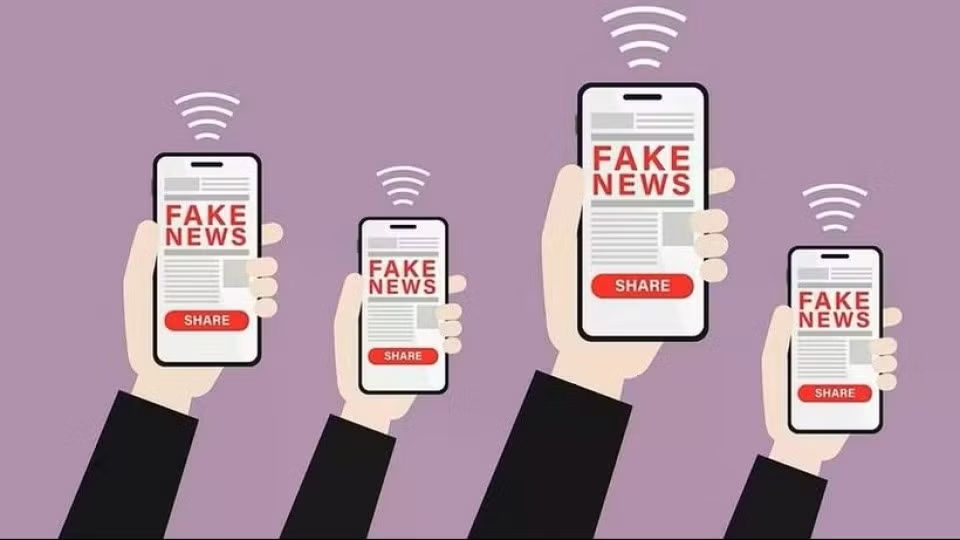
The Vietnamese Government will impose fines of up to VND50 million (about US$1,900) on social media users who share fabricated or false information, as part of a broad new decree aimed at tightening control over digital platforms.