If a big screen for watching videos, playing games or simply to fit more on the screen when browsing, emailing and texting is what you’re after, these are the best phablets available right now.
1. Apple iPhone 7 Plus
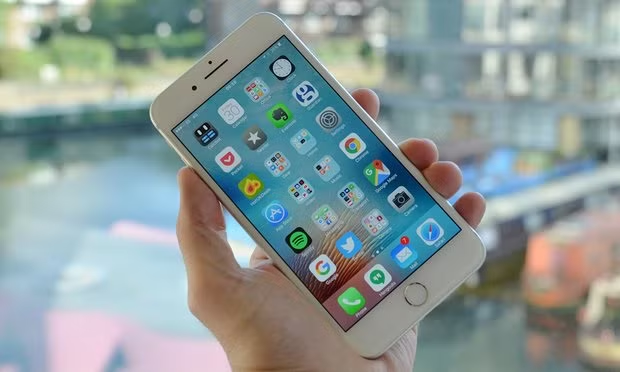 |
| Apple’s iPhone 7 Plus has a 5.5in screen and dual camera on the back. Photo: Samuel Gibbs for the Guardian |
Apple's latest phablet is like a greatest hits from the past two years of iPhone. It looks pretty much the same as 2014’s iPhone 6 Plus, has the same fingerprint scanner as the iPhone 6S Plus, but is now waterproof and has a better camera.
The dual camera on the back is the main attraction, using two different lenses to create an effective 2x zoom and some fancy effects. The home button also doesn’t move any more, but the little vibrating Taptic Engine does a good job of giving you the impression that it does.
One thing the 5.5in phablet doesn’t have is a headphone socket, which means you’ll have to use an adaptor to plug wired headphones into the Lightning port at the bottom. You can’t charge while listening to music, but at least the battery lasts about a day.
The iPhone 7 Plus is also wider and more difficult to use one-handed than other 5.5in smartphones in this group, so it’s worth investing in a good case as dropping it is a real possibility when out and about.
2. Google Pixel XL
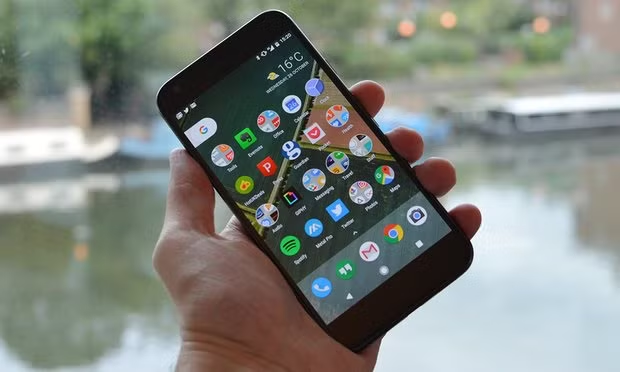 |
| The Google Pixel XL is the Android-maker’s first phablet. Photo: Samuel Gibbs for the Guardian |
Google’s first own-brand phablet runs the very latest version of Android 7.1 Nougat and will get updates before any other Android smartphone.
It has the company’s latest in intelligent voice control, Google Assistant, which is a conversational search and personal assistant hiding under the Pixel’s home button for when you need it.
The 5.5in Pixel XL is a relatively simple-looking device, but its subtle wedge shape means there’s no camera lump on the back. The camera is excellent – ranked the best in the business by DxoMark – and it’ll last over a day between charges.
It’s snappy, has a good fingerprint scanner on the back, great screen on the front and is one of the first smartphones compatible with Google’s new Daydream View VR goggles.
But the Pixel isn’t waterproof, like Apple’s iPhone doesn’t have expandable storage, and is pretty pricy compared to the rest of the Android competition.
3. Samsung Galaxy S7 Edge
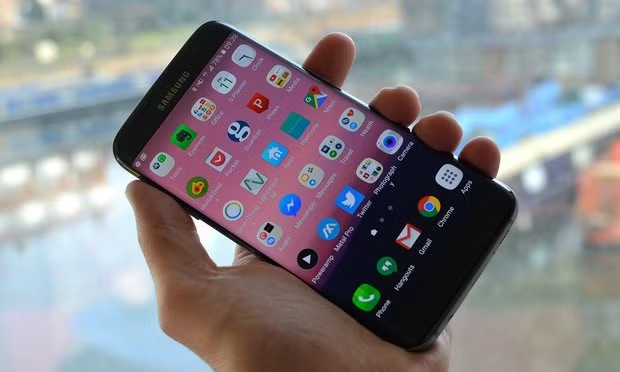 |
| The Samsung Galaxy S7 Edge’s screen is curved for more than aesthetics. Photo: Samuel Gibbs for the Guardian |
Samsung’s smaller top-end phablet, the Galaxy S7 Edge has a 5.5in curved screen that makes it the narrowest and easiest to handle in the category. It has more features too, with a great camera, fingerprint scanner, heart-rate reader, wireless charging and various bits and pieces to take advantage of the curved screen.
It is that curved screen that makes the S7 Edge stand out, fitting a 5.5in screen in a body not much larger than a 5in phone. The only real downside is that picking a case for it could be difficult.
The S7 Edge is waterproof, and has a microSD card slot for expanding the storage. It lasts a day and a half between charges and is compatible with Samsung’s Gear VR headset too.
It doesn’t run the latest version of Android yet, but an update to Android 7 Nougat is already in testing and is expected to be available to all in 2017.
4. Huawei Mate 9
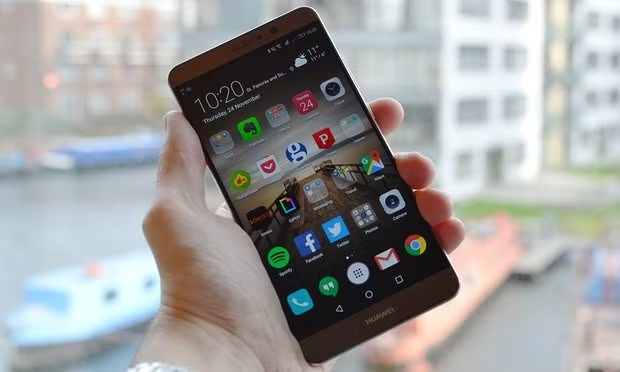 |
| The Huawei Mate 9 has a massive 5.9in screen. Photo: Samuel Gibbs for the Guardian |
If you want a really big screen – bigger than all the others in this lineup – the Mate 9 is for you.
The front is pretty much all screen with a 5.9in display and small bezels at either side making it more manageable than you might expect. Not everyone will be able to use it comfortably with one hand, but the curved back, chamfered edges and good palm rejection make it easier to hold on to than even some smaller-screened competitors, even when it weighs a good 20g more.
The screen isn’t as sharp as some others, but the Mate 9 will last around two days between charges. It’s superfast too, has dual-sim support, expandable storage and has an extremely rapid fingerprint scanner on the back.
It has two cameras on the back, one monochrome and one colour, which work together to improve detail and low-light performance. You can also use them in interesting combinations – shooting in true monochrome is great fun.
Huawei’s version of Android – Emotion UI based on Android 7 Nougat – has many more power and notification controls than you would normally find, and looks a little different from Android on most other smartphones.
5. OnePlus 3T
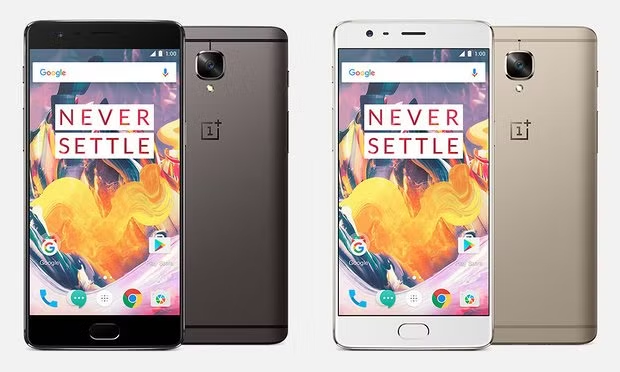 |
| The OnePlus 3T is available in gun metal or soft gold and squeezes a non-curved 5.5in screen into a small body. Photo: handout/Handout |
The OnePlus 3T is the successor to the excellent OnePlus3. Now it has a faster processor, a larger capacity battery and better cameras.
It’s 5.5in screen is slightly less sharp than rivals with the same size display, but is vibrant and colourful with good viewing angles. It’s also got narrow bezels, which combined with a curved back and chamfered edges make the 3T easier to grip than most.
You have a choice of 64GB or 128GB of storage, but cannot add more. It has two sim slots for using two phone numbers simultaneously, and a rapid charging technology called Dash Charge.
The battery lasts a day between charges and the phone has the fastest Qualcomm processor on the market, matching the Google Pixel XL. The fingerprint scanner on the front is excellent and the camera’s pretty good too.
It doesn’t yet run Android 7 Nougat, but an update to the latest version is promised before the year is out. The OnePlus 3T is a great all-round device for less money than most of the rest.