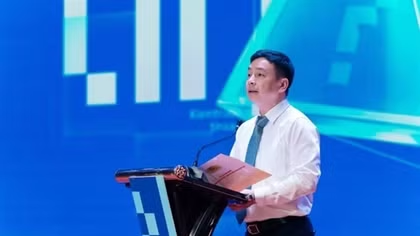
French Nobel Laureate inspires Vietnamese youth to embrace science

PSNews - Professor Serge Haroche, the French quantum physicist who won the 2012 Nobel Prize in Physics, sent an inspiring message to Vietnamese youth: “Passion and curiosity are the greatest driving forces. Then, be prepared to adapt to change, because science always opens unexpected paths. Seek an academic environment with mentors who are willing to listen.”

On October 3, at the Vietnam International Innovation Exhibition 2025 (Hoa Lac Hi-Tech Park), the National Innovation Center (NIC) and the French Embassy in Vietnam co-hosted a seminar titled “Unlocking Franco–Vietnamese Innovation Potential: Lessons from Nobel Laureate Serge Haroche.” The event attracted a large audience of scientists, scholars, entrepreneurs, and hundreds of young people passionate about science.

Bridging Franco–Vietnamese Scientific Excellence

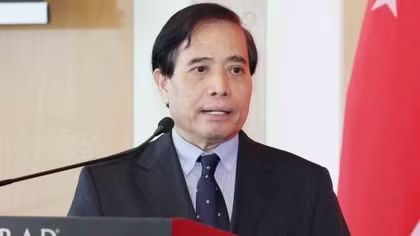
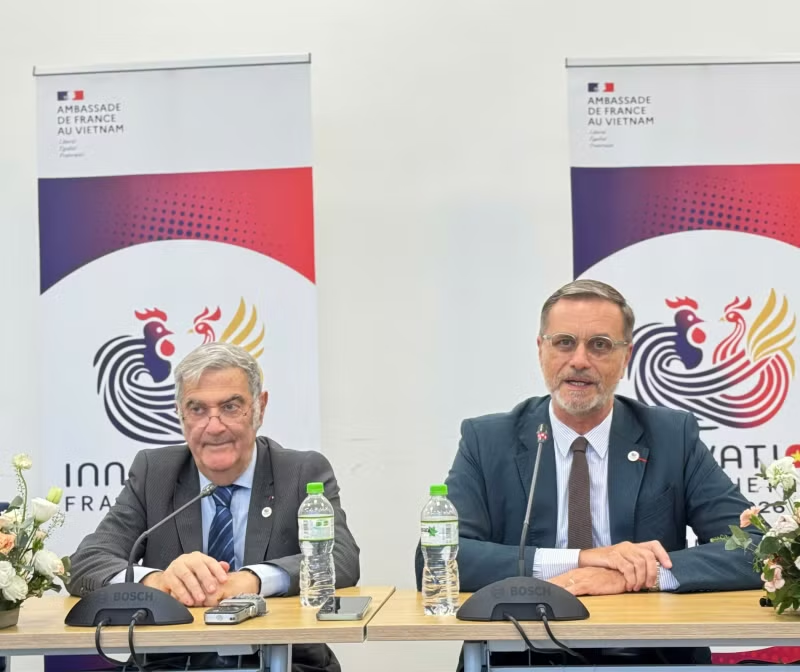
Speaking at the seminar, French Ambassador to Vietnam Olivier Brochet said France invests 48 billion euros annually in research — a commitment that has made it the world’s fourth-largest holder of Nobel Prizes. France currently leads Europe in artificial intelligence investment, with nearly 2 billion euros mobilized in 2024.
French Nobel Laureate inspires Vietnamese youth to embrace science -0
French Ambassador to Vietnam Olivier Brochet said that 2025 marks the France–Viet Nam Year of Innovation, launched by France to promote cooperation and exchanges in innovation between the two countries.

“The spirit of French innovation in Vietnam is reflected through a diverse ecosystem of enterprises across sectors, as well as three Franco–Vietnamese universities training future scientists, engineers, managers, and entrepreneurs — all contributing to a dynamic and trustworthy partnership in innovation,” Ambassador Brochet emphasized.

He noted that since the establishment of the Comprehensive Strategic Partnership between France and Vietnam on October 7, 2024, France has launched the France–Vietnam Innovation Year, featuring a series of key events — including this seminar with Professor Serge Haroche, a Nobel laureate and an emblem of French scientific excellence.

Ambassador Brochet highlighted that Professor Haroche’s work exemplifies the importance of fundamental research in addressing today’s and tomorrow’s global challenges, particularly the applications of quantum physics in emerging technologies. The Ambassador expressed hope that Professor Haroche’s insights would inspire a passion for science among Vietnamese students and young researchers.
French Nobel Laureate inspires Vietnamese youth to embrace science -1
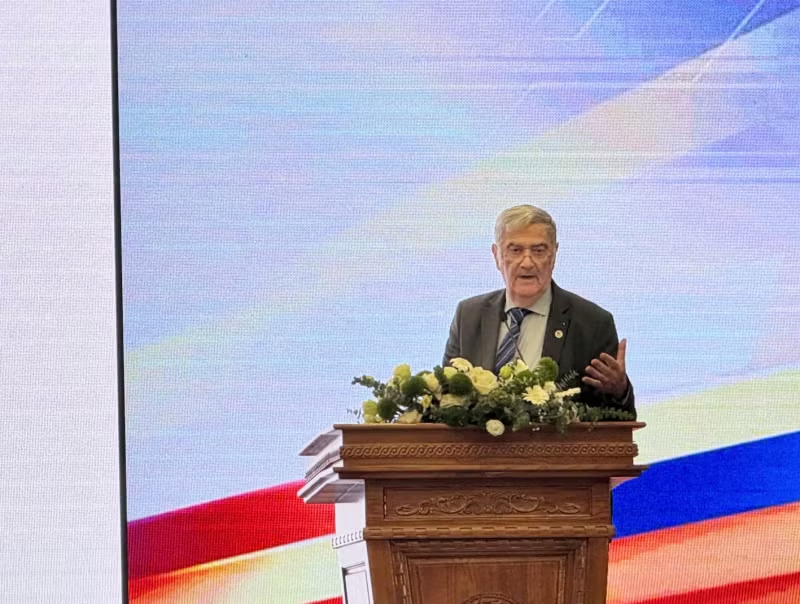
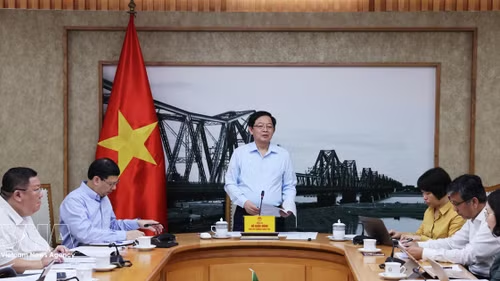
Professor Serge Haroche, co-recipient of Nobel Prize in Physics 2012 speaking at the seminar.

Fundamental Science: The Foundation of All Breakthroughs

Opening his remarks, Professor Haroche underscored the essential role of fundamental research in addressing humanity’s pressing challenges — from the environment and energy to technological transformation.

“Many people see basic science as a luxury,” he said, “but it is the foundation of all modern applications. Every technology we have today stems from outstanding fundamental research".

Citing the history of science, Haroche recalled how 17th-century thinkers pondered abstract questions such as ‘What is light?’ and ‘What is the nature of matter?’ — inquiries that paved the way for groundbreaking discoveries including electricity, lasers, nuclear magnetic resonance, atomic clocks, and GPS. He reminded the audience that scientific progress often arises from unpredictable connections and serendipitous discoveries.

Turning to Vietnam, Professor Haroche said the country’s political stability offers a solid base for long-term investment in science. He emphasized the need to nurture a generation of young researchers who are curious, creative, and free to explore. “Both the government and businesses should accompany this effort by providing financial support and helping to test and apply scientific findings in real life,” he noted.
French Nobel Laureate inspires Vietnamese youth to embrace science -2
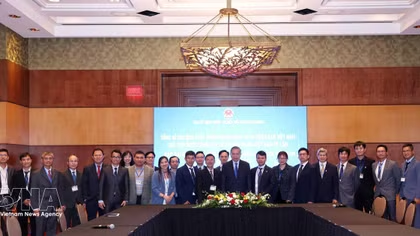
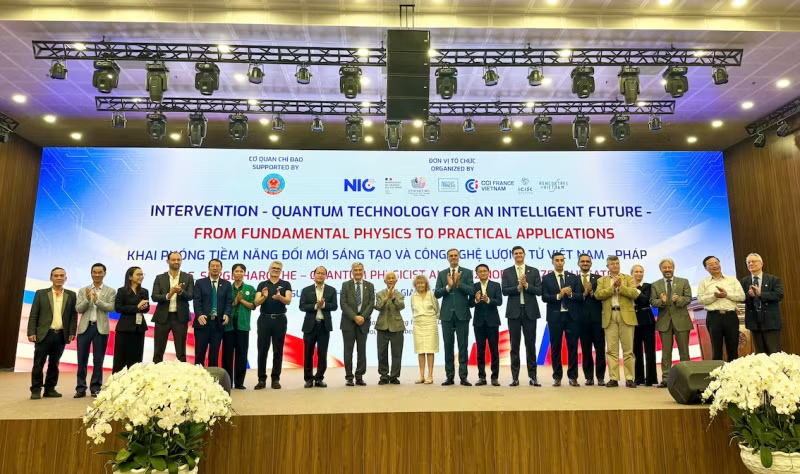
Delegates at the seminar.

When interacting with students, Haroche shared that this was his first visit to Vietnam, but he was already aware of the strong academic spirit among Vietnamese youth, who have achieved impressive results in international science competitions. As quantum technology becomes a defining frontier, he said Vietnam’s advantage lies in fostering “brilliant minds who are deeply grounded in fundamental science and driven by genuine curiosity”.

Reaffirming his lifelong belief, Professor Haroche concluded that basic and applied sciences are inseparable. “Patience in investing in fundamental science,” he said, “is what builds the solid foundation for the technological breakthroughs of the 21st century”.

He once again encouraged young Vietnamese to remain curious and resilient: “Passion and curiosity are the greatest driving forces. Then, be prepared to adapt to change, because science always opens unexpected paths. Seek an academic environment with mentors who are willing to listen”.

Professor Serge Haroche, born in 1944, earned his Ph.D. in 1971 and is currently an honorary professor at the Collège de France. He is renowned for his pioneering research in quantum optics and quantum information science. In 2012, he and his colleague David Wineland were awarded the Nobel Prize in Physics for their groundbreaking experimental methods that enable the measurement and manipulation of individual quantum systems.

Experts describe Haroche as the first scientist to measure changes in a quantum state without destroying the system, proving that humans can observe and control fragile quantum states once thought impossible to handle.

His pioneering experiments have helped move quantum mechanics beyond theoretical boundaries, establishing it as the foundation for future technologies such as quantum computers — which can vastly outperform classical computers — as well as quantum sensors and the quantum internet, a communication network with virtually unbreakable security.
By Kim Khanh

Other News

Top leader calls for greater contribution from Vietnamese experts in Canada

Top leader calls for greater contribution from Vietnamese experts in Canada

At a meeting with representatives of the Canadian Vietnamese Scientists and Experts Association (CVSEA) on September 25 (local time), the top leader praised the contributions and professional capabilities of Vietnamese experts and intellectuals in Canada, describing them as a valuable intellectual resource and an important bridge connecting Vietnam with Canada and the wider world.

Hanoi approves controlled pilot of two technology projects

Hanoi approves controlled pilot of two technology projects

The two projects involve an intelligent autonomous transportation system developed by Phenikaa-X JSC and a technology for producing mixed rare-earth oxides with a purity of over 95% on a semi-industrial scale developed by the Mining Technology and Construction Consultancy JSC.

Banking industry in AI era: When data becomes competitive advantage

Banking industry in AI era: When data becomes competitive advantage

In just a few years, AI has evolved from an experimental technology into an “assistant” for many banks, supporting everything from customer service, credit approval, and fraud detection to risk management. However, as the technological gap between institutions narrows, a new question is emerging: What will determine banks' competitive advantage in the AI era?

Bac Ninh considers establishing AI centre of excellence

Bac Ninh considers establishing AI centre of excellence

A meeting has been held in Bac Ninh to discuss potential cooperation with Plug and Play in developing the northern province’s innovation ecosystem and establishing an artificial intelligence (AI) centre of excellence, with Standing Vice Chairman of the provincial People’s Committee Mai Son receiving a delegation from the global innovation platform.

Hanoi allows 24-month trial of autonomous vehicles at Hoa Lac

Hanoi allows 24-month trial of autonomous vehicles at Hoa Lac

The project aims to assess the safety, reliability and readiness of autonomous vehicles under real traffic conditions, as well as the effectiveness of autonomous public transport and compatibility with existing systems. Its results will contribute to developing technical standards, operating procedures and management models suited to Hanoi’s traffic conditions.

Singapore's experience suggests solutions to Vietnam's human resources challenge in AI era

Singapore's experience suggests solutions to Vietnam's human resources challenge in AI era

As Vietnam accelerates digital transformation and high-tech development, Singapore’s experience and the engagement of global technology companies demonstrate that human resources preparation must stay ahead of the curve. The ability to filter knowledge, collaborate, innovate and effectively use AI will increasingly become essential to helping workers adapt to a changing labour market and strengthening the competitiveness of Vietnam’s economy in the new era.

Protecting national security amid digital transformation, cyberspace

Protecting national security amid digital transformation, cyberspace

Cybersecurity, information security and data security risks must be identified and addressed early and from afar, with appropriate defensive measures ready to neutralise threats and protect national interests in cyberspace, said Lieutenant General Le Xuan Minh, Director of the Ministry of Public Security’s Department of Cybersecurity and Hi-tech Crime Prevention (A05).

Mekong Delta launches first robotics, AI research institute

Mekong Delta launches first robotics, AI research institute

Dr. Nguyen Van Quang, Rector of Nam Can Tho University, said the university is developing a value chain covering training, research, technology development, testing, technology transfer and commercialisation. The model is designed to link research more closely with practical needs, ensuring that technologies generate products and products create value for society.

Vietnam positioned to harness AI wave, World Bank report says

Vietnam positioned to harness AI wave, World Bank report says

The WB report identifies Vietnam as one of the few economies outside the European Union (EU) to have adopted a comprehensive AI regulatory framework as early as 2025. Vietnam applies a risk-tiered approach similar to that of the EU AI Act, imposing different obligations depending on whether an AI system poses “unacceptable,” “high,” “low” or “minimal” risks. The approach is viewed as a strategic step towards ensuring safe and transparent AI governance.