Vietnam accelerates tourism digitalisation via AI, data ecosystems

Under this blueprint, tourism is designated as a high-priority sector to enhance the use of digital technology to improve management capabilities, service quality, and the visitor experience.

Hanoi (VNA) - Vietnam is set to digitise its tourism sector, leveraging artificial intelligence (AI) and data analytics to streamline operations, enhance visitor experiences, and integrate with regional markets.
2-8343.jpg
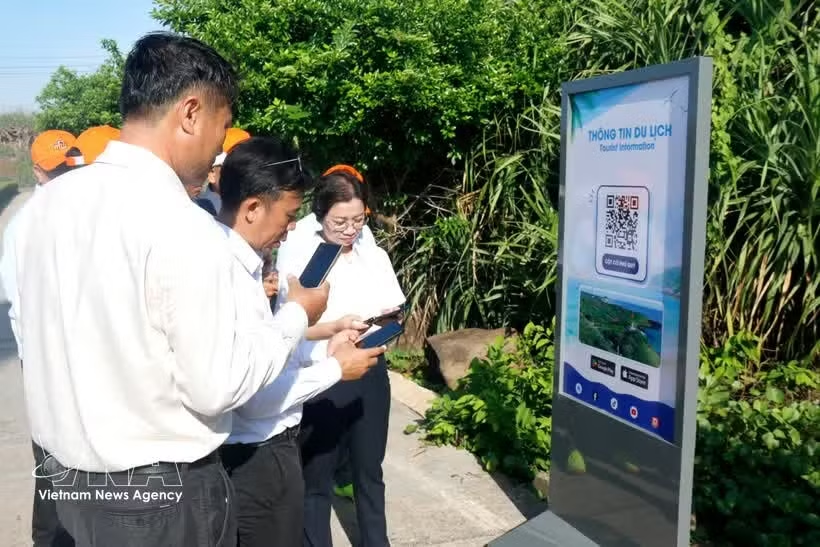
Tourists scan the QR Code to access travel information at the sovereignty flagpole of Phu Quy Special Zone in Lam Dong province. (Photo: VNA)

This directive centres heavily on a newly approved national strategy aimed at transforming the country's socio-economic landscape over the next five years.

According to the Tourism Information Centre under the Vietnam National Authority of Tourism (VNAT), Deputy Prime Minister Ho Quoc Dung recently signed Decision No. 1033/QD-TTg, approving the National Digital Economy and Digital Society Development Programme for the 2026 – 2030 period. The programme establishes a dynamic digital economy driven by digital platforms, big data, and AI.

Under this blueprint, tourism is designated as a high-priority sector to enhance the use of digital technology to improve management capabilities, service quality, and the visitor experience.

Developing the digital economy and digital society is not only a requirement of the national digital transformation process but also an important driver that promotes fast, sustainable growth, boosting productivity, efficiency, and the competitiveness of the economy.

Tourists at a traditional craft village in Ho Chi Minh City. (Photo: VNA)

Digital applications will be deeply integrated into the management and operation of tourism establishments, including accommodation, travel agencies, catering services, and tourist attractions.

A key mandate of the programme is the creation of a national tourism digital data platform alongside an advanced digital promotion system. The government will continue to promote tech-driven tourism concepts, such as virtual reality (VR) tours, digital sightseeing, and online experiential travel. These initiatives aim to broaden destination accessibility and boost Vietnam’s appeal to both domestic and international travelers.

Furthermore, the programme emphasises deploying AI to develop smart destinations and deliver highly personalised traveler experiences.

Human resources development is also being prioritised. Tourism workers will undergo extensive training to master digital management platforms and business software, ensuring compliance with both national and international professional standards.

The programme sets an ambitious target that is by 2030, at least 70% of all tourism establishments nationwide must utilise digital platforms for their governance and business operations. The Ministry of Culture, Sports and Tourism (MoCST) will oversee and measure this metric.

The MoCST has been tasked with several key responsibilities including building and operating specialised tourism databases; publishing open data directories so businesses can develop new products; and deploying support programmes to help small and medium-sized enterprises (SMEs) transition digitally.

Additionally, the ministry will diversify tour models by introducing digital products such as virtual tours, augmented reality (AR), route simulations, and 360-degree experiences.

Crucially, Vietnam will push for the interconnectivity of digital tourism platforms across Southeast Asia, aiming to establish a unified "ASEAN Digital Tourism" ecosystem. This will provide travelers with a seamless, end-to-end digital experience, from information searching and booking to cashless payments and service reviews.

These new directives build upon the VNAT’s existing digital foundations, which include the nationwide "Tourism Management and Business" platform, the "Vietnam Travel" application, and automated e-ticketing systems at major landmarks. The VNAT noted that AI and digital data are no longer just supporting tools, but are now the primary drivers modernising the industry and sharpening Vietnam's competitive edge in the global market./.

en.vietnamplus.vn

Other News

Vietnam targets at least 10 large strategic technology firms by 2030

Vietnam targets at least 10 large strategic technology firms by 2030

Deputy Prime Minister Ho Quoc Dung has signed a decision approving a plan to develop large domestic strategic technology enterprises in the 2026–2030 period, aimed at advancing digital infrastructure, digital human resources, digital data, strategic technologies and cybersecurity.

Protecting users crucial in building digital trust: Experts

Protecting users crucial in building digital trust: Experts

In Vietnam, digital transformation in the finance and banking sector is accelerating cashless payments, expanding access to financial services, improving market transparency and supporting economic growth and macroeconomic management.

Fostering skilled workforce for innovation era: experts

Fostering skilled workforce for innovation era: experts

Experts said close coordination among State management agencies, research institutes, universities, and businesses will improve training quality and serve the dual goals of quality education and practical research application.

Startup forum bridges Silicon Valley and local innovation ecosystem

Startup forum bridges Silicon Valley and local innovation ecosystem

The University of Economics Ho Chi Minh City (UEH), Saigon Asset Management (SAM), and Plug and Play Tech Centre co-hosted the “From Vietnam to Silicon Valley” forum, exploring AI innovation, venture capital, and pathways to integrate Vietnam’s startup ecosystem with Silicon Valley and global markets.

Experts call for stronger action against fake news online

Experts call for stronger action against fake news online

Experts have warned that fake news, misinformation and harmful online content are increasingly shaping public perceptions, particularly among young people, and stressed the need for stronger legal safeguards, technology tools and wider dissemination of credible information to tackle the problem effectively.

Protecting digital future in post-quantum, AI era

Protecting digital future in post-quantum, AI era

Participants highlighted the importance of building a proactive, synchronised and sustainable national cybersecurity ecosystem through closer cooperation among regulators, technology firms, research institutions and cybersecurity experts.

Vietnam attends SAHA 2026 defence, aerospace exhibition in Türkiye

Vietnam attends SAHA 2026 defence, aerospace exhibition in Türkiye

Vietnam’s participation in SAHA 2026 International Defence & Aerospace Exhibition in Istanbul reflects the country’s consistent policy of enhancing international defence integration and promoting defence industry cooperation towards self-reliance, self-strengthening, modernisation and dual-use development.

SK Group partners to build AI ecosystem in Vietnam

SK Group partners to build AI ecosystem in Vietnam

SK Innovation and SK Telecom signed MoUs with Nghe An province and the National Innovation Centre of Vietnam to advance AI ecosystem development and support the country’s long-term growth strategy.

Vietnam Research Excellence Fellowship for 2026-2030 approved

Vietnam Research Excellence Fellowship for 2026-2030 approved

Under the Vietnam Research Excellence Fellowship (VREF) for the 2026–2030 period, PhD students are identified as a core research force directly contributing to breakthroughs in sci-tech and innovation. Investing in top-tier doctoral candidates is more than workforce development, but a high-stakes strategic bet to forge a cohort of world-class scientists and technologists who can power Vietnam’s long-term economic ambitions.