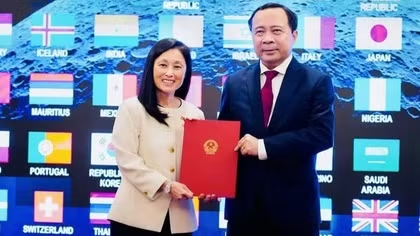
Vietnam views space science and technology as a strategic sector that can lift national science-technology capacity and support sustainable growth. The country wants to work with member nations on peaceful, safe, equitable, transparent and sustainable space exploration under international law, with tangible benefits for people and the planet.
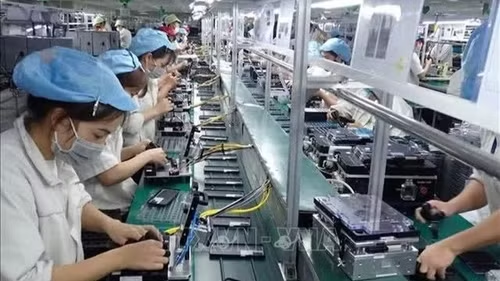
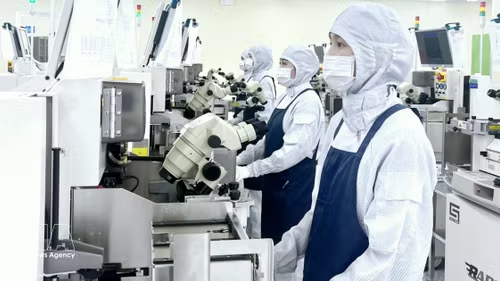
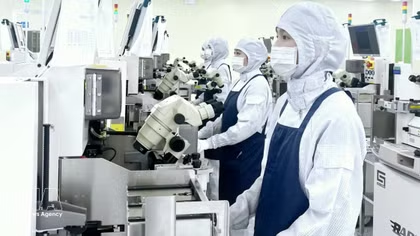
As global semiconductor supply chains are restructured, experts said Vietnam’s opportunity lies not only in attracting projects but also in accumulating knowledge, technology and management expertise to move into higher-value activities.
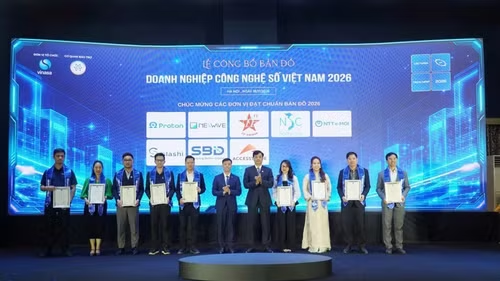
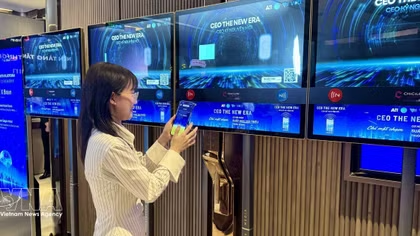
The digital economy is a strategic priority for Vietnam, which aims to raise its share of GDP to at least 30% by 2030, in line with the Politburo’s Resolution No. 57-NQ/TW on breakthroughs in science and technology, innovation and national digital transformation.
Addressing the event, experts and business representatives stressed that harnessing digital technologies requires businesses to adopt a new mindset, use data in decision-making, and maintain brand identity and consumer trust.
The Agricultural University Plovdiv values cooperation with Viet Nam and stays ready to share experience and expertise and explore joint research and technology transfer opportunities.
Over the next three to five years, Vietnam could develop products and services, including post-quantum cryptography migration services, quantum random number generator (QRNG) devices and, potentially, subsurface surveys of transport infrastructure using quantum sensors.
Decree No. 386/2026/ND-CP dated October 12, comprises five chapters and 54 articles specifying mechanisms to attract experts, young talent and breakthrough initiatives; access to and exploitation of data; financing and venture capital; dedicated data innovation spaces; and the development of data products and services, and the data economy.
Vietnam is one of the world’s biodiversity-rich countries, with more than 5,100 medicinal plant and fungal species, along with hundreds of animal and mineral species used in traditional medicine.
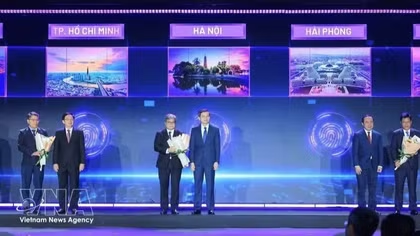
Hanoi led in 18 of the 52 component indicators – the highest number among the 34 localities assessed.
The resolution offers a broader approach, with contributions possible through knowledge, experience or by connecting businesses, universities and research institutes in Vietnam and abroad. Individual contributions may be small, but when multiplied, they can create significant strength.
Vietnam’s innovation output ranking also rose two places from 37th to 35th, helping the country meet the target set by the Government in Resolution No. 02/NQ-CP for 2026.
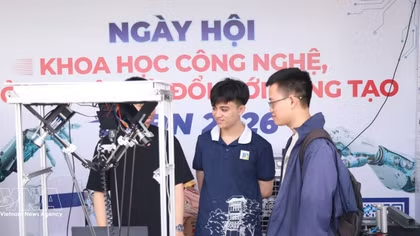
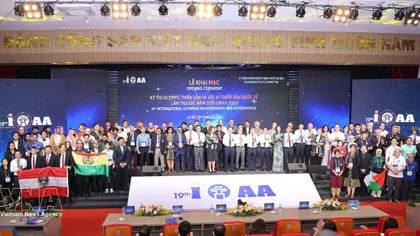
Vietnam is participating in IOAA 2026, which runs through October 5, with a 10-member team selected in accordance with regulations set by the Ministry of Education and Training.
At a meeting with representatives of the Canadian Vietnamese Scientists and Experts Association (CVSEA) on September 25 (local time), the top leader praised the contributions and professional capabilities of Vietnamese experts and intellectuals in Canada, describing them as a valuable intellectual resource and an important bridge connecting Vietnam with Canada and the wider world.
Although the Political Bureau’s Resolution No. 57-NQ/TW allows pilot schemes for new practical issues and accepts risks and delays in science, technology and innovation, concerns over risks and responsibility persist.
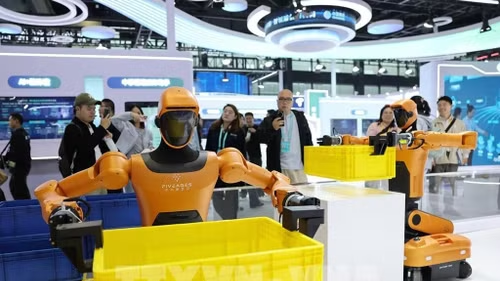
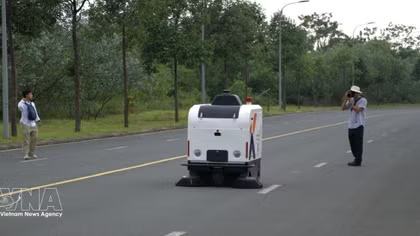
The two projects involve an intelligent autonomous transportation system developed by Phenikaa-X JSC and a technology for producing mixed rare-earth oxides with a purity of over 95% on a semi-industrial scale developed by the Mining Technology and Construction Consultancy JSC.
If the proposed threshold is approved and takes effect, the five largest technology companies could add up to 7.6 trillion VND (291 million USD) in R&D funding annually.
In just a few years, AI has evolved from an experimental technology into an “assistant” for many banks, supporting everything from customer service, credit approval, and fraud detection to risk management. However, as the technological gap between institutions narrows, a new question is emerging: What will determine banks' competitive advantage in the AI era?
A meeting has been held in Bac Ninh to discuss potential cooperation with Plug and Play in developing the northern province’s innovation ecosystem and establishing an artificial intelligence (AI) centre of excellence, with Standing Vice Chairman of the provincial People’s Committee Mai Son receiving a delegation from the global innovation platform.
The project aims to assess the safety, reliability and readiness of autonomous vehicles under real traffic conditions, as well as the effectiveness of autonomous public transport and compatibility with existing systems. Its results will contribute to developing technical standards, operating procedures and management models suited to Hanoi’s traffic conditions.
As Vietnam accelerates digital transformation and high-tech development, Singapore’s experience and the engagement of global technology companies demonstrate that human resources preparation must stay ahead of the curve. The ability to filter knowledge, collaborate, innovate and effectively use AI will increasingly become essential to helping workers adapt to a changing labour market and strengthening the competitiveness of Vietnam’s economy in the new era.