Up to 40% of cancers are preventable, says the World Cancer Research Fund, launching its updated report on the reasons for the global spread. While smoking is still the biggest cause of cancer, WCRF says obesity will overtake it within a couple of decades in countries like the UK. The fund advises that our unhealthy modern lifestyle – and the promotion of junk food – has to end if people are to avoid the disease.
Watching screens, whether computers at work or the TV at home, is bad for adults and children because it is sedentary. Physical activity, including walking, is protective. Processed meats and too much red meat are linked to bowel and other forms of cancer. Sugary drinks cause people to put on weight. Alcohol is also calorific and linked to bowel, breast, liver, mouth and throat, oesophagus and stomach cancers.
Ten years ago, WCRF identified links between obesity and seven cancers. Today, the evidence shows links to 12, says the report presented at the European Congress on Obesity in Vienna. They are cancers of the liver, ovary, prostate (advanced), stomach, mouth and throat, bowel, breast (post-menopause), gallbladder, kidney, oesophagus, pancreas and womb.
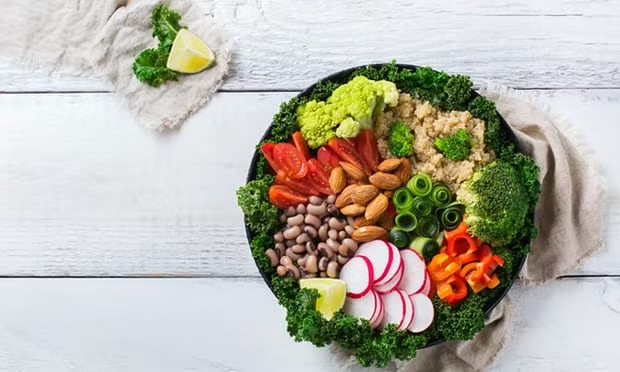 |
| Maintaining a healthy weight, and eating a diet that is rich in vegetables and whole grains will reduce your risk of cancer. Photograph: Aamulya/Getty Images/iStockphoto |
It is impossible to work out how many cancer-free years a better lifestyle could buy people, says WCRF, but a spokesperson said “we do know that around 40% of cancer cases are preventable and that eating a healthy diet, being more active each day and maintaining a healthy weight are – after not smoking – the most important ways you can reduce your cancer risk.”
WCRF says one in six deaths globally are already caused by cancer. As more countries adopt “western” lifestyles, moving less and eating more junk food, the number of new cases of cancer is expected to rise. At the current rate, the number of cases around the world will increase by 58%, reaching 24m per year by 2035. The global cost of cancer, it says, is projected to be an “astonishing” US$458bn by 2030.
It is the whole diet that matters – not just giving up sugars or salami. WCRF recommends that people cut down on fast and processed convenience foods. In February the Guardian revealed that more than half the UK diet was made up of ultra-processed foods.
“Our research shows it’s unlikely that specific foods or nutrients are important single factors in causing or protecting against cancer,” said Dr Kate Allen, WCRF’s executive director of science and public affairs.
“Rather, different patterns of diet and physical activity throughout life combine to make you more or less susceptible to cancer. Our cancer prevention recommendations work together as a blueprint to beat cancer that people can trust, because they are based on evidence that has now proved consistent for decades.”
This is the third expert report on global cancer prevention that WCRF has published – the others were in 1997 and 2007.
Individuals can help reduce their cancer risk by living a healthy life, but governments have a responsibility too, it says. Public health policies and regulations that reduce the advertising and marketing and discounting of junk and processed foods and make it easier to walk, cycle and be active are vital, the report says.
Prof Linda Bauld, Cancer Research UK’s prevention expert, said: “This report supports what we already know – the key to cutting cancer risk is through our way of life. Not smoking, keeping a healthy weight, eating and drinking healthily and getting more active all helps. A bacon butty or glass of wine every so often isn’t anything to worry about, it’s the things you do every day that matter most. Building small changes into your daily life, like choosing sugar-free drinks or walking more, can add up to a big difference for your health.” She also called on the government to act to curb junk food marketing.
The WCRF has launched an online cancer health check tool to allow people to assess their own lifestyle and risk.
A separate presentation at the conference suggests that obesity plays a part in malignant melanoma – a form of skin cancer that is the fifth most common in the UK, causing 2,000 deaths a year. Magdalena Taube and colleagues at the University of Gothenburg in Sweden have shown that obese people who undergo stomach-shrinking bariatric surgery and lose a quarter of their weight have a dramatically decreased risk of the cancer.
The data showing a 61% drop in risk came from the long-running 4,000-strong Swedish Obese Subjects study, with follow-up of 20 years. Half had bariatric surgery and half did not. “Our study indicates it is not the sun exposure,” said Taube. “It is the obesity that drives this melanoma.” The subjects are all Swedish residents who do not have a great deal of sun exposure.
Taube also cites a study in the US of war veterans, in which black subjects had a higher rate of malignant melanoma than those with more sun-susceptible white skins. One possibility, she said, is that this is a different type of melanoma which is not affected by the sun’s radiation.