Toxic waste turned into money

PSNews - Scientists have found out a technological solution to turn phosphor gypsum wastes of Dinh Vu fertilizer plant (Hai Phong) into synthetic gypsum, an additive for the cement industry.

This research result was announced on January 21, in Hanoi.

The process of turning gypsum wastes, which negatively impacts environment and human health, into an additive in manufacturing construction materials, has resolved two issues: reducing environmental polluters and creating a cheaper additive in manufacturing construction materials.

Currently, Vietnam has 3 factories, which discharge a huge amount of gypsum wastes. The three plants are DAP JSC, a subsidiary of Vinachem in the Dinh Vu Economic Zone in Hai Phong City; DAP No. 2 JSC - Vinachem in Lao Cai province; and the Duc Giang - Lao Cai Chemicals Joint Stock Company.
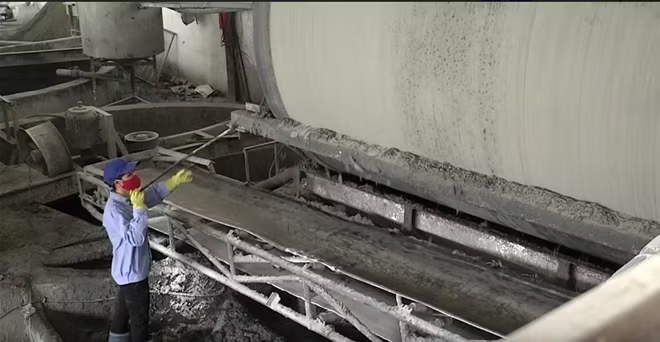
Scientists from Ngoc Linh Company has found the best technological solution, turning phosphor gypsum wastes of Dinh Vu Fertilizer Plant into synthetic gypsum, an additive for cement production.

Up to now, the amount of untreated gypsum wastes is estimated to be about 5.6 million tons. By 2020, the amount of gypsum wastes is forecast to mount to around 3,885 million tons per year.

According to the complex DAP fertilizer production process, gypsum wastes include HF, H2SO4, H3PO4 salts of heavy metals and even radioactive substances.  

Over the past years, DAP Dinh Vu Plant has evidently been found as a big environmental polluter, causing much concern to the public, as the local authorities have detected many environmental violations during its operations.

Against this backdrop, a group of scientists from Ngoc Linh Company has conducted a comprehensive research project, aiming to find the best technological solution, turning phosphor gypsum wastes of Dinh Vu Fertilizer Plant (Hai Phong) into synthetic gypsum, an additive for cement production.

After years of researching, the team has successfully discovered a solution to keeping gypsum discharges from the DAP fertilizer production process in standard quality, and provides first batches of the additive for a number of cement factories, such as VINACONEX Yen Binh Cement; Yen Bai Cement; and Tan Quang Cement.

Apart from protecting environment, the successful work of scientists also has many economic benefits. Vietnam so far has no natural gypsum mine and all gypsum used in the cement manufacturing industry as additive is imported from foreign countries, such as Laos, Thailand and China.

As known, the current price for one ton of domestic-made gypsum is about 600,000 VND, or half of the price of gypsum imported from Laos, Thailand, and 70% of the cost imported gypsum from Oman.
By Phung Nguyen

Other News

Vietnam targets at least 10 large strategic technology firms by 2030

Vietnam targets at least 10 large strategic technology firms by 2030

Deputy Prime Minister Ho Quoc Dung has signed a decision approving a plan to develop large domestic strategic technology enterprises in the 2026–2030 period, aimed at advancing digital infrastructure, digital human resources, digital data, strategic technologies and cybersecurity.

Protecting users crucial in building digital trust: Experts

Protecting users crucial in building digital trust: Experts

In Vietnam, digital transformation in the finance and banking sector is accelerating cashless payments, expanding access to financial services, improving market transparency and supporting economic growth and macroeconomic management.

Fostering skilled workforce for innovation era: experts

Fostering skilled workforce for innovation era: experts

Experts said close coordination among State management agencies, research institutes, universities, and businesses will improve training quality and serve the dual goals of quality education and practical research application.

Startup forum bridges Silicon Valley and local innovation ecosystem

Startup forum bridges Silicon Valley and local innovation ecosystem

The University of Economics Ho Chi Minh City (UEH), Saigon Asset Management (SAM), and Plug and Play Tech Centre co-hosted the “From Vietnam to Silicon Valley” forum, exploring AI innovation, venture capital, and pathways to integrate Vietnam’s startup ecosystem with Silicon Valley and global markets.

Experts call for stronger action against fake news online

Experts call for stronger action against fake news online

Experts have warned that fake news, misinformation and harmful online content are increasingly shaping public perceptions, particularly among young people, and stressed the need for stronger legal safeguards, technology tools and wider dissemination of credible information to tackle the problem effectively.

Protecting digital future in post-quantum, AI era

Protecting digital future in post-quantum, AI era

Participants highlighted the importance of building a proactive, synchronised and sustainable national cybersecurity ecosystem through closer cooperation among regulators, technology firms, research institutions and cybersecurity experts.

Vietnam attends SAHA 2026 defence, aerospace exhibition in Türkiye

Vietnam attends SAHA 2026 defence, aerospace exhibition in Türkiye

Vietnam’s participation in SAHA 2026 International Defence & Aerospace Exhibition in Istanbul reflects the country’s consistent policy of enhancing international defence integration and promoting defence industry cooperation towards self-reliance, self-strengthening, modernisation and dual-use development.

SK Group partners to build AI ecosystem in Vietnam

SK Group partners to build AI ecosystem in Vietnam

SK Innovation and SK Telecom signed MoUs with Nghe An province and the National Innovation Centre of Vietnam to advance AI ecosystem development and support the country’s long-term growth strategy.

Vietnam Research Excellence Fellowship for 2026-2030 approved

Vietnam Research Excellence Fellowship for 2026-2030 approved

Under the Vietnam Research Excellence Fellowship (VREF) for the 2026–2030 period, PhD students are identified as a core research force directly contributing to breakthroughs in sci-tech and innovation. Investing in top-tier doctoral candidates is more than workforce development, but a high-stakes strategic bet to forge a cohort of world-class scientists and technologists who can power Vietnam’s long-term economic ambitions.