UK Drone users face 'Theory test' under new Gov't proposals

Anyone who buys a drone in the UK may have to register the device and take a safety test in a bid to prevent potential collisions with passenger jets, a new government proposal suggests.
The UK government is clamping down on drone owners and considering giving them a knowledge or situational awareness test, which would be similar to a driving theory exam. According to the Department for Transport, it is unclear at this stage if the exam will be voluntary or mandatory.

The new drone rules are part of a document drawn up by the government entitled, 'Unlocking the UK's High Tech Economy: Consultation on the Safe Use of Drones in the UK.' While there are already strict rules for drone users, the unmanned aerial vehicles — also known as UAVs — which can operate under remote control or autonomously by on-board computers, have become increasingly widespread and are cheaply available in high street shops and online.
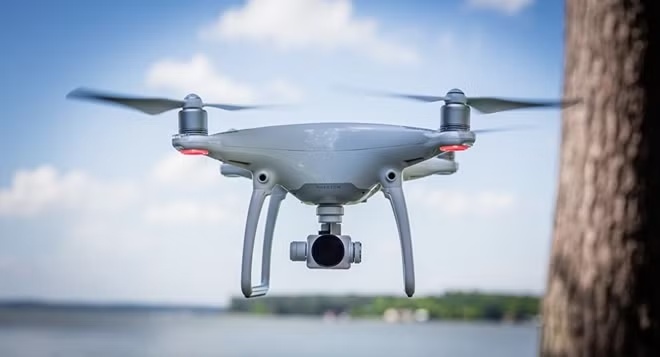
Their popularity has led to a spike in the number of near-misses with passenger jets, with aviation chiefs receiving reports of 56 near-miss incidents in the 10 months to October — up from 29 in all of the previous year and six in 2014. 
It is believed that the rules will keep casual pilots of drones in check while encouraging more research to be done by the private sector.

​The government is also interested in electronic tagging; however the technology for this is not yet available. As a result government officials are considering an app that pilots would need to use before each flight. 

Other proposals include testing facilities, which will allow the owner to fly their drone in a quiet rural area. Although none of these ideas have been finalized as of yet, the government has recognized that there are problems with drone ownership in the UK and have put forward these proposals and ways in which to mitigate the risks.
Sputnik

Other News

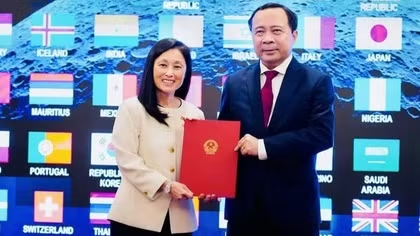
Vietnam joins Artemis Accords on space exploration

Vietnam joins Artemis Accords on space exploration

Vietnam views space science and technology as a strategic sector that can lift national science-technology capacity and support sustainable growth. The country wants to work with member nations on peaceful, safe, equitable, transparent and sustainable space exploration under international law, with tangible benefits for people and the planet.

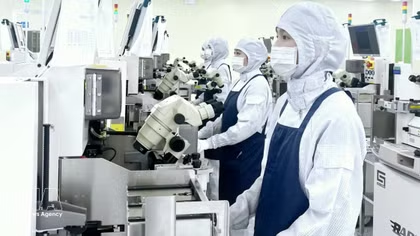
Vietnam seeks deeper role in global semiconductor value chain

Vietnam seeks deeper role in global semiconductor value chain

As global semiconductor supply chains are restructured, experts said Vietnam’s opportunity lies not only in attracting projects but also in accumulating knowledge, technology and management expertise to move into higher-value activities.

Vietnam moves to standardize digital economy measurement

Vietnam moves to standardize digital economy measurement

The digital economy is a strategic priority for Vietnam, which aims to raise its share of GDP to at least 30% by 2030, in line with the Politburo’s Resolution No. 57-NQ/TW on breakthroughs in science and technology, innovation and national digital transformation.

AI platform launched to help businesses build brands

AI platform launched to help businesses build brands

Addressing the event, experts and business representatives stressed that harnessing digital technologies requires businesses to adopt a new mindset, use data in decision-making, and maintain brand identity and consumer trust.

Top leader calls for greater contribution from Vietnamese experts in Canada

Top leader calls for greater contribution from Vietnamese experts in Canada

At a meeting with representatives of the Canadian Vietnamese Scientists and Experts Association (CVSEA) on September 25 (local time), the top leader praised the contributions and professional capabilities of Vietnamese experts and intellectuals in Canada, describing them as a valuable intellectual resource and an important bridge connecting Vietnam with Canada and the wider world.

Hanoi approves controlled pilot of two technology projects

Hanoi approves controlled pilot of two technology projects

The two projects involve an intelligent autonomous transportation system developed by Phenikaa-X JSC and a technology for producing mixed rare-earth oxides with a purity of over 95% on a semi-industrial scale developed by the Mining Technology and Construction Consultancy JSC.

Banking industry in AI era: When data becomes competitive advantage

Banking industry in AI era: When data becomes competitive advantage

In just a few years, AI has evolved from an experimental technology into an “assistant” for many banks, supporting everything from customer service, credit approval, and fraud detection to risk management. However, as the technological gap between institutions narrows, a new question is emerging: What will determine banks' competitive advantage in the AI era?

Bac Ninh considers establishing AI centre of excellence

Bac Ninh considers establishing AI centre of excellence

A meeting has been held in Bac Ninh to discuss potential cooperation with Plug and Play in developing the northern province’s innovation ecosystem and establishing an artificial intelligence (AI) centre of excellence, with Standing Vice Chairman of the provincial People’s Committee Mai Son receiving a delegation from the global innovation platform.

Hanoi allows 24-month trial of autonomous vehicles at Hoa Lac

Hanoi allows 24-month trial of autonomous vehicles at Hoa Lac

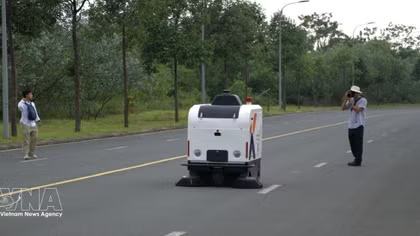
The project aims to assess the safety, reliability and readiness of autonomous vehicles under real traffic conditions, as well as the effectiveness of autonomous public transport and compatibility with existing systems. Its results will contribute to developing technical standards, operating procedures and management models suited to Hanoi’s traffic conditions.

Singapore's experience suggests solutions to Vietnam's human resources challenge in AI era

Singapore's experience suggests solutions to Vietnam's human resources challenge in AI era

As Vietnam accelerates digital transformation and high-tech development, Singapore’s experience and the engagement of global technology companies demonstrate that human resources preparation must stay ahead of the curve. The ability to filter knowledge, collaborate, innovate and effectively use AI will increasingly become essential to helping workers adapt to a changing labour market and strengthening the competitiveness of Vietnam’s economy in the new era.