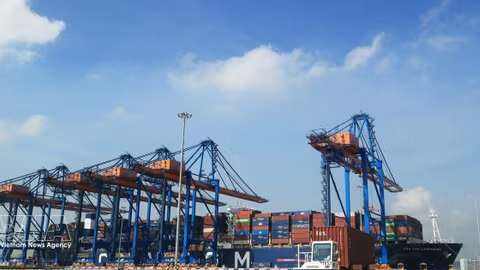
The free trade agreement between Vietnam and the EU (EVFTA) is expected to bring US$3.2 billion worth of benefits to Vietnam in 2020, while helping the Southeast Asian nation expand export markets and engage deeper into the global value chain, said experts.
Negotiations for the deal have ended after six years, opening great chances for Vietnamese firms to penetrate into a promising market with a population of 508 million and total GDP of about US$18 trillion.
Before the FTA was signed, the EU had been the third largest trade partner of Vietnam and one of the two leading export markets of the country with two-way trade reaching upwards of US$50.4 billion in 2017.

With a commitment to cutting down import taxes by over 99%, the deal will bring about great chances for Vietnamese firms to strengthen exports, especially in products Vietnam holds strengths in, such as garments and textiles, footwear, agro-fishery, and timber.
In particular, products that have never been sold in the EU due to tariff barriers will be able to access the market with a competitive price.
A recent research by international experts has shown that the FTA will help increase Vietnam’s export revenue by 4-6% per year in the 10 years after it takes effect.
For the garment and textiles sector, the deal may help raise its exports by US$1.54 billion by 2023 and US$5.82 billion by 2028.
According to the Minister of Industry and Trade Tran Tuan Anh, the FTA is a high quality deal, thus the benefits it brings are high. Vietnam’s export revenue is expected to rise 4-6%, while those of the economic sector will increase by US$19 billion in 2019 and US$70 billion in 2028.
As Vietnam and the EU’s export products and economic structures are supplementary without direct competition, the benefit from the deal is huge.
Minister Anh also held that there will be competitive pressure, including in processing, automobile manufacturing, information technology, agriculture, and animal breeding.
However, along with the opportunities, Vietnam will also face some challenges from the FTA from 2019 onwards. Enterprises who wish to export goods to the EU will have to show certificates of origin (C/O) for their products in order to enjoy the Generalised System of Preferences (GSP).
Tran Thanh Hai, Vice Director of the Department of Import-Exports under the Ministry of Industry and Trade, said that the responsibility to prove the origins of goods will switch from management agencies to exporters themselves.
This means enterprises will have to process the procedures themselves, meeting the criteria for origin certificates and bear the responsibility themselves on the accuracy of the documents.
Statistics from the Ministry of Industry and Trade showed that Vietnam already has 2,700 enterprises conducting export activities with the EU which are subject to GSP.
Hai asserted that before applying C/O regulations on Vietnamese firms, the EU should grant about six months for the firm to adapt to the new regulations.The ministry will organise training courses for enterprises and grant licences to them to issue C/Os, he added.
On the other hand, the EVFTA will create motivation and new playgrounds for EU organisations who wish to invest in Vietnam, while contributing to the process of building modern market institutions and international economic integration in Vietnam.
Minister Anh stressed the need for Vietnamese firms to actively exploit benefits from the deal and prepare themselves for its upcoming impacts.
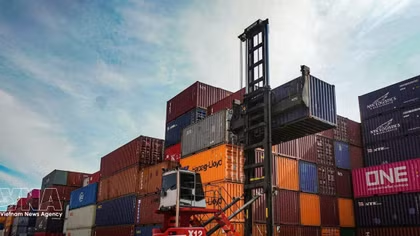
Rather than expanding logistics infrastructure indiscriminately, the MoIT plans to establish a tiered network comprising national, regional and local logistics centres, specialised logistics hubs and cargo consolidation points.
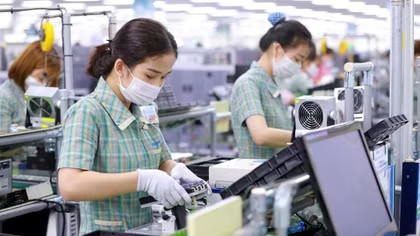
Vietnam has entered the world's top 30 most competitive economies for the first time, ranking 27th out of 70 economies in the 2026 World Competitiveness Ranking published by the International Institute for Management Development (IMD).
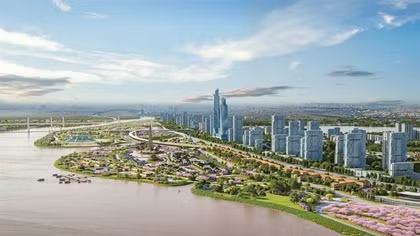
The new circular will help credit institutions have more room to provide capital to businesses and investment projects to support high economic growth in the next few years, while increasing flexibility in the SBV’s monetary policy management.
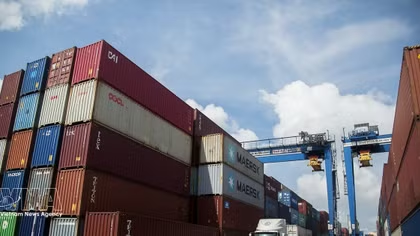
The study found that 85% of Vietnamese enterprises reported positive business sentiment, a sharp increase from 48% in 2025, when business confidence was weighed down by uncertainties surrounding US tariff policies and related trade developments.
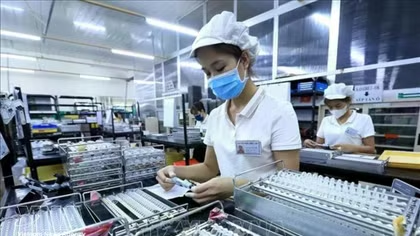
Resolution 10-NQ/TW marks a significant reset of Vietnam’s foreign investment strategy, introducing broad reforms to create a more unified and effective framework for attracting foreign capital.
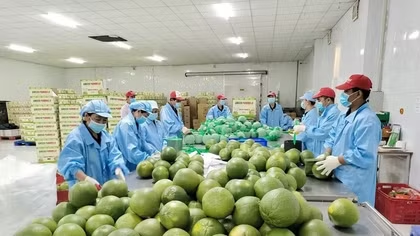
Vinh Long farmers are scaling up specialised growing zones and tightening production standards, aiming to lock in sustainable growth for pomelo cultivation and more prosperity across the Mekong Delta province.
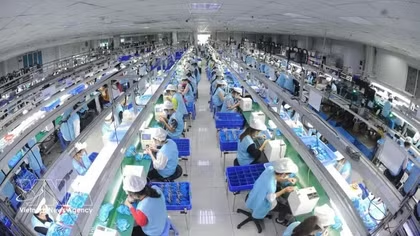
According to Vice Chairman of the provincial People’s Committee Pham Van Thinh, the province aims to maintain stable and sustainable growth, improve the competitiveness of both the economy and local businesses, and make better use of free trade agreements (FTAs) to expand and diversify export markets.
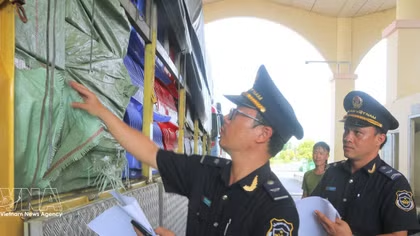
As offenders adopt increasingly sophisticated tactics, customs authorities are tightening controls at border gates, stepping up the use of technologies and refining enforcement measures to intercept illicit goods at the import and transit stages.
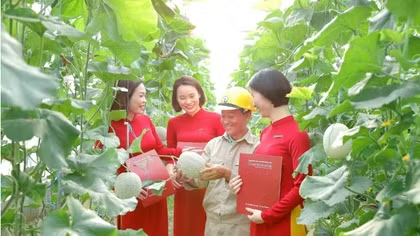
As Vietnam pursues rapid and sustainable economic growth, improving growth quality, advancing the green transition, promoting the circular economy, and adopting environmental, social and governance (ESG) standards are becoming increasingly urgent.
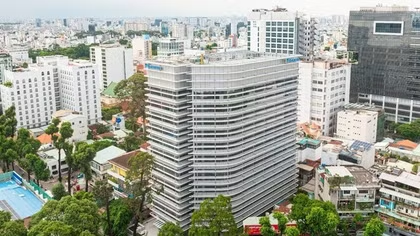
The International Finance Corporation (IFC) highlighted the city's dominance in green-certified building floor space in Vietnam, reflecting the rapid expansion of the green building market with 780 completed green buildings encompassing over 18.69 million sq.m by 2025, predominantly certified by EDGE and LEED.
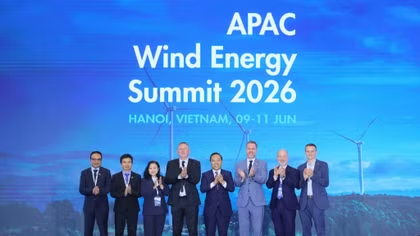
The United Kingdom officially announced two new climate cooperation initiatives to support Vietnam in its energy transition and green growth journey. These programs focus on offshore wind power development and the creation of a sustainable green financial ecosystem.
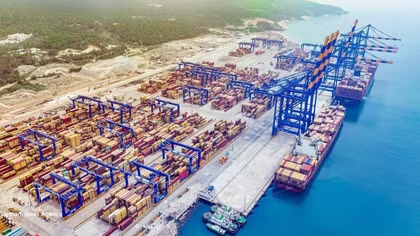
The GTTCI expert noted that alongside logistics and integrated warehousing, e-commerce is expected to be a particularly high-growth sector in the coming years. He described it as a multi-billion-dollar market with significant untapped opportunities for cooperation between Vietnam and India.
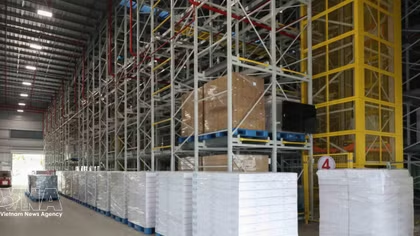
According to the Ministry of Industry and Trade, Vietnam’s exports reached 215.66 billion USD in the first five months of 2026, up 19.5% year-on-year. Twenty-six export items generated more than 1 billion USD in revenue each, including seven with turnover exceeding 10 billion USD.
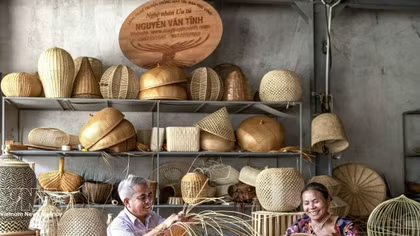
By combining centuries-old craftsmanship with contemporary design, Hanoi’s traditional craft villages are finding new ways to keep their cultural heritage relevant and competitive in modern life.
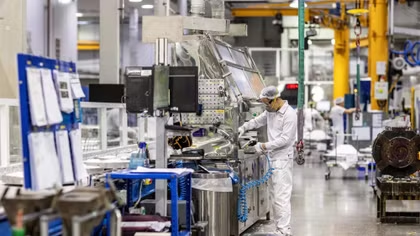
A significant number of Swedish enterprises are set to expand their operations in Vietnam, reflecting a deep-seated confidence in the country’s long-term economic prospects.
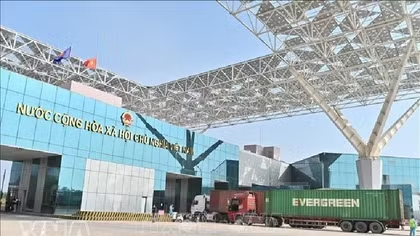
Since the start of the summer harvest season, China's two major border gates with Vietnam, Youyi Guan in Pingxiang and Beilun 2 Bridge in Dongxing, have entered their peak period for handling imports of fresh agricultural and seafood products from member states of the Association of Southeast Asian Nations (ASEAN).
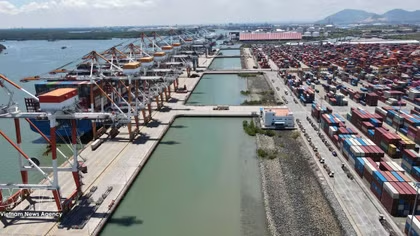
UOB noted that while Vietnam has maintained relatively strong growth momentum, recent economic indicators suggest a mixed short-term outlook, with positive developments tempered by mounting challenges. In particular, higher energy costs are beginning to weigh on manufacturing activity and macroeconomic stability.
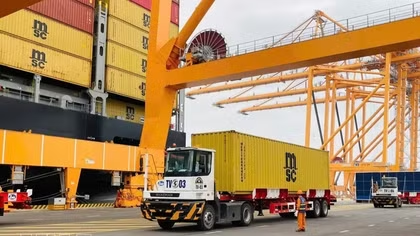
According to the Vietnam Logistics Business Association (VLA), the logistics sector will require around 2.2 million workers by 2030, including 1.6 million employees for logistics service providers and nearly 600,000 personnel supporting logistics operations in manufacturing and trading enterprises.
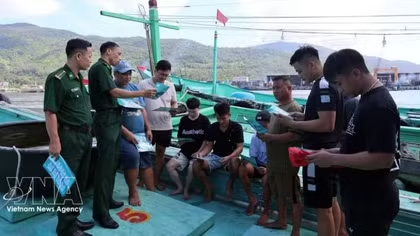
To date, over 100 fisheries unions, solidarity groups and teams protecting national sovereignty and security at sea in Da Nang have signed commitments not to engage in IUU fishing.
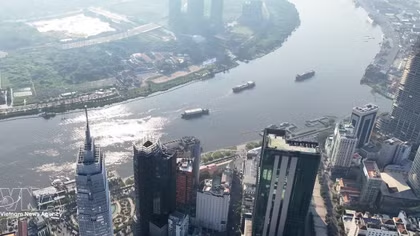
The development strategy for VIFC-HCMC envisions a comprehensive financial ecosystem encompassing green finance, carbon credits, financial technology (fintech), blockchain technology, digital assets, digital banking and other innovative business models. These highly internationalised sectors involve complex cross-border transactions and sophisticated legal structures.