Google launches new Pixel 2 and Pixel 2 XL smartphones

In direct challenge to Apple, Google’s new high-end smartphones have 64GB of storage, front-facing speakers and 12-megapixel cameras supported by machine-learning

The firm is using the new high-end smartphones and Android Oreo operating system to demonstrate its prowess in combining hardware and software, using exclusive features to attempt things other manufacturers including Apple cannot.
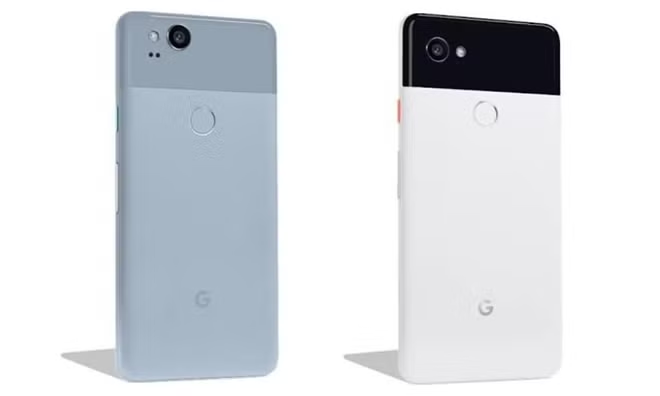
The two phones both have the latest Qualcomm Snapdragon 835 processor, 64GB of storage as standard, front-facing speakers, water-resistance to IP67 standards, and new 12-megapixel cameras on the back, but with different sized OLED screens – and, following the iPhone’s lead, no headphone socket. The Pixel 2 has a traditional 5in screen with large bezels at the top and bottom and costs from £629, while the Pixel 2 XL has a modern design similar to the Samsung Galaxy S8 and LG’s G6, with an elongated 6in screen and small bezels, costing from £799.

In a direct swipe at Apple, Google’s vice president product manager Mario Queiroz said: “We don’t save cool features just for the large device. You get all the goodness with both phones, so the only choice you have to make is what size you want.”
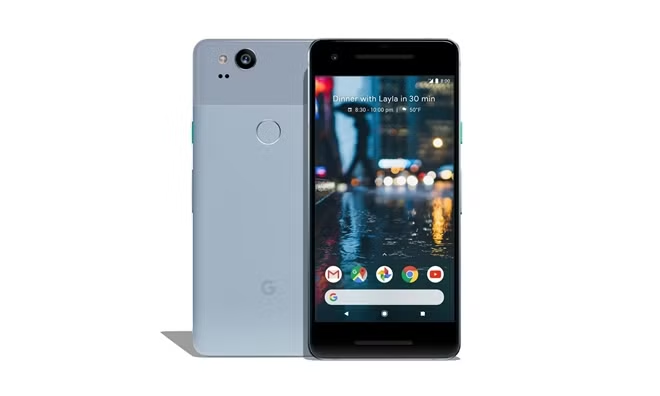
The Pixel 2 and 2 XL also have pressure-sensitive sides that can be squeezed to launch the company’s Google Assistant. A similar feature debuted in HTC’s U11 smartphone, but Google appears to be using it as a way to get around the stigma of using the voice assistant’s wake phrase “OK, Google” in public, launching the Assistant without having to power on the device and hold the home button.

Google says the phones also have 10% longer battery life and faster charging than the 2016 Pixel smartphones. “We’ve focused on super-fast charging, so you can get around seven hours of use out of a 15-minute charge. And we supply the fast charger in the box,” said Christiaan Prins, product manager at Google – another jab at Apple, which does not include a fast charger in the box with the iPhone 8 or 8 Plus.

To take the iPhone on, Google has focused on fine-tuning the combination of hardware and software, from intelligent features to super-smooth operation. The camera is the most obvious element.
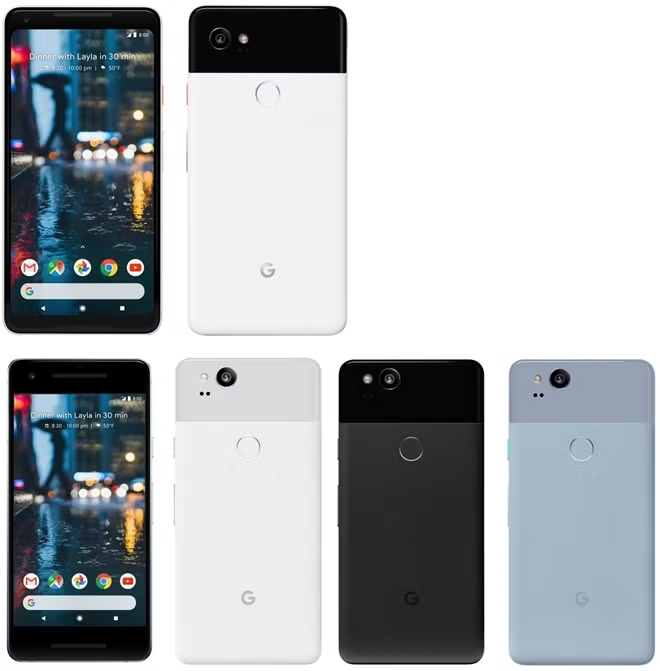
The depth information is used to create a portrait mode, which identifies what’s in the foreground to artificially blur the background simulating the look of a high-end digital SLR camera – a feature that has proved popular for dual-camera phones such as Apple’s iPhone 8 Plus.

Google is also using the depth information for augmented-reality experiences, similar to that offered by Apple, calibrating each camera at the factory before shipping it for greater accuracy. There is also a new smart-camera feature called Lens, intended as a demonstration of what Google’s AI can do when integrated into a camera, detecting landmarks and book covers.

The Guardian

Other News

Vietnam targets at least 10 large strategic technology firms by 2030

Vietnam targets at least 10 large strategic technology firms by 2030

Deputy Prime Minister Ho Quoc Dung has signed a decision approving a plan to develop large domestic strategic technology enterprises in the 2026–2030 period, aimed at advancing digital infrastructure, digital human resources, digital data, strategic technologies and cybersecurity.

Protecting users crucial in building digital trust: Experts

Protecting users crucial in building digital trust: Experts

In Vietnam, digital transformation in the finance and banking sector is accelerating cashless payments, expanding access to financial services, improving market transparency and supporting economic growth and macroeconomic management.

Fostering skilled workforce for innovation era: experts

Fostering skilled workforce for innovation era: experts

Experts said close coordination among State management agencies, research institutes, universities, and businesses will improve training quality and serve the dual goals of quality education and practical research application.

Startup forum bridges Silicon Valley and local innovation ecosystem

Startup forum bridges Silicon Valley and local innovation ecosystem

The University of Economics Ho Chi Minh City (UEH), Saigon Asset Management (SAM), and Plug and Play Tech Centre co-hosted the “From Vietnam to Silicon Valley” forum, exploring AI innovation, venture capital, and pathways to integrate Vietnam’s startup ecosystem with Silicon Valley and global markets.

Experts call for stronger action against fake news online

Experts call for stronger action against fake news online

Experts have warned that fake news, misinformation and harmful online content are increasingly shaping public perceptions, particularly among young people, and stressed the need for stronger legal safeguards, technology tools and wider dissemination of credible information to tackle the problem effectively.

Protecting digital future in post-quantum, AI era

Protecting digital future in post-quantum, AI era

Participants highlighted the importance of building a proactive, synchronised and sustainable national cybersecurity ecosystem through closer cooperation among regulators, technology firms, research institutions and cybersecurity experts.

Vietnam attends SAHA 2026 defence, aerospace exhibition in Türkiye

Vietnam attends SAHA 2026 defence, aerospace exhibition in Türkiye

Vietnam’s participation in SAHA 2026 International Defence & Aerospace Exhibition in Istanbul reflects the country’s consistent policy of enhancing international defence integration and promoting defence industry cooperation towards self-reliance, self-strengthening, modernisation and dual-use development.

SK Group partners to build AI ecosystem in Vietnam

SK Group partners to build AI ecosystem in Vietnam

SK Innovation and SK Telecom signed MoUs with Nghe An province and the National Innovation Centre of Vietnam to advance AI ecosystem development and support the country’s long-term growth strategy.

Vietnam Research Excellence Fellowship for 2026-2030 approved

Vietnam Research Excellence Fellowship for 2026-2030 approved

Under the Vietnam Research Excellence Fellowship (VREF) for the 2026–2030 period, PhD students are identified as a core research force directly contributing to breakthroughs in sci-tech and innovation. Investing in top-tier doctoral candidates is more than workforce development, but a high-stakes strategic bet to forge a cohort of world-class scientists and technologists who can power Vietnam’s long-term economic ambitions.