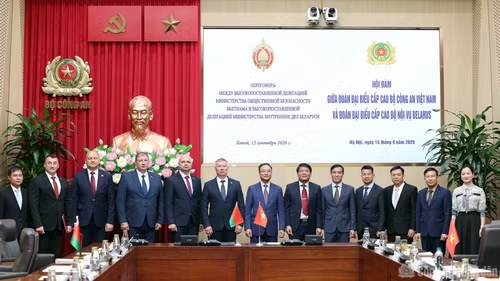
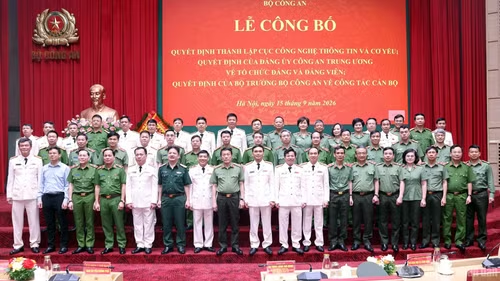
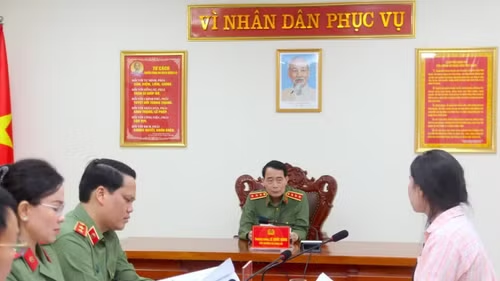
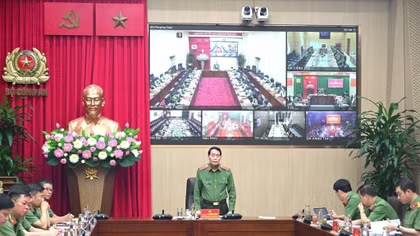
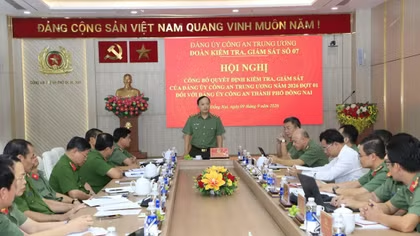
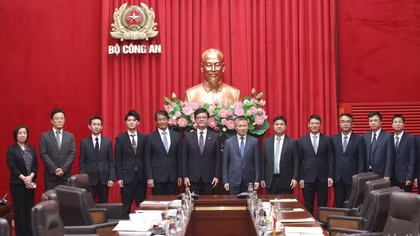
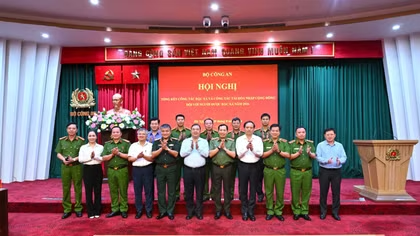
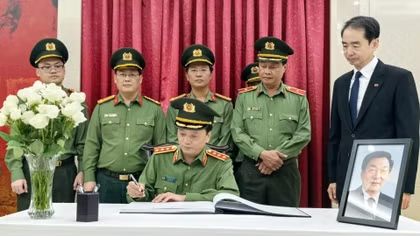
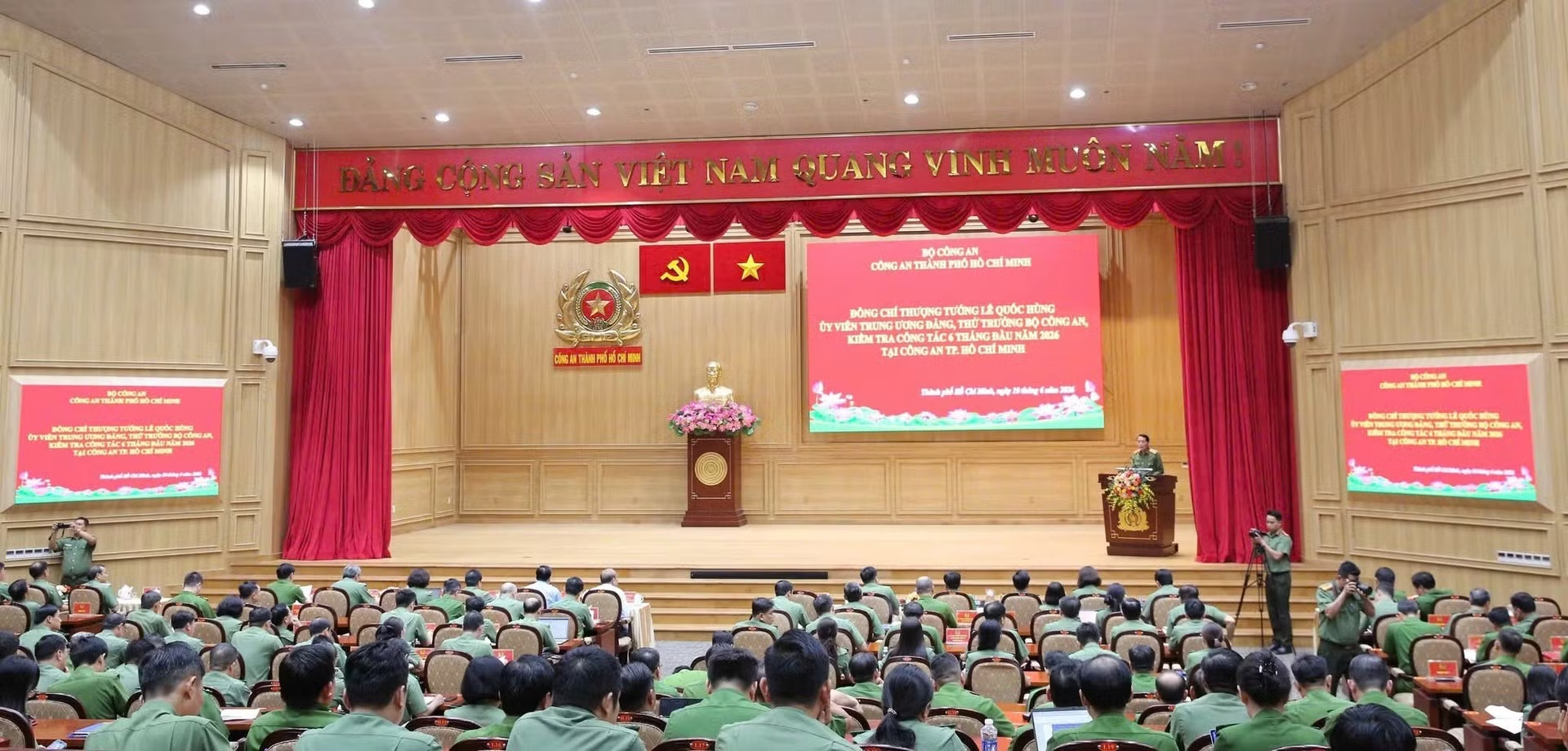
The working session was attended by Vice Chairman of the Ho Chi Minh City People's Committee Tran Van Bay as well as leaders from the Ministry of Public Security's Office, various professional departments under the Ministry of Public Security, the Internal Affairs Committee of the Ho Chi Minh City Party Committee, the Directorate of the Ho Chi Minh City Police Department, and local police units.
During the preceding two days, Inspection Team No. 1 dispatched multiple working groups to conduct field inspections at numerous units, including 16 professional divisions and 5 ward and commune police stations throughout Ho Chi Minh City.
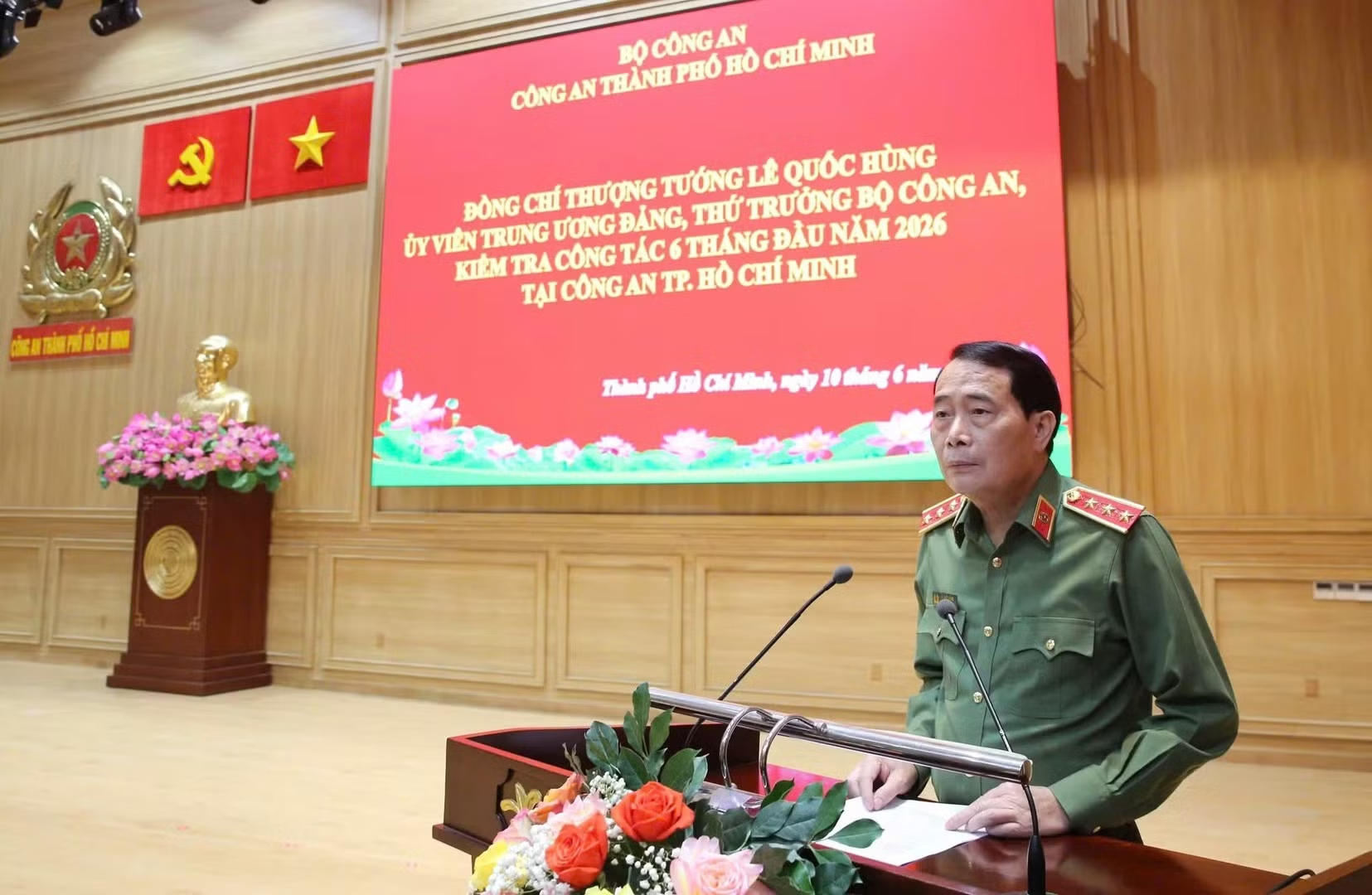
On behalf of the Directorate of the Ho Chi Minh City Police Department, Deputy Director Senior Colonel Tran Thi Kim Phung presented a summary report outlining the security situation, operational results and target fulfillments for the first six months of 2026. The report was integrated with a one-year preliminary review of the municipality's two-level public security organizational model.
Deputy Chief of the Ministry of Public Security’s Office Senior Colonel Mai Xuan Thao, head of the Inspection Working Group, presented the draft findings from the inspections at the Ho Chi Minh City Police Department and its affiliated units, highlighting their major achievements, pointing out their ongoing difficulties, and recommending the local police to take breakthrough solutions so as to accomplish their assignments and meets their set targets.
On behalf of the Public Security Central Party Committee, the leadership of the Ministry of Public Security, and Inspection Team No. 1, Deputy Minister Le Quoc Hung acknowledged and commended the Ho Chi Minh City Police Force for its achievements and accomplishments over the past six months.
Key operational breakthroughs in five fields
Deputy Minister Le Quoc Hung assessed outstanding results in five operational fields of the municipal police force. Notably, the Party Committee and the Directorate of the Ho Chi Minh City Police Force strictly and effectively institutionalized and executed directives from the Party Central Committee, the National Assembly, the Government, the Public Security Central Party Committee, the Ministry of Public Security, the Municipal Party Committee, the People's Council and the Municipal People's Committee regarding national security, social order and safety, and force building, thereby directly driving the city's socio-economic development.
The Ho Chi Minh City Police Force excelled in situational intelligence and demonstrated a decisive shift toward modern strategic thinking and innovative working methods. The local police’s operations have transitioned toward a proactive approach:
"Not merely maintaining public order and security, but actively stabilizing and establishing a safe, secure environment; clearing bottlenecks, creating new opportunities and expanding the space for the city's socio-economic, cultural and foreign affairs development."
Over the past six months, the municipal police force proactively deployed numerous security plans and operations to ensure absolute safety for the activities of Party and State leaders, vital projects and critical political, cultural, social and foreign relations events in the city, avoiding even the slightest oversight, while the city’s political security remained firmly stabilized.
During the first half of the year, social order offenses were reduced by 3.49%. The force successfully dismantled multiple illicit drugs trafficking rings, seizing large quantities of narcotics, and intercepted large-scale counterfeit operations involving cosmetics, food products, fake fuel and household chemicals.
The overall successful investigation rate of criminal cases reached 78.69%, with numerous high-profile cases solved after several hours of the offense. Street crime dropped noticeably, earning high praise from local party committees, authorities and citizens.
Innovative and exemplary frameworks
Most notably, the Ho Chi Minh City Police Department served as an effective advisory body and deployed highly creative, effective models, including:
- The "6-Clear" management framework: Systematically assigning personnel across all tiers, from the Directorate down to divisions, teams and stations to take direct responsibility for complex areas prone to narcotics and social order offenses. This framework is coupled with strict oversight and accountability mechanisms.
- The 45-day clean sweep campaign: Launching a high-intensity, 45-day campaign to census, detect and suppress crime in order to sanitize security hot spots and transform complex areas, aiming for the long-term target of establishing a drug-free Ho Chi Minh City by 2030.
- Internal drug testing: The Deputy Minister particularly commended the local police for their highly flexible and effective internal innovation: conducting mandatory drug testing across the entire force (including members of the Directorate) and planning to carry out drugs testing of cadres and Party members in the political system. This initiative aims to stamp out supply networks and ensure a drug-free political system.
Core directives for the coming period
Deputy Minister Le Quoc Hung required the Ho Chi Minh City Police Force to proactively advise authorities on constructing a favorable environment for development and determinedly lead the implementation of Politburo Resolution No. 09-NQ/TW alongside resolutions of local Party Congresses. The force should proactively monitor and advise the higher-level authorities to break through bottlenecks within Foreign Direct Investment (FDI) projects, take breakthrough solutions against transfer pricing and tax evasion, and strictly handle businesses defaulting on social insurance contributions. The city’s police is requested to resolve concerned complex public complaints and petitions from the roots to prevent the formation of security "hot spots."
The force should maintain a robust security posture, achieve a sustainable reduction in crime, and absolutely prevent passive or unexpected situations. Comprehensive security must be guaranteed for major upcoming events, particularly the 50th Anniversary of the naming of the city after President Ho Chi Minh. Capitalizing on its current anti-crime momentum, the force is supposed to meet its target of reducing social order offenses by at least 10%, focusing heavily on eradicating "black credit" (usury) rings, high-tech crime, and economic offenses.
Crucially, the force should resolve to build and establish 40% of its communes and wards as drug-free zones in 2026. Meanwhile, it needs to accelerate digital transformation and smart security governance, maximizing the efficiency of Project 06, smoothly operating the Cyber Security Operations Center, and studying the establishment of specialized units dedicated to protecting the International Financial Center and critical digital infrastructure.
The ultimate objective is to construct a smart urban security governance model that serves citizens and businesses best while seriously observing operational discipline and stepping up force-building from the grassroots level by strengthening political and ideological education, effectively executing the "Three Best" emulation movement (Best Discipline, Most Loyal, Closest to the People), accelerating investment to complete 100% of commune-level police stations, and maximizing capital disbursement for all ongoing projects.
On behalf of the Central Public Security Party Committee and the leadership of the Ministry of Public Security, Deputy Minister Le Quoc Hung expressed his deep gratitude to the local Party committees, authorities and citizens for their dedicated support, and stated his firm confidence that the Ho Chi Minh City Police Force will remain unified, overcome all challenges, and continue to serve as an exemplary model and a leading banner to be replicated nationwide.